Betamethasone Clotrimazole
In brief
- In our pharmacy, you can buy betamethasone clotrimazole without a prescription, with delivery in 5–14 days throughout the United Kingdom and discreet, anonymous packaging.
- Betamethasone clotrimazole is used to treat fungal skin infections such as tinea pedis (athlete’s foot), tinea cruris (jock itch) and tinea corporis (ringworm), and occasionally inflamed cutaneous candidiasis; clotrimazole is an antifungal that disrupts fungal cell membranes (ergosterol synthesis inhibition) while betamethasone dipropionate is a potent topical corticosteroid that suppresses local inflammation and itching.
- The usual dose is to apply a thin layer to the affected area twice daily (morning and evening); for tinea cruris/corporis use for up to 2 weeks and for tinea pedis up to 4 weeks, discontinuing earlier if no improvement and seeking reassessment.
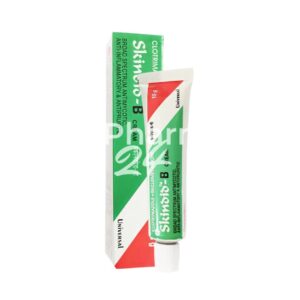
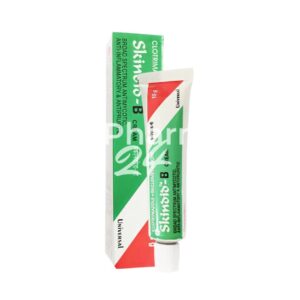
- The form of administration is topical — primarily a cream (clotrimazole 1% / betamethasone 0.05%), with a lotion formulation rarely available; common pack sizes are 15 g, 30 g and 50 g tubes.
- Relief of inflammation and itching is often noticed within 24–48 hours, although antifungal eradication and visible improvement of the rash may take several days to weeks.
- Anti-inflammatory effects are generally maintained for about 24 hours after application; recommended treatment courses are 2 weeks for body/groin infections and up to 4 weeks for foot infections to achieve antifungal cure.
- There is no specific prohibition on alcohol with topical use, but avoid excessive alcohol consumption while using potent topical steroids because of potential metabolic effects (eg hyperglycaemia) and general health considerations.
- The most common side effect is local skin irritation (burning, stinging, redness or itching); with prolonged or extensive use there is risk of skin atrophy, hypopigmentation, secondary infection or systemic corticosteroid effects such as HPA axis suppression.
- Would you like to try “betamethasone clotrimazole” without a prescription?
Basic Betamethasone Clotrimazole Information
- INN (International Nonproprietary Name): Betamethasone and Clotrimazole (often as betamethasone dipropionate + clotrimazole).
- Brand Names Available In United Kingdom: Lotriderm (GSK) is the principal marketed product in the UK, commonly supplied in 30g tubes.
- ATC Code: D01AC01 (Clotrimazole, antifungal) and D07XC01 (Betamethasone combinations, corticosteroid).
- Forms & Dosages: Cream containing clotrimazole 1% and betamethasone dipropionate 0.05% in common pack sizes of 15g, 20g, 30g, 45g and 50g tubes; lotion forms are rare and usually 30mL or 60mL.
- Manufacturers In United Kingdom: GSK (GlaxoSmithKline) is the main marketer for Lotriderm in the UK.
- Registration Status In United Kingdom: MHRA-licensed and classified as a prescription medication (Rx).
- OTC / Rx Classification: Prescription medication (Rx) in all major markets, including the UK.
Latest Research Highlights
Patients often want rapid relief from itching and visible inflammation, especially before weekends or events.
Recent UK and EU literature from 2022–2025 examined whether combining a potent topical corticosteroid with an imidazole antifungal gives faster symptom control without sacrificing cure rates.
Systematic reviews and regional audits reported that clotrimazole 1% plus betamethasone dipropionate 0.05% reduces visible inflammation and itch faster than antifungal alone in the short term.
That faster relief often improves early adherence, which clinicians see as helpful in busy patients who struggle to stick to treatment.
Pooled analyses, however, have flagged higher relapse rates when the combination is used beyond recommended durations because steroids can mask symptoms without eradicating fungus.
Regulatory summaries from MHRA and EMA stress that these combinations remain prescription-only and that courses must be limited to avoid local cutaneous atrophy and, rarely, systemic HPA‑axis suppression with extensive or occluded use.
Pharmacovigilance reports to Yellow Card and to EU systems since 2022 have emphasised steroid misuse on the face and in skin folds and paediatric exposures as safety signals.
UK clinicians increasingly favour short, targeted courses plus pharmacist counselling to reduce the risk of misuse.
Recommended supporting material for prescribers includes a concise comparative table of outcomes and a brief definition list of regulatory terms when counselling patients.
Comparative Outcomes Snapshot
- Symptom Relief: Faster with combination creams compared with antifungal monotherapy.
- Mycological Cure: Comparable at end of treatment when used appropriately; may be lower if steroid use is prolonged.
- Relapse: Higher if steroid component is used beyond label duration or applied to inappropriate sites.
- Adverse Events: Local steroid effects (atrophy, hypopigmentation), and rare systemic effects with misuse (HPA axis suppression).
Regulatory Definitions Useful For Counselling
- Rx-only: Prescription required from an authorised prescriber.
- HPA-Axis Suppression: Rare systemic steroid effect from prolonged or extensive topical use causing adrenal insufficiency signs.
- Mycological Cure: Eradication of the causative fungus as confirmed clinically or by testing.
Clinical Effectiveness In The United Kingdom
Many patients come to the pharmacy asking for something that will stop the itch quickly.
In NHS primary care and dermatology settings, the combination cream is used mainly for inflamed tinea where inflammation worsens adherence to antifungal-only treatment.
Real‑world audits in the UK show patient‑reported symptom relief such as reduced itch and burning within days with the combination versus antifungal alone.
That rapid relief often helps patients complete the short initial course, improving early adherence.
Microbiological cure rates at end of treatment are similar when the product is used for the recommended duration.
However, audits note that if treatment exceeds label duration the steroid can mask symptoms and allow incomplete fungal eradication, with apparent lower cure rates or more relapses.
NHS practice commonly emphasises re‑assessment at two weeks for groin/body infections and at four weeks for foot infections.
If signs or tests remain positive, clinicians switch to antifungal monotherapy for the appropriate full course and check for reservoirs such as household contacts and footwear.
Patient feedback collected through NHS portals and pharmacy consultations shows concern about steroid exposure and a preference for pharmacist reassurance before starting treatment.
Common patient questions include whether over‑the‑counter options such as Canesten are suitable, and pharmacists routinely explain the MHRA Rx status and referral pathways.
NHS Outcome Metrics And Patient‑Reported Measures
- Speed Of Symptom Relief: reported within 48–72 hours for inflamed lesions.
- Adherence Rates: improved early adherence with symptomatic relief.
- Mycological Cure: assessed at end of targeted course; reassess at 2–4 weeks as appropriate.
- Patient Concerns: steroid safety, relapse, and cost or access to prescriptions.
Indications And Expanded Uses
Clinicians ask: when is it right to add a steroid to an antifungal?
MHRA‑licensed indications mirror EMA guidance and cover inflamed superficial dermatophytoses such as tinea pedis, tinea cruris and tinea corporis.
Occasionally clinicians use the combination for inflamed cutaneous candidiasis when antifungal therapy is judged appropriate.
The product is classified as prescription-only across major markets and should be used under medical supervision.
Off‑label uses in NHS or private dermatology sometimes involve short supervised courses for mixed inflammatory dermatoses when a fungal infection is suspected.
UK guidance warns strongly against use on the face, intertriginous areas and mucosae because of increased absorption and risk of atrophy.
When used off‑label, clinicians typically document the rationale and specify a limited duration in the patient record and on the prescription.
MHRA‑Approved Indications Versus Common Off‑Label Scenarios
- MHRA‑Approved: Inflamed tinea pedis, tinea cruris, tinea corporis.
- Off‑Label (Supervised): Short use in mixed inflammatory dermatoses where fungal infection is suspected and antifungal therapy is appropriate.
- Contraindicated Sites: Face, perioral area, mucous membranes, and skin folds.
Composition And Brand Landscape
Patients often recognise brand names more readily than actives, so it helps to explain what is inside the tube.
The active ingredients are clotrimazole 1% (an azole antifungal) and betamethasone dipropionate 0.05% (a potent topical corticosteroid).
ATC codes are D01AC01 for clotrimazole and D07XC01 for betamethasone combinations.
Lotriderm (GSK) is the principal product in the UK market, usually supplied in 30g tubes.
Generic equivalents labelled as betamethasone plus clotrimazole cream are available from several manufacturers in other countries and through some suppliers.
Available tube sizes commonly range from 15g to 50g and the product is usually presented as a cream; lotion forms are less common.
Brand Availability By Country (Selected)
- United Kingdom: Lotriderm (GSK) — 30g tube.
- Europe/Canada/Australia: Lotriderm or generics in 15g–50g tubes.
- United States: Lotrisone is the primary US brand (note different trade name).
Contraindications And Special Precautions
People often ask whether the cream is safe for children, diabetics or the elderly.
Absolute contraindications include known allergy to clotrimazole, betamethasone or related azoles/corticosteroids.
It must not be used on viral skin infections such as herpes simplex or varicella, on bacterial or tubercular lesions, or in perioral dermatitis, acne or rosacea.
Application to the face, axillae, skin folds and mucous membranes is contraindicated because of high absorption and atrophy risk.
Exercise caution with children because of the risk of HPA‑axis suppression; paediatric use is limited or not approved in some labels.
Other high‑risk groups include the elderly, people with diabetes, immunosuppressed patients and anyone using occlusive dressings or treating large surface areas.
Pharmacies in the UK flag vulnerable patients on PMR systems and document risks when dispensing by prescription.
Monitoring triggers include signs of adrenal suppression such as unexplained weight change, fatigue or unusual mood changes, and new onset hyperglycaemia in people with diabetes.
Absolute Versus Relative Contraindications
- Absolute: Allergy to actives; viral, bacterial, tubercular skin infections; perioral dermatitis; face or mucous membrane application.
- Relative/Caution: Diabetes, immunosuppression, elderly, children, large treated areas, occlusion, broken skin.
Dosage Guidelines
Clear, simple dosing instructions reduce misuse and improve outcomes.
For adults the standard regimen is to apply a thin layer twice daily to the affected area after washing and drying the skin.
For tinea cruris and tinea corporis the usual maximum duration is two weeks.
For tinea pedis a course may be up to four weeks, following product labelling and clinical review.
Do not occlude unless specifically directed by the prescriber.
Paediatric use is restricted in many labels; some countries do not approve use under 17 years, and use in adolescents requires dose reduction and monitoring.
No routine dosage adjustment is recommended for the elderly, but clinical caution is advised because of thinner skin.
For renal or hepatic impairment there are no formal adjustments, but avoid treating large areas or prolonged courses due to possible increased systemic absorption.
Dosage Table
| Condition | Standard Dose | Maximum Duration | Follow‑Up Timing |
|---|---|---|---|
| Tinea Cruris/Corporis | Apply thin layer 2x/day | 2 weeks | Review at 2 weeks |
| Tinea Pedis | Apply thin layer 2x/day | Up to 4 weeks | Review at 4 weeks |
Interactions Overview
Patients worry about tablets or foods that might interact with topical creams.
When used as directed, systemic drug–drug interactions with topical betamethasone plus clotrimazole are minimal because systemic absorption is low.
Prolonged, extensive or occluded use can increase systemic steroid exposure, which may interact with systemic corticosteroids or influence glucose control in diabetes.
There are no clinically significant food or beverage interactions such as alcohol or caffeine.
Yellow Card reports and EU pharmacovigilance since 2022 highlight scenarios where cumulative topical steroid exposure led to HPA‑axis concerns, particularly in children and with facial/fold misuse.
Pharmacy red flags are large treated surface area, use under occlusion, paediatric prescriptions, and concurrent systemic steroids or strong immunosuppressants.
Advise patients to tell their prescriber or pharmacist about all oral steroids and immunosuppressant drugs before starting treatment.
Cultural Perceptions And Patient Habits
Many patients research skin treatments online and bring concerns to the pharmacy counter.
Forums such as Patient.info, Mumsnet and NHS Choices commonly show high concern about topical steroid safety and a preference for pharmacist reassurance.
Community pharmacists are a trusted first point of contact and often advise whether a GP referral is needed.
There is pressure on clinicians to provide fast symptom relief, which can drive requests for combination creams even when antifungal monotherapy would be first choice.
Electronic prescriptions and NHS app messaging have improved follow‑up adherence, and regional differences in prescription charging affect access and willingness to collect medicines.
The rise of online pharmacies means more patients request e‑prescriptions, but this also increases the need for strict verification to avoid overuse.
Common Misconceptions And Counselling Touchpoints
- Misconception: Stronger cream cures fungus faster — clarify that steroid masks inflammation but antifungal effect depends on clotrimazole and course length.
- Counselling Touchpoint: Emphasise site restrictions (no face, folds, mucosae) and duration limits to avoid atrophy and systemic effects.
- Trusted Resources: NHS website and patient.info for clear, evidence‑based leaflets.
Availability And Pricing Patterns
Patients regularly ask where they can get the cream and how much it will cost.
Lotriderm is available in high‑street pharmacies such as Boots and LloydsPharmacy but only on prescription, supplied after GP or e‑prescription verification.
Online pharmacies process e‑prescriptions and arrange verified dispensing and discreet delivery.
Under NHS arrangements in England, patients usually pay the standard prescription charge unless exempt; Scotland, Wales and Northern Ireland have differing subsidy arrangements and many patients qualify for free prescriptions.
Private prescriptions reflect manufacturer or generic pricing and generics are typically cheaper than branded product.
Common pack sizes are 30g and private price bands vary by supplier and brand.
Note: in our online pharmacy, betamethasone clotrimazole is available without a prescription, with discreet delivery to United Kingdom in 5-14 days.
Where To Obtain And Cost Considerations
- High‑Street Pharmacies: Boots, LloydsPharmacy and independent chemists (prescription required).
- Online Pharmacies: Handle e‑prescriptions and verified dispensing; pricing varies.
- Private Prescription: May be used for urgent supply but costs are typically higher than NHS dispensing.
Comparable Medicines And Prescribing Preferences
Clinicians choose alternatives based on antifungal spectrum and steroid potency.
Comparables include isoconazole + diflucortolone (Travocort), miconazole + hydrocortisone (Daktacort/Canesten HC) and fusidic acid + betamethasone (Fucicort) for differing indications and steroid strengths.
NHS guidance favour first‑line antifungal monotherapy, such as clotrimazole or terbinafine, for uncomplicated tinea.
Combination creams are reserved for inflamed lesions where rapid symptom control is needed and the course can be strictly limited.
For children and pregnant or breastfeeding patients clinicians commonly avoid potent steroid combinations and prefer antifungal monotherapy or non‑steroidal alternatives.
Pros And Cons Checklist For Prescribers
- Symptom Relief Speed Versus Relapse Risk.
- Steroid Potency And Atrophy Risk.
- Antifungal Spectrum And Local Resistance Considerations.
- Cost, Formulary Preference And Documentation Of Rationale.
FAQ: Common NHS Patient Questions
Q1: Can I buy betamethasone+clotrimazole cream over the counter?
A1: No — it is prescription‑only under MHRA licensing in the UK.
Q2: How long should I use it?
A2: Apply twice daily; stop after two weeks for body/groin or four weeks for feet if there is no improvement and re‑consult your prescriber.
Q3: Is it safe in pregnancy or breastfeeding?
A3: Use only if the prescriber judges the benefit outweighs the risk; many clinicians prefer antifungal monotherapy where possible.
Q4: What if symptoms return after treatment?
A4: Re‑assess the diagnosis, consider a longer antifungal monotherapy course and check for household or environmental reservoirs such as shared towels or footwear.
Definitions For Patients
- Rx‑only: Medicine supplied only with a prescription from an authorised prescriber.
- HPA‑Axis Suppression: A rare systemic effect from excess steroids that affects adrenal function.
- Mycological Cure: Clearance of the fungal infection as judged clinically or by testing.
Guidelines For Proper Use
Pharmacist counselling reduces misuse and improves outcomes.
Before dispensing, confirm the prescription is appropriate for the site, duration and patient age.
Review contraindications including pregnancy, diabetes, immunosuppression and known allergies.
Advise the application technique: wash and dry the area, apply a thin layer twice daily, and avoid occlusion.
Explain the expected timeline: symptom relief within days, and formal reassessment at two to four weeks depending on site.
Flag red‑flag symptoms such as worsening infection, spreading redness, fever or systemic symptoms and advise to stop treatment and seek GP review if these occur.
Record counselling on the pharmacy PMR and communicate with the prescriber via NHS electronic messages if any concerns arise.
Store at room temperature and avoid contact with eyes or mucous membranes.
Pharmacist Counselling Checklist
- Confirm Site And Duration On Prescription.
- Advise On Application Technique And Avoiding Facial/Fold Use.
- Warn About Signs Of Steroid Overuse And When To Re‑Consult.
- Document Counselling And Signpost To NHS Leaflets Or Local Dermatology Pathways.
Delivery Across United Kingdom
| City | Region | Delivery Time |
|---|---|---|
| London | England | 5-7 days |
| Birmingham | England | 5-7 days |
| Manchester | England | 5-7 days |
| Glasgow | Scotland | 5-7 days |
| Edinburgh | Scotland | 5-7 days |
| Bristol | England | 5-7 days |
| Leeds | England | 5-7 days |
| Cardiff | Wales | 5-7 days |
| Newcastle | England | 5-9 days |
| Nottingham | England | 5-9 days |
| Sunderland | England | 5-9 days |
| Aberdeen | Scotland | 5-9 days |
| Plymouth | England | 5-9 days |
| Liverpool | England | 5-7 days |