Ivermectin
In brief
- You can buy ivermectin from pharmacies and online suppliers in some markets, and it is prescription-only for human use in most countries, including the UK and Romania; veterinary products are also available separately. In some pharmacy settings it may be obtainable without a prescription, but human oral ivermectin is generally regulated as an Rx medicine.
- Ivermectin is used to treat parasitic infections such as onchocerciasis, strongyloidiasis and scabies, and topically for rosacea and head lice. It works by binding to parasite nerve and muscle channels, causing paralysis and death of the parasite.
- The usual dose depends on the condition: oral treatment is commonly 150–200 micrograms/kg as a single dose, sometimes repeated after 7–14 days or at 6–12 month intervals; topical cream is usually applied once daily, and lotion is often a single application.
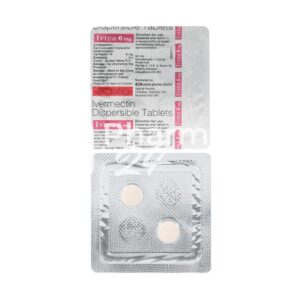
- The form of administration may be tablets for oral use, cream for topical use, lotion for topical use, and veterinary injectable, pour-on or premixed feed formulations.
- Ivermectin usually starts working within a few hours after oral use, while improvement in symptoms such as itching or skin lesions may take 1–2 days or longer.
- The duration of action is typically one dose for some infections, but may require a second dose after 7–14 days, or repeated treatment every 6–12 months for certain parasitic diseases.
- Alcohol is not known to have a direct dangerous interaction with ivermectin, but drinking alcohol may worsen dizziness, drowsiness or stomach upset, so it is best to avoid or limit alcohol while taking it.
- The most common side effects are nausea, diarrhoea, abdominal pain, dizziness, headache, sleepiness, itching and rash.
- Would you like to try ivermectin without a prescription?
Basic Ivermectin Information
- INN (International Nonproprietary Name): Ivermectin
- Brand names available in United Kingdom: Stromectol, Soolantra, Sklice, Mectizan, Ivomec
- ATC Code: P02CF01
- Forms & dosages: Oral tablets 3 mg, 6 mg, 12 mg; cream 1% (10 mg/g); lotion 0.5% (5 mg/g); veterinary injectable, pour-on, and premix formulations
- Manufacturers in United Kingdom: Merck, Galderma, Sanofi/Arbor Pharma, Zoetis; availability through UK supply routes may also involve generics and private import channels
- Registration status in United Kingdom: Human oral ivermectin is prescription-only in most UK and EU settings; some topical forms are regulated differently by country
- OTC / Rx classification: Prescription-only for most human use; veterinary presentations are not for human use
Latest Research Findings In The UK And EU On Ivermectin
What does modern UK and EU guidance actually support, and where does the evidence stop?
Recent practice remains narrow and evidence-led.
Across 2022 to 2025, ivermectin is still supported in UK and EU settings for recognised parasitic infections, while broad claims for other uses have not been adopted into routine NHS care.
The main human indications remain strongyloidiasis, scabies, onchocerciasis, and selected topical uses such as rosacea and lice where a licensed product is available.
Human oral ivermectin is prescription-only in most UK and EU settings, which fits the MHRA and EMA-style approach to medicines that need clinical selection and dose checking.
That matters because ivermectin medicine is not a casual over-the-counter product for people, and veterinary products such as Ivomec are not interchangeable with human medicines.
For a quick snapshot, the table below shows how the current evidence sits in practice.
| Indication | Formulation | Strength | Current Support In Practice |
|---|---|---|---|
| Strongyloidiasis | Oral tablet | 3 mg, 6 mg, 12 mg | Supported in standard parasitic care |
| Scabies | Oral tablet or topical where relevant | 3 mg, 6 mg, 12 mg; 1% cream | Used when clinically indicated |
| Onchocerciasis | Oral tablet | 3 mg, 6 mg, 12 mg | Supported for endemic parasitic disease |
| Rosacea | Topical cream | 1% (10 mg/g) | Licensed topical use in some markets |
| Lice | Topical lotion | 0.5% (5 mg/g) | Licensed in some markets, country dependent |
The ATC code is P02CF01, which places ivermectin within macrocyclic lactone anthelmintics.
For search-friendly readers, the phrase ivermectin, ivermectin medicine, ivermectin prescription, ivermectin tablets, and ivermectin 3 mg still describes the real UK product landscape better than any viral claims online.
Clinical Effectiveness Of Ivermectin In NHS-Relevant Care
When is ivermectin actually useful in day-to-day NHS-style practice?
In UK care, ivermectin tends to be used for parasites rather than vague “immune” or “antiviral” claims.
That includes strongyloidiasis, scabies, and onchocerciasis, with topical treatment considered for rosacea or lice when a licensed product fits the problem.
Doctors and pharmacists usually look for a clear diagnosis, weight-based dosing, and a plan for follow-up.
With scabies, symptom relief may lag behind parasite clearance, so a patient can still itch for a while even after treatment has started.
That is one reason NHS-style counselling includes a repeat dose where needed, checking household contacts, and making sure the full treatment plan is followed.
In practice, GP and specialist prescribing is usually arranged through the NHS when an infection needs medicine, while a pharmacist may support medicine choice, timing, and safe use.
A patient who rings on a Friday evening about itch, household spread, and whether the medicine needs repeating is a very typical scenario.
Standard adult regimens at a glance
Onchocerciasis: 150 mcg/kg once.
Strongyloidiasis: 200 mcg/kg once.
Scabies: 200 mcg/kg once, repeated in 7–14 days.
Those doses are weight-based for safety and should be checked against the official patient information leaflet and local protocol.
Indications And Expanded Uses: What Is Approved, What Is Off-Label
People often ask whether ivermectin is “licensed for everything” because of what they have seen online.
That is not how UK medicine use works.
Licensed use means the medicine has a defined indication and route that regulators accept.
Off-label use means a prescriber may use a medicine outside the exact licence when there is a documented clinical reason and an evidence-based judgement.
For ivermectin, oral tablets are used for parasitic disease, while topical products such as Soolantra 1% cream are used for rosacea in markets where that product is approved.
Sklice lotion 0.5% appears in some markets for lice, but availability is country-specific.
Human oral ivermectin remains Rx-only in the UK context, and the MHRA lens is clear: use medicines within the licence unless there is a good clinical reason not to.
Expanded-use claims on social media should not be treated as evidence-based NHS practice.
Veterinary-only formulations also deserve a direct warning.
Injectable, pour-on, and premix animal products are not suitable for people, even if the active ingredient sounds familiar.
| Category | Examples | UK Position |
|---|---|---|
| Licensed uses | Oral tablets for parasitic infections; Soolantra cream for rosacea where licensed | Supported when prescribed appropriately |
| Country-specific topical use | Sklice lotion 0.5% for lice in some markets | Depends on local regulation |
| Off-label use | Any use outside the product licence | Needs documented clinical reason |
| Veterinary use | Ivomec and related animal formulations | Not for human use |
For patients comparing ivermectin prescription options, Soolantra cream, ivermectin cream, ivermectin tablets, and off-label ivermectin should never be grouped as if they were identical treatments.
Composition And Brand Landscape In The United Kingdom And Internationally
What exactly is in the pack, and why do the brand names look so different?
Ivermectin is the active ingredient, and its pharmacological class is a macrocyclic lactone anthelmintic.
The ATC code is P02CF01, which is the pharmacy shorthand used in classification systems.
In the UK, branded products may be seen through online pharmacies or private import channels, but supply still needs to follow UK regulation.
Large community chains such as Boots, LloydsPharmacy, and Superdrug may handle supply where the prescription status and stock allow.
The brand landscape is wider internationally, especially where human and veterinary products are both marketed.
| Brand | Type | Typical Formulation |
|---|---|---|
| Stromectol | Human | Tablets, 3 mg |
| Soolantra | Human | Cream 1% (10 mg/g) |
| Sklice | Human | Lotion 0.5% (5 mg/g) |
| Mectizan | Human | Tablets, 3 mg |
| Ivomec | Veterinary | Injectable, pour-on, premix |
That human-versus-veterinary split is important because the packaging, strength, and intended use are different.
Contraindications And Special Precautions
Who needs extra caution before taking ivermectin?
There are several high-risk groups that should be screened carefully.
- Hypersensitivity
- Do not use if there is a known allergy to ivermectin or excipients.
- Children under 15 kg or under 5 years
- Oral use is generally not recommended because safety data are limited.
- Severe hepatic impairment
- Use cautiously, and avoid where severe liver dysfunction raises toxicity risk.
- Possible Loa loa infection
- Specialist assessment is needed because serious CNS reactions can occur in high parasite burden.
Pregnancy and breastfeeding are precaution areas rather than routine exclusions, because the benefits must justify the risk when safety data are limited.
Everyday counselling matters too.
Dizziness and somnolence can affect driving, using machinery, and even how well someone tolerates alcohol.
Elderly or debilitated patients may need closer monitoring for central nervous system effects, especially if they are already unsteady or taking several medicines.
Rare but serious reactions can happen, including neurotoxicity, hypotension, and severe skin reactions, particularly in overdose or in specific parasitic contexts.
That is why a pharmacist or GP would usually ask about dose, weight, liver disease, and any unusual travel or infection history before supply.
Dosage Guidelines And Regimen Planning
Why does weight-based dosing matter so much with ivermectin?
Because this medicine is usually prescribed in mcg/kg, so the right dose depends on body weight and indication.
That is especially important when the pack size is 3 mg, 6 mg, or 12 mg and the final dose needs clinical calculation rather than guesswork.
| Indication | Dose | Timing |
|---|---|---|
| Onchocerciasis | 150 mcg/kg | Once, then repeat every 6–12 months if prescribed |
| Strongyloidiasis | 200 mcg/kg | Once; some protocols use 2 doses |
| Scabies | 200 mcg/kg | Repeat after 7–14 days |
| Rosacea cream | Topical cream once daily | Up to 12 weeks |
| Lice lotion | Lotion applied to dry scalp, rinse after 10 minutes | Once; may repeat after 7 days |
There is usually no typical renal dose change, but caution is sensible in severe liver disease and in anyone with limited paediatric data below 15 kg.
If a dose is missed, it should be taken when remembered unless it is nearly time for the next dose, and it should not be doubled.
Overdose warning signs include nausea, vomiting, ataxia, and hypotension, and urgent medical help may be needed.
Interactions Overview: Medicines, Food, And Drinks
What can interact with ivermectin in real life?
Interaction risk is best handled by looking at the whole medicine list rather than assuming one product is always the problem.
| Interaction Type | Concern | Action |
|---|---|---|
| Alcohol | May worsen dizziness or drowsiness in some people | Be cautious and avoid excess |
| Caffeine, tea, food | No strong evidence of major interaction | Follow product directions; do not overstate food effects |
| CNS depressants | May add to sedation | Pharmacist review is sensible |
| Anticoagulants and complex regimens | May complicate adverse-effect assessment | Check the full medication list |
For UK patients, it is normal for a pharmacist to review medicines on the local prescribing system before supply.
That includes any medicines that may affect the central nervous system or make it harder to spot adverse effects.
When safety concerns arise after supply, the MHRA Yellow Card system remains the standard route for reporting suspected reactions.
Cultural Perceptions And Patient Habits In The United Kingdom
How do people actually ask about antiparasitic treatment in the UK?
Often they start with the community pharmacist, because it feels less awkward than booking a surgery appointment for scabies, lice, or household itching.
NHS 111 is another common route when people are unsure whether a rash, itch, or travel-related parasite problem needs urgent attention.
Many also check NHS patient portals and then compare that advice with forum discussions on Patient.info or Mumsnet, although forum stories should never replace clinical evidence.
That mix of formal and informal advice is very typical in the UK.
Pharmacist counselling is often preferred for scabies and lice because the concern usually involves the whole household, not just one person.
- Embarrassment about skin symptoms or head lice.
- Worry about infections coming back.
- Questions about treating contacts at the same time.
- Confusion over cleaning bedding, clothing, and soft furnishings.
Misinformation online can push people towards self-medication, especially when a medicine is talked about as a cure-all.
That is precisely why a calm, practical UK pharmacy conversation still matters.
Availability And Pricing Patterns Across The United Kingdom
Can everyone access ivermectin in the same way across the UK?
Not quite, because supply differs between England, Scotland, Wales, and Northern Ireland, particularly around prescription charges and access pathways.
England usually has prescription charges, while Scotland, Wales, and Northern Ireland follow different charging arrangements.
Access can come through a GP electronic prescription, a specialist, or a private route, depending on the indication and product type.
| Supply Route | Typical Access | Price Pattern |
|---|---|---|
| NHS prescription route | GP or specialist prescribing, then local pharmacy supply | Depends on nation and charge rules |
| Private prescription | Often used when NHS supply is not appropriate or not available | Varies by product, brand, and pharmacy |
| Online pharmacy supply | Digital assessment or uploaded prescription | Varies by formulation and service |
Oral 3 mg tablets, topical 1% cream, and 0.5% lotion may all be priced differently depending on whether the item is NHS-funded or privately purchased.
Boots, LloydsPharmacy, Superdrug, GP electronic prescriptions, and growing online pharmacies all play a part in access.
Our online pharmacy is available without a prescription, with discreet delivery to United Kingdom in 5-14 days, but buying from unregulated sites still carries counterfeit risk.
That is why legitimacy checks matter more than chasing the lowest price.
Comparable Medicines And Patient Preferences
How does ivermectin compare with other antiparasitic medicines used in UK practice?
The answer depends on the infection, the age of the patient, and whether topical or oral treatment is better suited.
| Medicine | Typical Use | Why It May Be Chosen |
|---|---|---|
| Albendazole | Helminthic infections | Useful for specific worm infections |
| Mebendazole | Helminthic infections | Often chosen for intestinal worms |
| Praziquantel | Schistosomiasis, cestodes | Targeted for different parasite types |
| Permethrin | Lice, scabies | Topical option when local treatment is preferred |
| Moxidectin | Onchocerciasis, strongyloidiasis | Newer alternative in some settings |
In lice and scabies discussions, the choice between ivermectin and permethrin often comes down to route of use, ease of household treatment, and perceived convenience.
- Ivermectin pros: oral option, useful when whole-household or repeated treatment is a concern.
- Ivermectin cons: prescription-only for most human use, weight-based dosing, and more cautions in selected groups.
- Permethrin pros: familiar topical treatment for lice and scabies.
- Permethrin cons: topical application may be harder for some families to manage correctly.
Balanced counselling matters because no antiparasitic is the right answer for every patient.
Frequently Asked Questions
Is ivermectin available on the NHS?Yes, when a clinician decides it is appropriate for a recognised indication, but human oral use is prescription-only in most UK and EU settings.
How long does ivermectin take to work?That depends on the condition. For scabies, itching can continue after treatment even when the parasite has been cleared.
Can children take ivermectin?It is generally not recommended for children under 15 kg or under 5 years because safety data are limited.
What should I do if I miss a dose?Take it when remembered unless it is nearly time for the next dose, and do not double up.
Guidelines For Proper Use And Pharmacist Counselling
What would good UK pharmacist counselling look like in practice?
It starts with confirming the indication, then checking the dose by weight, and making sure the patient has the correct human formulation.
A simple checklist helps:
- Confirm the infection or licensed use.
- Verify the dose by weight.
- Avoid veterinary products completely.
- Tell the pharmacist about pregnancy or liver disease.
- Follow the full course, including any repeat dose.
Storage is straightforward for human oral tablets and cream products: keep at room temperature, away from light and moisture.
Patients should also keep the patient information leaflet and follow any local NHS portal advice or NHS support channel guidance.
Legitimate online supply should be checked carefully, especially where a website claims to sell ivermectin medicine with minimal questions asked.
| When To Contact A Doctor Urgently | Reason |
|---|---|
| Severe drowsiness, confusion, or poor coordination | Possible CNS toxicity |
| Low blood pressure, fainting, or collapse | Possible serious reaction or overdose |
| Severe rash, blistering, or swelling | Possible serious skin reaction |
| Persistent vomiting or signs of overdose | Needs urgent medical review |
Delivery Across United Kingdom
| City | Region | Delivery time |
|---|---|---|
| London | England | 5-7 days |
| Birmingham | England | 5-7 days |
| Manchester | England | 5-7 days |
| Leeds | England | 5-7 days |
| Glasgow | Scotland | 5-7 days |
| Edinburgh | Scotland | 5-7 days |
| Cardiff | Wales | 5-7 days |
| Belfast | Northern Ireland | 5-7 days |
| Liverpool | England | 5-9 days |
| Sheffield | England | 5-9 days |
| Bristol | England | 5-9 days |
| Newcastle upon Tyne | England | 5-9 days |
| Aberdeen | Scotland | 5-9 days |
| Swansea | Wales | 5-9 days |