Antabuse
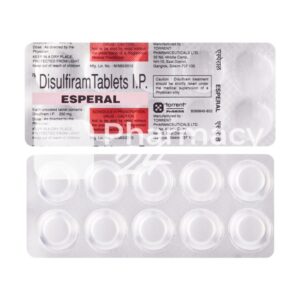
In brief
- Antabuse (disulfiram) is sold in some online pharmacies and may be available without a prescription in certain outlets, although it is prescription-only in the UK and most countries. Always check local regulations and the pharmacy’s legitimacy before purchasing.
- Antabuse is used in the treatment of alcohol dependence. It works by blocking aldehyde dehydrogenase, causing an unpleasant disulfiram–alcohol reaction if alcohol is consumed, which helps deter drinking.
- The usual dose for adults is 500 mg once daily for 1–2 weeks, then a maintenance dose of 250 mg daily, typically within a range of 125–500 mg.
- The form of administration is an oral tablet, commonly available in 250 mg and 500 mg strengths.
- It usually starts working within a few hours after taking the first dose, but its aversive effect is only relevant when alcohol is consumed.
- The effect can last throughout the day with daily dosing, and the alcohol-reaction risk may persist for up to 2 weeks after the last dose.
- Do not drink alcohol during treatment or for up to 2 weeks after stopping, as even small amounts can trigger flushing, palpitations, chest pain, breathlessness, dizziness, nausea, vomiting, and low blood pressure.
- The most common side effects are drowsiness, fatigue, headache, nausea, vomiting, and a metallic or garlic-like aftertaste.
- Would you like to try Antabuse without a prescription?
Latest Research Highlights: UK And EU Evidence On Disulfiram
- INN (International Nonproprietary Name): Disulfiram.
- Brand names available in United Kingdom: Antabuse.
- ATC code: N07BB01.
- Forms & dosages: Tablets 250 mg and 500 mg.
- Manufacturers in United Kingdom: Accord Healthcare, TEVA Pharmaceuticals, Mylan, and other regional generics.
- Registration status in United Kingdom: Prescription only.
- OTC / Rx classification: Prescription only (Rx).
Looking at the newer UK and European evidence from 2022 to 2025, disulfiram still has a place, but it is a very specific place.
It is not the medicine most patients are started on first, and it is not treated as a universal answer for alcohol dependence medication.
What the literature continues to show is simple enough for everyday pharmacy counselling.
When Antabuse is supervised and the patient is genuinely committed to abstinence, outcomes can be useful, especially as a deterrent against impulsive drinking.
When adherence is poor, the benefit drops away quickly, because the medicine only works if it is actually taken and alcohol is avoided.
That makes service model important in the UK and across Europe, where prescribing is often shaped by local alcohol teams, GP follow-up, pharmacy support, and structured counselling rather than a one-size-fits-all approach.
In practical terms, the evidence still supports disulfiram for selected patients who want a clear abstinence-based plan and can be monitored.
It is less convincing where routines are chaotic, alcohol use is hidden, or follow-up is inconsistent.
That is why supervised treatment remains the key theme in recent reviews and observational work.
| Outcome | When Supervised | When Adherence Is Poor | Practical UK/EU Takeaway |
|---|---|---|---|
| Abstinence | Better maintained in motivated patients | Falls quickly if doses are missed | Works best with alcohol team or pharmacist oversight |
| Relapse reduction | Deterrent effect can reduce impulsive drinking | Protection is weak without regular dosing | Useful for patients choosing strict abstinence |
| Adherence | Improves with supervision by clinician, family member, or service | Common barrier in routine self-management | Repeat review and counselling matter |
| Adverse events | Usually manageable with screening and monitoring | Alcohol exposure can trigger severe reactions | Hidden alcohol checks are essential |
The most useful data points for search and clinical framing are the INN disulfiram, ATC code N07BB01, and the standard tablet strengths of 250 mg and 500 mg.
Across the UK and EU, regulators such as the MHRA and EMA framework recognise disulfiram as a prescription medicine used for alcohol dependence, but local formularies and services decide how often it is offered.
That is why Antabuse UK search interest often reflects service access rather than a universal first-line recommendation.
In real-world practice, the strongest evidence-backed searches tend to be disulfiram, Antabuse, Antabuse UK, disulfiram prescription UK, alcohol dependence medication, supervised treatment, relapse prevention, and safety data.
Basic Antabuse Information
The basic facts matter before a patient even starts reading about side effects or dosing.
- INN (International Nonproprietary Name): Disulfiram.
- Brand names available in United Kingdom: Antabuse.
- ATC Code: N07BB01.
- Forms & dosages: Tablet 250 mg, 500 mg; rare injection not generally marketed.
- Manufacturers in United Kingdom: Accord Healthcare, TEVA Pharmaceuticals, Mylan, and various regional generics.
- Registration status in United Kingdom: Prescription only (Rx).
- OTC / Rx classification: Prescription only (Rx).
Clinical Effectiveness In The United Kingdom: Where Antabuse Fits In NHS Care
Patients usually ask one direct question first: “Will it actually help me stop drinking?”
For the right patient, it can help, but the context matters more than with many other medicines.
Disulfiram therapy is most useful when the person wants an abstinence-based approach and is willing to take a tablet consistently.
It can reduce impulsive drinking because the patient knows that alcohol can trigger an unpleasant reaction.
That psychological deterrent is a real part of its value in UK practice.
Common barriers are also very familiar to NHS alcohol services and community pharmacy teams.
People forget doses, stop once cravings ease, or underestimate alcohol in sauces, mouthwashes, cough mixtures, and toiletries.
Side effects can also put patients off, particularly if they were not counselled carefully before starting.
Where supervised dosing is built into care, outcomes tend to be better.
That supervision might come from a clinician, a pharmacist, a family member, or an alcohol service, depending on the patient’s set-up.
In a private clinic, the medicine may be discussed alongside lifestyle support and regular review, but the same principle applies: it works best when someone is actually helping with adherence.
Many UK patients will have already spoken to a GP, an alcohol team, or a pharmacist before starting, and that conversation often determines whether treatment is realistic.
A useful UK-style starting plan is usually 500 mg once daily for 1 to 2 weeks, then a maintenance dose around 250 mg daily, with a range of 125 mg to 500 mg depending on response and tolerability.
Treatment often continues for several months, and sometimes longer, alongside counselling or behavioural support.
- Best fit: motivated patient aiming for abstinence.
- Best setting: supervised dosing through a clinician, pharmacist, family member, or alcohol service.
- Best outcome: consistent daily use plus counselling.
- Common problem: missed doses and hidden alcohol exposure.
- Key UK support: GP review, alcohol team follow-up, and pharmacy counselling.
Indications And Expanded Uses: Approved Use, Off-Label Practice, And Patient Selection
People often wonder whether Antabuse is only for “severe alcoholism” or whether it can be used more selectively.
The core indication is alcohol dependence, and in the UK it is usually considered when abstinence is the goal and the patient understands the alcohol-disulfiram reaction.
That means patient selection is just as important as the prescription itself.
In real life, clinicians tend to look for patients who are motivated, able to avoid alcohol, and able to engage with monitoring and counselling.
Some private-clinic prescribing is more selective, but the principle is the same: the medicine is not a casual deterrent, and it should sit within support rather than replace it.
The ATC code N07BB01 places it firmly within drugs used in alcohol dependence.
Some patients will also hear the terms alcohol-aversion therapy or Antabuse treatment, which are widely used as plain-English descriptions.
An Esperal implant may be mentioned online, but that approach is controversial and not a mainstream UK model.
In practice, standard oral tablets remain the normal route.
- Indication
- The main approved reason for using a medicine.
- Off-label
- Using a medicine in a way not covered by its standard approved use.
- Supervised administration
- Taking the tablet with help from a clinician, pharmacist, family member, or alcohol service to improve adherence.
Selection also includes a very practical check: can the patient avoid hidden alcohol in foods, medicines, mouthwashes, and toiletries?
If the answer is no, the risk can outweigh the benefit.
Composition And Brand Landscape: Antabuse, Generics, And United Kingdom Naming
For most UK patients, the name Antabuse is the one they recognise first.
The INN is disulfiram, and that is the name used in clinical and regulatory settings.
Tablet strengths commonly seen are 250 mg and 500 mg.
Packaging is typically blister or bottle packs of 10, 20, 30, or 50 tablets, although the exact presentation depends on the product list available at the time.
| Country Or Region | Brand Name | Common Strengths | Typical Presentation |
|---|---|---|---|
| United Kingdom | Antabuse | 250 mg, 500 mg | Blister or bottle packs |
| France and EU | Esperal | 500 mg | Varies by local product |
| Spain | Antabus | 500 mg | Varies by local product |
| Russia | Тетурам, Эспераль | 150 mg, 500 mg | Varies by local product |
Generic substitution may be discussed by pharmacy staff, especially where the patient is collecting through Boots, LloydsPharmacy, Superdrug, or an online pharmacy service.
That conversation usually centres on whether the patient is getting the brand they expect, or a clinically equivalent generic disulfiram tablet.
Exact availability can vary, so the label on the dispensed pack is the safest guide.
In ordinary pharmacy language, “Antabuse tablets UK” and “disulfiram tablets” usually mean the same treatment family.
Contraindications And Special Precautions: Who Should Avoid Antabuse
Safety screening is not optional with disulfiram.
The alcohol–disulfiram reaction can be severe, and some patients should not take the medicine at all.
Warning
Recent alcohol intake within 12 to 24 hours is an absolute contraindication.
The same applies to severe myocardial or coronary disease, psychosis or severe mental impairment, hypersensitivity to disulfiram, pregnancy, breastfeeding, and severe hepatic insufficiency.
- Absolute contraindications: recent alcohol intake, severe myocardial or coronary disease, psychosis, hypersensitivity, pregnancy, breastfeeding, severe hepatic insufficiency.
- Relative precautions: mild to moderate liver or kidney disease, diabetes, epilepsy or seizure disorders, cerebrovascular disease.
- Driving and machinery: patients should be cautious if drowsy or unwell.
- Alcohol exposure: check labels on medicines, mouthwashes, and personal-care products.
- Timing: the reaction can still occur up to 2 weeks after the last dose.
That two-week window matters for surgery, social events, and emergency care, because alcohol exposure can come from places people do not expect.
If the patient is due to see a dentist, have an operation, or start a new medicine, it is worth flagging disulfiram early.
Patients with liver concerns need particular caution, and transaminases should be monitored where appropriate.
Dosage Guidelines: NHS-Style Initiation, Maintenance, And Special Groups
Questions about dose come up quickly, especially when a patient has been given a pack and wants to know how to begin.
| Group | Usual Approach | Notes |
|---|---|---|
| Adults | 500 mg once daily for 1 to 2 weeks, then 250 mg daily | Maintenance range 125 mg to 500 mg depending on response |
| Elderly | Start at the lower end | Monitor liver and renal function more closely |
| Children | Not recommended | Safety and efficacy data are lacking |
| Liver or kidney impairment | Use with caution | Avoid in severe hepatic impairment and monitor transaminases regularly |
In UK practice, dosing is not about chasing a perfect number.
It is about balancing the treatment goal, adherence, and side-effect tolerance.
Some patients do well on 250 mg daily, while others need a lower maintenance dose.
Repeat prescriptions, GP review, and pharmacy support all help keep the regimen steady.
If a dose is missed, it should be taken as soon as remembered, but not doubled up.
If it is nearly time for the next dose, the missed one should be skipped.
Overdose needs urgent medical attention, especially if there is severe nausea, vomiting, low blood pressure, or seizures.
Interactions Overview: Alcohol, Medicines, And Hidden Exposure
The headline interaction is alcohol, but hidden alcohol is the thing that catches many people out.
That includes cough syrups, sauces, desserts, mouthwashes, aftershaves, and some topical products.
| Common Source | Why It Matters | Practical Check |
|---|---|---|
| Cough syrups | May contain alcohol | Read the label or ask the pharmacist |
| Mouthwashes | Can trigger a reaction if alcohol-based | Choose an alcohol-free option |
| Aftershaves and toiletries | May expose the skin to alcohol | Check ingredients carefully |
| Sauces and desserts | Can contain small amounts of alcohol | Ask before eating if unsure |
The reaction can involve flushing, palpitations, chest pain, breathlessness, dizziness, low blood pressure, nausea, and vomiting.
It can be severe, so urgent help is needed if symptoms are marked.
- Flushing or facial redness.
- Palpitations or a racing heart.
- Chest pain or breathlessness.
- Dizziness or faintness.
- Nausea, vomiting, or low blood pressure.
In the UK, adverse reactions can be reported through the MHRA Yellow Card scheme, which supports safer use across pharmacy and primary care.
Pharmacists also check for medicine conflicts before dispensing, which is one reason disulfiram is better managed through a proper prescription pathway than by guesswork.
Cultural Perceptions And Patient Habits: What United Kingdom Patients Actually Do
People do not just take Antabuse; they worry about it, compare stories online, and ask the same questions in different ways.
On patient forums such as Patient.info and Mumsnet, the same themes appear again and again.
- Fear of the alcohol reaction.
- Uncertainty about whether it really works.
- Worry about side effects such as tiredness or nausea.
- Relief when the treatment is supervised.
- Concerns about stigma and keeping treatment discreet.
- Requests for help checking medicines and hidden alcohol.
UK patients also lean heavily on pharmacists for counselling, especially in community pharmacy settings.
Many check information through NHS apps, patient portals, or the NHS 111 advice route before starting treatment.
Family members are often asked to help with daily dosing, because routine and accountability make a real difference.
That is especially true when treatment is combined with counselling for several months or longer.
For some people, the deterrent effect feels reassuring; for others, the reaction is too frightening to make the medicine a good fit.
Availability And Pricing Patterns: NHS, Private, And Online Access In The United Kingdom
Disulfiram is prescription only in the UK, so access usually starts with a GP, alcohol service, or a private prescriber.
It may then be supplied through the NHS, via a private prescription, or through a legitimate online pharmacy that supports e-prescriptions and repeat dispensing.
In our online pharmacy, Antabuse is available without a prescription, with discreet delivery to United Kingdom in 5-14 days.
| Access Route | Typical Process | Cost Pattern | Notes |
|---|---|---|---|
| NHS prescription | Issued after clinical review | Depends on the UK nation and local charging rules | Often linked with alcohol services or GP follow-up |
| Private prescription | Prescriber writes and pharmacy dispenses | Varies by consultation and dispensing fees | May suit private clinic pathways |
| Online pharmacy | Electronic review and dispensing where permitted | Varies by service and pack size | Check registration and legitimacy before ordering |
Availability can differ across England, Scotland, Wales, and Northern Ireland, especially where prescription charges are handled differently.
Pack sizes and exact brand availability may also vary from one pharmacy to another.
Before ordering, patients should always check the regulator status of the service and the pharmacy registration details.
Comparable Medicines And Preferences: How Antabuse Compares With Alternatives
Disulfiram is only one option in alcohol dependence medication, and it is not the best choice for every patient.
The decision usually comes down to the treatment goal, the likelihood of adherence, and whether the patient wants a deterrent or craving reduction.
- Disulfiram: Best for abstinence-focused patients who want a clear deterrent; needs strong adherence and monitoring.
- Naltrexone: Often used when craving reduction is the main goal; may suit patients who do not want a deterrent model.
- Acamprosate: Often considered after detox when maintaining abstinence is the aim; tablet burden and adherence matter.
- Topiramate: Off-label option with some evidence for alcohol harm reduction; not a routine first choice.
For many UK patients, the practical questions are simple.
How many tablets a day?
Is liver monitoring needed?
Can the patient stick with it?
Will it fit alongside counselling and NHS alcohol services?
Disulfiram suits a very specific profile, which is why it remains part of the toolkit rather than a universal first pick.
Frequently Asked Questions About Antabuse
How long after drinking can disulfiram be started?
A person should be alcohol-free for 12 to 24 hours before starting.
What happens if I drink on Antabuse?
The reaction can cause flushing, palpitations, chest pain, breathlessness, dizziness, low blood pressure, nausea, and vomiting, and it can be severe.
Can I take Antabuse with other medicines?
It depends on the medicine, so a pharmacist or prescriber should check for interactions before use.
Do I need liver blood tests?
Monitoring is often needed, especially if there is liver disease or if treatment continues for some time.
Guidelines For Proper Use: Pharmacist Counselling, Portals, And Ongoing Support
Safe use depends on routine, honesty, and a bit of planning.
- Never start after recent alcohol intake.
- Take the tablet at the same time every day.
- Read labels on medicines, mouthwashes, sauces, and toiletries.
- Keep tablets in the original packaging.
- Store at room temperature, protected from light and moisture.
- Tell every clinician about disulfiram before surgery or new medicines.
- Do not double up doses if one is missed.
- Seek urgent help if overdose symptoms occur.
- Use NHS patient portals, GP online services, or pharmacy repeat prescription systems to support adherence.
- Continue counselling and relapse planning, and escalate back to alcohol services if cravings return.
Regular transaminase monitoring is appropriate where advised, especially in liver disease or longer treatment courses.
For many patients, the best results come from simple, pharmacy-led habits: consistent dosing, early review, and quick advice when something does not feel right.
That is where disulfiram can become more than just a tablet in a box.
It becomes part of a proper abstinence plan.
Delivery Across United Kingdom
| City | Region | Delivery time |
|---|---|---|
| London | England | 5-7 days |
| Birmingham | England | 5-7 days |
| Manchester | England | 5-7 days |
| Leeds | England | 5-7 days |
| Liverpool | England | 5-7 days |
| Sheffield | England | 5-7 days |
| Bristol | England | 5-7 days |
| Glasgow | Scotland | 5-7 days |
| Edinburgh | Scotland | 5-7 days |
| Cardiff | Wales | 5-7 days |
| Belfast | Northern Ireland | 5-7 days |
| Newcastle upon Tyne | England | 5-9 days |
| Nottingham | England | 5-9 days |
| Leicester | England | 5-9 days |