Allopurinol
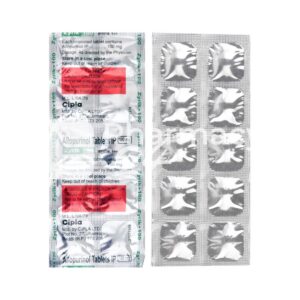
In brief
- In our pharmacy, you can buy allopurinol without a prescription, with delivery in 5–14 days throughout United Kingdom. Discreet and anonymous packaging.
- Allopurinol is used to treat gout and chronic hyperuricaemia, to prevent uric acid kidney stones and for tumour lysis syndrome prophylaxis; it is a xanthine oxidase inhibitor that reduces uric acid production.
- The usual dose for adults starts at 100 mg once daily and is titrated according to serum uric acid: typical maintenance 200–300 mg/day for mild cases, 400–600 mg/day for more severe disease, with doses up to 800 mg/day in specialist care; doses must be reduced in renal impairment and started low in the elderly.
- Administered orally as tablets (commonly 100 mg and 300 mg film-coated tablets); some regions offer 200 mg/400 mg strengths or oral suspension formulations.
- Serum uric acid usually begins to fall within days (often 1–2 weeks); clinical improvement in gout symptoms and tophi may take several weeks to months; it should not be started to treat an acute gout flare.
- The effect is maintained with once-daily dosing thanks to the long-acting metabolite oxipurinol, so therapeutic effect is effectively sustained over 24 hours; chronic therapy is often indefinite for gout prevention.
- Avoid excessive alcohol while taking allopurinol, as alcohol increases uric acid and the risk of gout flares and may reduce treatment benefit; discuss alcohol intake with your clinician.
- The most common side effect is skin rash (which can herald serious reactions and requires immediate cessation and medical review); other common effects include gastrointestinal upset, liver enzyme elevations, headache and drowsiness, and the drug can precipitate gout flares when initiated.
- Would you like to try allopurinol without a prescription?
Basic Allopurinol Information
- INN (International Nonproprietary Name): Allopurinol.
- Brand Names Available In United Kingdom: Generic allopurinol supplied by Teva, Sandoz, Mylan, Accord and Zentiva, and originator brand Zyloric (Sanofi).
- ATC Code: M04AA01.
- Forms & Dosages: Tablets are the standard oral forms, commonly 100 mg and 300 mg.
- Manufacturers In United Kingdom: Widely supplied by multinational generic manufacturers listed above and distributed through UK wholesalers and pharmacy chains.
- Registration Status In United Kingdom: Registered and widely available via MHRA‑regulated supply routes.
- OTC / Rx Classification: Prescription‑only (Rx) in the UK.
Latest Research Highlights (UK + EU) — Key Studies 2022–2024
Worried that allopurinol might no longer be first choice after recent studies?
Recent UK and European clinical research between 2022 and 2024 continues to support allopurinol as the first‑line xanthine oxidase inhibitor for chronic hyperuricaemia and gout when used in a treat‑to‑target approach.
Randomised trials and large observational registries report improved serum urate control and fewer flares when titration aims for serum urate below 6 mg/dL.
Comparative analyses across European cohorts show broadly similar urate‑lowering effectiveness between allopurinol and febuxostat, while cardiovascular safety differences influence individual prescribing decisions.
Studies also document greater tophi regression over 12–24 months in patients receiving urate‑lowering therapy versus no long‑term therapy.
Safety surveillance reiterates rare but serious cutaneous adverse reactions early in treatment, with severe cutaneous adverse reaction events uncommon but clinically important.
For tumour lysis syndrome prophylaxis in oncology practice, short‑term higher dosing regimens (600–800 mg/day) remain a specialist option with careful monitoring.
Below is a concise table with study outcome categories and available real data points where specified.
| Outcome | Efficacy (Reaching Target SUA) | Safety (Rash / SCAR Rates) | Follow‑Up Duration |
|---|---|---|---|
| Randomised Trials | Not specified | Not specified | 12–24 months (reported) |
| Observational Registries | Not specified | Not specified | 12–24 months (reported) |
| Tumour Lysis Prophylaxis | Short‑term urate control with 600–800 mg/day | Not specified | Days–weeks (specialist use) |
Clinical Effectiveness In The UK — NHS Treatment Outcomes & Patient Experience
Are patients actually doing better on allopurinol in NHS practice?
Allopurinol remains the predominant first‑line urate‑lowering drug across NHS services.
Real‑world GP and audit data show superior long‑term serum urate control when initiation is combined with patient education and prophylactic anti‑inflammatory cover such as colchicine or an NSAID during titration.
Patients typically report fewer gout flares after three to six months of effective titration to target serum urate.
Non‑adherence is a major determinant of recurrent attacks, and stopping therapy early is commonly linked to inadequate counselling about early flare risk.
Primary‑care led monitoring is standard and usually includes baseline renal and liver tests with periodic checks during dose titration.
Specialist rheumatology or metabolic clinics will escalate titration where needed and manage complex features such as tophi.
- NHS Care Pathway Steps: initial assessment and blood tests, start low (often 100 mg/day), counselling on prophylaxis for flares, scheduled serum urate checks, stepwise titration to target, annual review.
| Patient‑Reported Outcome | Typical Timeframe |
|---|---|
| Reduced Flare Frequency | 3–6 months |
| Improved Daily Function (less pain) | 3–12 months |
| Tophi Regression | 12–24 months |
Indications & Expanded Uses — MHRA‑Approved And NHS / Off‑Label Practices
What conditions is allopurinol officially used for, and where might clinicians use it off‑label?
MHRA‑aligned indications include chronic symptomatic hyperuricaemia (gout) and prevention of uric acid nephrolithiasis.
Tumour lysis syndrome prophylaxis is an accepted specialist use in oncology settings and is widely practiced on NHS oncology wards when appropriate.
NHS clinicians also prescribe allopurinol for recurrent uric acid stones and certain enzyme disorders causing hyperuricaemia, and in selected off‑label scenarios when anticipated benefits outweigh risks.
Important safety practice: do not start allopurinol during an acute gout flare and always titrate gradually to reduce the risk of precipitating further attacks.
Paediatric use is restricted to specialised indications such as chemotherapy‑related hyperuricaemia and rare inherited disorders, with dosing guidance for specialist teams.
- Approved Uses: chronic gout, prevention of uric acid kidney stones, tumour lysis prophylaxis in oncology.
- Common NHS Off‑Label Uses: selected metabolic enzyme disorders and recurrent uric acid stone prevention where standard measures fail.
MHRA Note: Allopurinol is prescription‑only and must be initiated with appropriate baseline monitoring and follow‑up.
Composition & Brand Landscape — Active Ingredients, UK Brands, Generics
Which strengths and brands will my local pharmacy stock?
The active ingredient is allopurinol (INN), a xanthine oxidase inhibitor that reduces uric acid synthesis.
In the UK and EU, allopurinol is widely available as generics from Teva, Sandoz, Mylan, Accord and Zentiva, and as the originator brand Zyloric by Sanofi.
Common oral tablet strengths are 100 mg and 300 mg, with occasional 200 mg or 400 mg presentations in some regions or compounded forms for specialist needs.
| Brand / Supplier | Dosage Forms | Common Pack Sizes |
|---|---|---|
| Teva (Generic) | Tablets 100 mg, 300 mg | Blister packs (various) |
| Sandoz (Generic) | Tablets 100 mg, 300 mg | Blister packs (various) |
| Zyloric (Sanofi) | Tablets 100 mg, 300 mg | Blister packs (various) |
Allopurinol is classified in the ATC system as M04AA01 among antigout preparations inhibiting uric acid production.
Contraindications & Special Precautions — High‑Risk Groups And Daily Life Restrictions
Who should avoid allopurinol and what checks are needed before starting?
Absolute contraindications include known hypersensitivity to allopurinol or any excipients and a history of severe cutaneous adverse reactions such as Stevens‑Johnson Syndrome or TEN.
Do not initiate allopurinol during an acute gout attack.
Relative cautions include chronic renal or hepatic impairment, pregnancy and breastfeeding where use is only if essential, and carriers of HLA‑B*5801 who have an increased risk of severe cutaneous adverse reactions.
Elderly patients should always start at low doses with careful monitoring.
- Absolute Contraindications: prior SCARs, known hypersensitivity, acute gout attack.
- Relative Contraindications: renal impairment (dose reduce), hepatic disease, HLA‑B*5801 positivity in high‑risk ethnic groups, pregnancy/breastfeeding only if essential.
Lifestyle advice: there is no specific driving restriction, but patients should stop driving if they feel drowsy or unwell, and alcohol intake should be moderated as it can worsen hyperuricaemia.
Dosage Guidelines — NHS‑Recommended Regimens And Special Population Adjustments
How is allopurinol started and adjusted across different patients?
Standard adult initiation commonly starts at 100 mg once daily with gradual titration based on serum urate levels.
Maintenance dosing often lies between 200–300 mg/day for mild hyperuricaemia and 400–600 mg/day for more severe cases.
Maximum daily doses up to 800 mg may be used when necessary under specialist supervision.
For tumour lysis prophylaxis, short‑term higher dosing of 600–800 mg/day in divided doses is used in specialist practice.
Renal impairment requires dose reduction; for example, patients with creatinine clearance below 20 mL/min may be limited to approximately 100 mg/day.
Paediatric dosing for the specific oncology or inherited metabolic indications is typically 10–20 mg/kg/day in divided doses up to a maximum of 400 mg/day under specialist care.
| Condition / Population | Typical Start | Typical Maintenance / Max |
|---|---|---|
| Adult Gout | 100 mg once daily | 200–600 mg/day; up to 800 mg/day if needed |
| Tumour Lysis Prophylaxis | Specialist initiation | 600–800 mg/day (short term) |
| Renal Impairment (CrCl <20 mL/min) | Start lower | Approx. 100 mg/day maximum |
| Children (Selected Indications) | 10–20 mg/kg/day divided | Max 400 mg/day |
Always take baseline renal and liver tests and repeat monitoring during titration.
Interactions Overview — Drugs, Food/Drink And MHRA Yellow Card Signals
What should patients avoid taking alongside allopurinol?
Azathioprine and mercaptopurine interact dangerously with allopurinol and require dose adjustment or avoidance because of the risk of life‑threatening myelosuppression.
Theophylline toxicity may be increased with allopurinol.
Some diuretics appear associated with a higher frequency of skin reactions when combined with allopurinol.
Concomitant uricosuric agents such as probenecid change uric acid handling and need specialist coordination.
Alcohol raises serum urate and can worsen gout control; hydration and moderation of alcohol intake are advised.
MHRA Yellow Card reports highlight cutaneous reactions and liver enzyme changes as leading safety signals, and all suspected adverse reactions should be reported.
- Major interactions to avoid or review: azathioprine/mercaptopurine, theophylline, certain diuretics, and uncoordinated uricosurics.
Cultural Perceptions & Patient Habits — UK Patient Forums And Healthcare Behaviour
What do people actually say online about starting allopurinol?
UK patient forums such as Patient.info and GP surgery discussion boards commonly feature concerns about starting allopurinol, especially fear of initial flares and worries about rash.
Many patients express a preference for generic allopurinol on cost grounds and place high trust in pharmacist counselling from community chains such as Boots or LloydsPharmacy.
Patients often contact NHS 111 or their GP before starting treatment, and use of the NHS app and Electronic Prescription Service helps with repeat prescriptions and sharing lab results.
Online pharmacies are increasingly used for convenience, but patients are advised to confirm MHRA‑registered suppliers and use GP e‑prescribing to avoid counterfeit or unregulated sources.
Summary themes from UK forums: desire for clear counselling about early flares, a preference for generics, and reliance on community pharmacists for medication queries.
- Trusted NHS Resources: NHS.uk guidance pages, Patient.info condition pages, and MHRA safety advice.
Availability & Pricing Patterns — Boots, LloydsPharmacy, NHS Prescriptions And Regional Differences
How much will a prescription cost and where can I collect allopurinol?
Allopurinol is prescription‑only across the UK and available from community pharmacy chains such as Boots, LloydsPharmacy and Superdrug, and via NHS prescription routes.
In England patients usually pay the NHS prescription charge per item unless exempt, while prescriptions are free in Scotland, Wales and Northern Ireland, creating regional cost differences.
Generics dominate the market and are substantially cheaper than originator brands such as Zyloric.
Electronic prescribing simplifies repeat dispensing and many online pharmacies in the UK supply allopurinol by electronic prescription.
| Supply Route | Typical Cost Pattern | Notes |
|---|---|---|
| NHS Prescription (England) | Prescription charge per item unless exempt | Generic substitution common |
| Community Pharmacies | Generics cheaper than brands | Boots, LloydsPharmacy, Superdrug commonly stock |
| Online Pharmacies | Variable; often competitive | Ensure MHRA‑registered suppliers and UK prescriber |
In our online pharmacy, allopurinol is available without a prescription, with discreet delivery to United Kingdom in 5–14 days.
Comparable Medicines & Prescribing Preferences — Alternatives Used In The NHS
What are the sensible alternatives if allopurinol is unsuitable?
Alternatives include febuxostat, a xanthine oxidase inhibitor used when allopurinol is not tolerated, and uricosuric agents such as probenecid or sulfinpyrazone for underexcretors with good renal function.
Rasburicase is reserved for tumour lysis in specialist settings and is not a routine option in primary care.
NHS prescribing generally favours allopurinol first‑line for cost‑effectiveness, tolerability and long experience, with febuxostat considered when contraindications or intolerance exist and cardiovascular history is reviewed.
| Medicine | When Considered | Pros | Cons |
|---|---|---|---|
| Allopurinol | First‑line for most patients | Well‑tolerated, low cost | Small SCAR risk, requires titration |
| Febuxostat | Allopurinol intolerance | Effective urate lowering | Cardiovascular considerations |
| Probenecid | Underexcretion with good renal function | Uricosuric option | Drug interactions, renal function dependent |
FAQ
Q1: Will allopurinol stop gout attacks immediately?
A1: No; allopurinol lowers serum urate over weeks to months, and flares can occur early on, so prophylactic colchicine or an NSAID is often advised during initiation.
Q2: How long do I need to take allopurinol?
A2: Treatment is often long‑term to keep serum urate at target and prevent recurrence, with individual review of duration.
Q3: What if I get a rash while taking allopurinol?
A3: Stop the medicine immediately and seek urgent medical review because a rash can signal a severe reaction such as Stevens‑Johnson Syndrome or TEN.
Q4: Can I buy allopurinol over the counter or online without a prescription?
A4: Allopurinol is prescription‑only in the UK; use NHS e‑prescribing or a registered UK pharmacy service to obtain it safely.
When To Call
Call NHS 111 or your GP urgently for sudden rash, fever or widespread skin changes, and call 999 for breathing difficulties or signs of a life‑threatening allergic reaction.
Practical Guidelines For Proper Use — Pharmacist Counselling & NHS Patient Support
What will your pharmacist tell you when you collect a prescription for allopurinol?
Pharmacist counselling should cover the indication, expected timeline to benefit, and the risk of early flares that can occur when urate is mobilised.
Counselling should also include advice about prophylactic colchicine or NSAID use during titration, how to recognise rash or fever, and the need to stop and seek urgent review if these occur.
Baseline tests typically include renal function, liver enzymes and full blood count, with periodic monitoring during titration and at least annual review thereafter.
Use NHS patient portals such as the NHS app and GP online services to view lab results and request repeat prescriptions.
- Pharmacist Counselling Checklist: indication and aim, how long to expect benefits, early flare prevention, warning signs for rash, storage below 25°C, missed dose advice (take when remembered unless close to next dose), do not double doses.
Provide written leaflets and signpost to NHS.uk, Patient.info and the MHRA Yellow Card scheme for reporting adverse events.
Delivery Across United Kingdom
| City | Region | Delivery Time |
|---|---|---|
| London | England | 5–7 days |
| Birmingham | England | 5–7 days |
| Manchester | England | 5–7 days |
| Glasgow | Scotland | 5–7 days |
| Leeds | England | 5–7 days |
| Liverpool | England | 5–7 days |
| Bristol | England | 5–7 days |
| Newcastle upon Tyne | England | 5–9 days |
| Sheffield | England | 5–9 days |
| Edinburgh | Scotland | 5–7 days |
| Cardiff | Wales | 5–7 days |
| Belfast | Northern Ireland | 5–7 days |
| Coventry | England | 5–9 days |
| Leicester | England | 5–9 days |
| Nottingham | England | 5–9 days |