Neoral
Neoral
- In pharmacies and through some licensed online sellers, Neoral may be available to purchase without a prescription in certain markets, but it is officially a prescription-only medicine in most regions, including the UK. Availability, pack size and delivery depend on local regulations and stock.
- Neoral contains cyclosporine and is used to prevent organ rejection after transplantation and to treat certain autoimmune conditions such as rheumatoid arthritis and severe psoriasis. It works as a calcineurin inhibitor, suppressing T-cell activation and reducing the immune response.
- The usual dose depends on the condition: for transplant prevention, 10–15 mg/kg/day initially in divided doses, then typically 2–6 mg/kg/day; for rheumatoid arthritis, about 2.5 mg/kg/day, which may increase to 4 mg/kg/day; for severe psoriasis, about 2.5 mg/kg/day, which may increase to 5 mg/kg/day as needed.
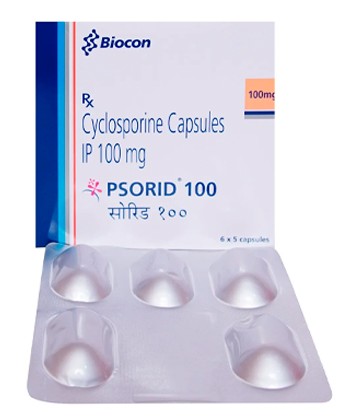
- Neoral is administered by mouth as liquid-filled capsules or as an oral solution (100 mg/mL).
- It does not work immediately; the onset is usually gradual, with measurable effects over days to weeks, and assessment of response is often made after several weeks of treatment.
- The duration of action is relatively long, so it is usually taken twice daily and may be continued long-term after transplantation, or for weeks to months in autoimmune disease depending on response and tolerability.
- Avoid or strictly limit alcohol, as it may increase strain on the liver and worsen side effects or interactions; discuss alcohol use with a doctor or pharmacist before taking cyclosporine.
- The most common side effects include kidney problems, high blood pressure, gum swelling, increased hair growth, headache, tremor, nausea, diarrhoea, and increased risk of infection.
- Would you like to try Neoral without a prescription?
Latest Research Highlights In The UK And EU
People asking about neoral usually want one straight answer: does ciclosporin still matter in modern specialist care?
The short answer is yes, especially in transplant medicine, and in selected cases of severe psoriasis and rheumatoid arthritis under specialist supervision.
Cyclosporine, ATC code L04AD01, remains a prescription-only ciclosporin immunosuppressant in oral capsule form and as oral solution, with the key strengths used in UK and EU practice being 25 mg, 50 mg, 100 mg capsules and oral solution 100 mg/mL.
It is a calcineurin inhibitor, and Neoral is not available as tablets, injection, or a topical product.
Recent 2022–2025 evidence from UK and European practice continues to support its role where rapid immunosuppression is needed, but only when renal function, blood pressure, and blood levels are watched closely.
That monitoring is important because the main safety signals are well known: renal dysfunction, hypertension, infection risk, tremor, and the need for trough-level monitoring.
In the NHS, this is usually specialist-led, often through transplant, renal, rheumatology, or dermatology teams, while community pharmacists reinforce adherence, timing, and adverse-effect checks.
| Study area | Setting | Outcome | Practical takeaway |
|---|---|---|---|
| Transplant medicine | UK and EU specialist care | Continued use for rejection prevention with blood-level guided dosing | Consistency of dosing and regular monitoring remain central to graft protection |
| Severe psoriasis | Specialist dermatology | Useful when faster control is needed, but toxicity limits duration | Review early and stop if benefit is not clear enough to justify renal risk |
| Rheumatoid arthritis | Rheumatology services | Can help selected patients who need specialist immunosuppression | Expect response review after the early treatment window and adjust carefully |
| Monitoring and safety | NHS pathways and community pharmacy support | Renal dysfunction, hypertension, and infection remain the main concerns | Check creatinine, blood pressure, symptoms, and interacting medicines regularly |
For dosing context, initiation is typically 10–15 mg/kg/day in transplantation, 2.5–5 mg/kg/day in severe psoriasis, and 2.5–4 mg/kg/day in rheumatoid arthritis.
Basic Neoral Information
- INN (International Nonproprietary Name): Cyclosporine
- Brand names available in United Kingdom: Neoral, with supply sometimes varying by procurement and pharmacy sourcing
- ATC Code: L04AD01
- Forms & dosages: capsules 25 mg, 50 mg, 100 mg; oral solution 100 mg/mL
- Manufacturers in United Kingdom: Novartis originator, with local generics and licensed supplies in some markets
- Registration status in United Kingdom: prescription only, not available OTC
- OTC / Rx classification: prescription only
Clinical Effectiveness In The NHS Context
Patients often want to know whether neoral “works properly” in real life, not just on paper.
In NHS practice, effectiveness means more than symptom reduction or rejection prevention.
- Efficacy
- How well ciclosporin performs under controlled specialist use when the dose, formulation, and monitoring are all correct.
- Practical effectiveness
- How well it works for a real person who must take it twice daily, attend blood tests, avoid interacting medicines, and stay on the same supply where possible.
- Patient-centred success
- Better symptom control, stable graft function, improved quality of life, and a plan that the patient can actually follow.
Rheumatoid arthritis is usually reviewed after 8 weeks, severe psoriasis after 6 weeks, and autoimmune treatment generally after 12–16 weeks.
If the benefit is not clear by then, the balance can tip towards harm, especially if kidney function begins to drift or blood pressure rises.
That is why pharmacy counselling matters so much in the UK.
Patients often rely on NHS follow-up letters, patient portals, and repeat-dispensing notes to keep track of dose changes, while brand consistency helps avoid confusion when the pack looks different.
Indications And Expanded Use In UK Practice
Which patients are actually given neoral under UK care?
The answer is narrow and specialist-led.
Neoral is prescription only in all regions and is not an over-the-counter medicine.
- Licensed or specialist uses: organ transplantation to prevent rejection, rheumatoid arthritis, and severe psoriasis.
- Hospital-led off-label practice: selected severe autoimmune disorders where specialists judge the benefits to outweigh the risks.
- When it is usually not chosen: routine self-treatment, mild inflammatory skin disease, or any situation where blood monitoring cannot be arranged reliably.
In transplant medicine, ciclosporin may be chosen when reliable immunosuppression is needed quickly and a specialist team can monitor trough levels.
In psoriasis and rheumatoid arthritis, it is usually used when other approaches are unsuitable, ineffective, or too slow to help.
Many patients ask whether the medicine is “strong” and whether it can be stopped once things improve.
That is exactly where specialist oversight matters, because some courses are time-limited, while transplant use may continue indefinitely.
The benefit-versus-risk review is especially important when there is hypertension, renal impairment, active infection, or a history of skin cancer risk factors.
Composition, Brand Names And UK Brand Landscape
People often notice the box first and the active ingredient second, which is why brand clarity matters.
Neoral contains ciclosporine, and the originator brand is Novartis.
Common dosage forms are capsules in 25 mg, 50 mg, and 100 mg strengths, plus oral solution 100 mg/mL.
Packaging may differ slightly between countries, and names may appear as cicloporina, ciclosporine, or other local spellings outside the UK.
| Brand | Region | Dosage forms | Notes |
|---|---|---|---|
| Neoral | EU and wider markets | Capsules, oral solution | Main UK-relevant brand name; local generic supply may also appear |
| SandIMMUNE | US and EU | Capsules, oral solution | Another Novartis-associated ciclosporin brand |
| Gengraf | US | Capsules, oral solution | AbbVie, formerly Abbott |
| Apo-cycloSPORINE | Canada | Capsules, oral solution | Apotex |
UK patients sometimes worry when a supply switch leads to a different-looking pack from an NHS pharmacy or a private supplier.
That anxiety is understandable, but the active ingredient may still be the same.
Even so, consistency matters with ciclosporin because monitoring and blood levels are part of safe use.
Contraindications And Special Precautions
What should make a patient stop and check before taking neoral?
These are the red flags that matter most in UK practice.
- Do not use: known hypersensitivity to cyclosporine or excipients, uncontrolled hypertension, malignancy history, severe renal impairment, and in psoriasis if there has been previous PUVA, methotrexate, coal tar, or radiation treatment because of malignancy risk.
- Use with caution: liver dysfunction, active infection, nephrotoxic medicines such as NSAIDs or aminoglycosides, older age, pregnancy, and breastfeeding when benefits outweigh risk.
Everyday safety also matters.
If tremor or dizziness affects driving, that needs attention before getting behind the wheel.
Alcohol can add to liver and blood pressure burden, so caution is sensible.
Infections need prompt attention because ciclosporin suppresses the immune response.
UK patients usually want a simple rule: if there is fever, worsening swelling, reduced urine output, very high blood pressure readings, or a new rash, contact the transplant team, rheumatology nurse, GP, or NHS 111 depending on urgency.
Dosage Guidelines And Adjustments
How much neoral is usually prescribed?
The dose depends entirely on the condition being treated, blood levels, and kidney function.
| Condition | Starting dose | Maintenance dose | Monitoring | Review timeline |
|---|---|---|---|---|
| Organ transplantation | 10–15 mg/kg/day by mouth, divided every 12 hours | 2–6 mg/kg/day every 12 hours | Blood levels, kidney function, blood pressure | Specialist-led and ongoing |
| Rheumatoid arthritis | 2.5 mg/kg/day by mouth, divided every 12 hours | May increase to 4 mg/kg/day | Kidney function and symptom response | Assess after 8 weeks |
| Severe psoriasis | 2.5 mg/kg/day by mouth, divided every 12 hours | May increase up to 5 mg/kg/day | Blood pressure, kidney function, skin response | Assess response at 6 weeks |
Children may need higher mg/kg dosing, while older patients should usually stay on the lowest effective dose.
Renal impairment calls for very careful individualisation, and hepatic impairment also needs close titration, especially with oral solution because bioavailability can vary.
NHS specialists often provide written dose schedules, and a good community pharmacist will reinforce when to take each dose, what to do if one is missed, and how to store it correctly.
Oral solution should not be refrigerated because precipitation may occur, and it is best kept in the original bottle.
Interactions: Food, Drink And Medicines
Cyclosporine has a narrow safety margin, so interaction checks are not optional.
Before starting anything new, including an over-the-counter item from Boots, LloydsPharmacy, or Superdrug, it is worth asking a pharmacist or prescriber.
- Medicines that raise toxicity risk: nephrotoxic drugs such as NSAIDs and aminoglycosides, plus other medicines that can push kidney function or blood pressure in the wrong direction.
- Medicines that lower effect: any medicine that changes ciclosporin exposure should be checked before use, because blood levels can shift unexpectedly.
- Food and drink: alcohol should be treated cautiously, and excess caffeine may worsen tremor or blood pressure symptoms in sensitive patients.
Tea and coffee are not usually the main problem, but anything that increases tremor or palpitations can make side effects feel worse.
If side effects or an interaction are suspected, the UK Yellow Card scheme is the right route for reporting concerns when appropriate, alongside normal pharmacist and prescriber advice.
That is particularly important with ciclosporin UK use, because subtle interaction changes can become clinically meaningful very quickly.
Cultural Perceptions And Patient Habits In The UK
UK patients rarely manage a medicine like neoral in isolation.
They often check NHS pages, ask the pharmacist at the counter, and compare experiences on forums such as Patient.info or Mumsnet.
That habit makes sense when side effects are visible and worrying.
- “Is it safe long term?”
- It can be, but only with specialist follow-up and regular blood and blood pressure monitoring.
- “Will I notice side effects?”
- Some people do, especially with gum swelling, increased body hair, tremor, fatigue, or infection susceptibility.
- “Can I switch brands?”
- Switching needs care because the appearance may change and the supply should be kept consistent where possible.
Visible changes such as hirsutism or gingival hyperplasia can be upsetting, so counselling should be honest and non-judgemental.
NHS 111 can help with urgent symptom questions, but dose changes should still come from the specialist team.
A calm explanation from a pharmacist often prevents panic, especially when the pack looks different after a repeat prescription.
Availability And Pricing Patterns Across The UK
Neoral is prescription only and supplied as capsules or oral solution, with Novartis as the originator and generic alternatives available in some markets.
In the UK, access may be through the NHS, a private prescription, or an online pharmacy.
Price is important, but for ciclosporin the bigger issue is continuity, authenticity, and proper monitoring.
| Channel | Likely cost pattern | Prescription type | Notes |
|---|---|---|---|
| NHS pharmacy | Standard NHS prescription charges may apply in England | NHS prescription | Scotland, Wales, and Northern Ireland have different patient-facing cost structures |
| Boots | Varies by prescription route | NHS or private | Pharmacist counselling is useful when packs change |
| LloydsPharmacy | Varies by prescription route | NHS or private | Useful for repeat supply and explanation of brand switches |
| Superdrug | Varies by prescription route | Private or partnered services | Convenient for patients who compare access options |
| Online pharmacy | Depends on supply and prescription type | Private or NHS-linked | In our online pharmacy, neoral is available without a prescription, with discreet delivery to United Kingdom in 5-14 days |
Packaging can vary by distributor, which sometimes confuses patients unless it is explained clearly at the point of supply.
For cyclosporine, the safest decision is rarely the cheapest sticker price; it is the product that can be supplied consistently and monitored properly.
Comparable Medicines And Prescribing Preferences
What happens when neoral is not the best fit?
Specialists may look at other immunosuppressants depending on the organ involved and the patient’s previous response.
- Neoral: well established, flexible oral forms, but needs specialist monitoring.
- Tacrolimus: another calcineurin inhibitor, often preferred in some transplant protocols because it has a different adverse-effect profile.
- Mycophenolate mofetil: commonly used in combination rather than as a direct substitute.
- Sirolimus: used in selected situations, including some non-renal transplants.
Local formulary decisions and the type of transplant both matter.
Patients often search for Neoral versus SandIMMUNE efficacy, but switching decisions are not based on the brand name alone.
The active ingredient may be cyclosporine, yet the formulation choice and monitoring plan still need specialist judgement.
That is why a transplant pharmacist or clinic nurse will often explain why one pack is being continued rather than swapped automatically.
Frequently Asked Questions
What should I do if I miss a dose?
Take it as soon as you remember unless the next dose is close.
Do not double up.
How is an overdose handled?
Seek immediate medical help, because acute toxicity can include kidney dysfunction, hypertension, and electrolyte problems.
Why must Neoral be stored at 20–25°C and not refrigerated?
The oral solution can precipitate if chilled, so it should be kept at room temperature and protected from light and moisture.
Can I switch between brands?
Only with advice from the NHS team or prescriber, especially if you use the oral solution or have had a recent dose adjustment.
Proper Use, Monitoring And Support In The UK
How do you get the best and safest result from neoral?
Take it exactly as prescribed, do not stop abruptly unless a doctor tells you to, and keep it in the original packaging during transport.
Transplant treatment may continue indefinitely, while autoimmune courses are usually reviewed after 12–16 weeks and stopped if they are not helping enough.
- Monitoring
- Regular checks of kidney function, blood pressure, blood levels, infection symptoms, and overall response.
- Adherence
- Taking each dose at the right time, in the right way, without unnecessary missed doses or brand confusion.
- Red flags
- Reduced urine, very high blood pressure, fever, worsening tremor, severe infection symptoms, or anything suggesting acute toxicity.
Community pharmacists can help with repeat prescriptions, storage advice, missed-dose guidance, and questions after a supply change.
NHS patient portals and specialist nurses are also useful for tracking results and dose instructions.
If vomiting stops a dose from being absorbed, or if side effects worsen after a change, the specialist team should be contacted promptly.
For UK patients, the pharmacist is not a side note in ciclosporin care; the pharmacist is one of the main safety checks.
Delivery Across United Kingdom
| City | Region | Delivery time |
|---|---|---|
| London | England | 5-7 days |
| Birmingham | England | 5-7 days |
| Manchester | England | 5-7 days |
| Leeds | England | 5-7 days |
| Glasgow | Scotland | 5-7 days |
| Edinburgh | Scotland | 5-7 days |
| Liverpool | England | 5-7 days |
| Bristol | England | 5-7 days |
| Cardiff | Wales | 5-7 days |
| Belfast | Northern Ireland | 5-7 days |
| Sheffield | England | 5-9 days |
| Nottingham | England | 5-9 days |
| Newcastle upon Tyne | England | 5-9 days |
| Leicester | England | 5-9 days |
| Coventry | England | 5-9 days |