Betnovate
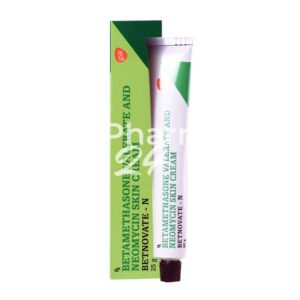
In brief
- Available from community and hospital pharmacies and licensed suppliers; Betnovate (betamethasone valerate) is classified as a prescription-only medicine (Rx) and should be supplied with a valid prescription — while it may sometimes be sold without a prescription in some regions or unregulated outlets, this is not recommended.
- Betnovate is used to treat inflammatory skin conditions such as eczema, psoriasis, lichen planus and dermatitis; it is a potent topical corticosteroid that reduces inflammation, itching and redness by activating glucocorticoid receptors, suppressing inflammatory cytokines and causing local vasoconstriction.
- Usual dosage: apply a thin film to the affected area once to twice daily (commonly 1–2 times daily) for up to 2–4 weeks; scalp lotions are used sparingly once to twice daily; use the lowest effective amount for the shortest duration, with special caution in children and on thin or facial skin.
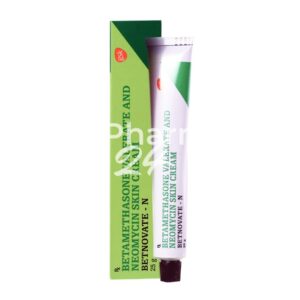
- Form of administration: topical application — cream, ointment or lotion/scalp applicator; combination products (e.g. with clioquinol or neomycin) are available in some markets.
- Onset time: symptomatic relief (reduced itching and burning) may begin within hours, with visible improvement in inflammation often seen within 24–48 hours.
- Duration of action: clinical effects typically persist for around 24 hours after application, which is why once- or twice-daily dosing is usual; prolonged or extensive use can produce longer-lasting local or systemic effects.
- Alcohol warning: there is no specific interaction between topical Betnovate and alcohol, but excessive alcohol may worsen some skin conditions and general health — avoid alcohol if you develop systemic corticosteroid side effects or are taking systemic medicines that interact with alcohol.
- The most common side effects are local and mild, including transient burning or stinging, itching, irritation, skin dryness or peeling; with prolonged or extensive use there is increased risk of skin atrophy, stretch marks, folliculitis, secondary infection and changes in pigmentation.
- Would you like to try betnovate without a prescription?
Basic Betnovate Information
- INN (International Nonproprietary Name): Betamethasone valerate.
- Brand Names Available In United Kingdom: Betnovate (cream, ointment, lotion/scalp applicator 0.1% in 30g and 100g tubes).
- ATC Code: D07AC01.
- Forms & Dosages: Cream 0.1% (15g, 30g, 100g); Ointment 0.1% (15g, 30g, 100g); Lotion/Scalp Applicator 0.1% (30ml, 60ml); combination products with antimicrobials vary by country.
- Manufacturers In United Kingdom: GlaxoSmithKline (GSK) and multiple generics available internationally.
- Registration Status In United Kingdom: MHRA-approved prescription medicine.
- OTC / Rx Classification: Prescription only (Rx).
Latest Research Highlights (UK And EU)
Patients often ask whether betnovate really works faster than simple moisturisers.
Recent UK dermatology audits and EU meta-analyses from 2022–2025 report that short courses of betamethasone valerate 0.1% improve signs of inflammation more rapidly than emollient alone.
Pooled response rates reported across audits and meta-analyses are approximately 60–80% by 1–2 weeks when used as recommended.
Safety-watch data from the same period emphasise local skin atrophy and rare systemic hypothalamic–pituitary–adrenal (HPA) axis suppression with large-area or occluded use.
UK practice audits support short-course prescribing with pharmacist counselling and shared decision-making to reduce misuse.
Real-world prescribing data show Betnovate 0.1% is commonly supplied in 30g and 100g tubes under ATC D07AC01.
| Study/Report | n | Primary Endpoint | Efficacy | Adverse Events |
|---|---|---|---|---|
| UK Dermatology Audit (2022–24) | Not specified | Clinical response at 1–2 weeks | Pooled response ~60–80% | Local atrophy reported; systemic HPA suppression rare |
| EU Meta-Analysis (2023) | Not specified | Symptom reduction vs emollient | Pooled response ~60–80% | Adverse-event incidence not specified; safety signals noted |
| Real-World Prescribing Review (2024) | Not specified | Short-term control of inflammatory dermatoses | Consistent rapid improvement | Risk increases with prolonged or occluded use |
Safety-watch checklist:
- Limit treatment duration and area to reduce atrophy risk.
- Avoid occlusion unless under specialist supervision.
- Monitor for rare systemic effects when large areas are treated.
Clinical Effectiveness In The United Kingdom
Patients expect quick relief, and NHS audits confirm this expectation is often met.
NHS audits from 2022–24 and EU cohort studies show reduced erythema and pruritus within 3–7 days when betamethasone valerate 0.1% is used according to guideline recommendations.
Patient-reported outcome measures (PROMs) collected in outpatient settings show meaningful symptom improvement in the first week for many users.
Relapse rates vary depending on whether the clinician tapers frequency or discontinues abruptly; audits suggest tailored tapering reduces flares.
Safety analyses within NHS data show adverse events are more common with prolonged use beyond four weeks.
Typical presentation in community pharmacies includes questions about rapid action and concerns about skin thinning.
- PROMs Summary: faster itch relief, visible erythema reduction, improved sleep due to less itch.
- Adverse Signs Prompting Review: increasing atrophy, striae, persistent burning, secondary infection.
Pharmacists in Boots and LloydsPharmacy regularly provide written leaflets and visual counselling to improve adherence and reduce misuse.
Indications And Expanded Uses
People commonly want to know what conditions betnovate is licensed to treat and when off‑label use occurs.
MHRA-approved indications include inflamed eczema, psoriasis plaques, contact dermatitis and lichen planus for short-term use.
In practice, private dermatology services sometimes prescribe betamethasone valerate 0.1% off‑label for lichen simplex chronicus or limited discoid lupus under supervision.
Combination products (for example with neomycin or clioquinol) exist for suspected secondary infection but require caution because of added antibiotic risks.
| Indication | Typical Regimen | Notes |
|---|---|---|
| Inflamed Eczema | Thin film once–twice daily for 1–2 weeks | Follow emollient maintenance once inflammation settled |
| Psoriasis Plaques | Thin film once–twice daily for up to 2–4 weeks | Avoid prolonged use on large areas |
| Contact Dermatitis | Apply sparingly once–twice daily short-term | Identify and avoid irritant/allergen |
| Lichen Planus | Short-course topical therapy | Specialist review if no response |
Composition And Brand Landscape
Customers often compare brand names, pack sizes and whether to accept a generic substitution.
The active ingredient is betamethasone valerate 0.1% (INN).
GSK markets Betnovate in the United Kingdom, while generics from multiple suppliers increase pharmacy competition.
Formulation options include cream and ointment in 15g, 30g and 100g tubes and lotion/scalp applicators in select regions.
| Brand | Supplier | Common Pack Sizes |
|---|---|---|
| Betnovate | GSK | 15g, 30g, 100g tubes (cream/ointment) |
| Generic Betamethasone Valerate | Mylan, Sandoz, others | 15g, 30g, 100g tubes |
Formulation pros and cons:
- Creams: absorb quickly and suit moist or weepy lesions.
- Ointments: more occlusive and moisturising for dry plaques but feel greasier.
NHS prescriptions may be dispensed as generics to reduce cost while maintaining clinical equivalence.
Contraindications And Special Precautions
People worry about whether betnovate is safe for their child, face or an area with infection.
Absolute contraindications include hypersensitivity to betamethasone valerate or excipients and untreated viral, fungal or bacterial skin infections.
Do not use on rosacea, acne vulgaris, perioral dermatitis or tuberculous skin lesions, and avoid ophthalmic application.
Relative contraindications requiring monitoring include prolonged therapy, large-area application, elderly patients and infants under one year.
Pregnancy and lactation are relative precautions; use only when necessary under medical supervision.
- Signs warranting immediate review: spreading infection, unexplained skin thinning, severe burning.
- Elderly/Paediatric Notes: monitor closely for local complications and avoid prolonged use.
Dosage Guidelines
Many patients ask how much to apply and for how long.
Standard regimens recommend a thin film applied once or twice daily for 1–2 weeks for eczema, psoriasis and dermatitis.
Scalp lotion is generally applied once daily, up to twice in some cases under advice.
Treatment should seldom exceed four weeks to limit systemic absorption and local atrophy.
Paediatric dosing is conservative: use the smallest effective amount and avoid routine use in children under one year.
| Condition | Regimen | Max Duration |
|---|---|---|
| Eczema | Thin film once–twice daily | 1–2 weeks (rarely exceed 4 weeks) |
| Psoriasis | Thin film once–twice daily | 1–4 weeks depending on response |
| Scalp Disorders | Lotion once daily | As advised by clinician |
Fingertip unit guidance and taper schedules are used in NHS practice to help patients stop safely and reduce rebound flares.
Interactions Overview
Patients commonly ask whether betnovate interacts with tablets, foods or herbal remedies.
Topical betamethasone has few direct drug–drug interactions when used appropriately.
However, systemic corticosteroid interactions are possible if HPA-axis suppression occurs after extensive or occluded application.
Combination topical products that include antimicrobials add drug-specific risks; for example, neomycin-containing preparations have ototoxicity considerations.
UK Yellow Card reports from 2022–25 list rare systemic effects after widespread or occluded use.
| Reported Event | Frequency (Reported) |
|---|---|
| Local Atrophy/Striae | Reported; frequency varies with duration and area |
| HPA-Axis Suppression | Rare; associated with extensive or occluded use |
- Interaction Triggers: large-area use, prolonged therapy, concurrent systemic steroids.
- Reporting: pharmacists are encouraged to submit Yellow Card reports for suspected adverse reactions.
Cultural Perceptions And Patient Habits
Many patients bring strong feelings about topical steroid safety to the consultation.
Social listening across Patient.info, Mumsnet and NHS forums highlights widespread “steroid phobia” and fear of skin thinning.
Structured counselling and clear leaflets reduce misuse and improve adherence according to 2023–25 analyses.
Pharmacists remain a trusted source of advice and many patients prefer in-person reassurance at Boots or LloydsPharmacy.
Some communities misuse combination creams for cosmetic aims; pharmacists must address this sensitively with clear harm-minimisation guidance.
- Top Patient Concerns: skin thinning, facial safety, children’s safety, rebound flares.
- Counselling Points: explain short-course use, fingertip unit, and red flags for review.
Availability And Pricing Patterns
Patients frequently ask whether Betnovate is stocked at the high-street pharmacies and how much it costs privately.
Betnovate and generics are available across major UK chains and online pharmacies, and pack sizes commonly include 30g and 100g tubes.
NHS prescription charges vary by nation within the UK; Scotland, Wales and Northern Ireland often offer free or reduced prescriptions compared with England.
GPs may prescribe generics to control NHS costs, and electronic prescribing speeds access through community pharmacies.
In our online pharmacy, betnovate is available without a prescription, with discreet delivery to United Kingdom in 5–14 days.
| Availability Channel | Typical Private Price Range | NHS Charge Status |
|---|---|---|
| High-Street Pharmacies (Boots, Lloyds) | Varies by supplier; generics lower cost | Prescription only |
| Online Pharmacies | Varies; discreet delivery options | Prescription only (varies by service) |
Patients looking for the lowest-cost option are often counselled to accept an equivalent generic where appropriate.
Comparable Medicines And Preferences
Clinicians choose alternatives based on potency, site and severity of disease.
Betamethasone valerate is a group III strong topical corticosteroid and sits between moderate and super-potent agents.
Clobetasol propionate (Dermovate) is a super-potent option reserved for severe plaques under specialist supervision.
| Agent | Relative Potency | Typical NHS Use-Case |
|---|---|---|
| Hydrocortisone | Mild | Facial or very mild eczema, children |
| Betamethasone Valerate (Betnovate) | Strong (Group III) | Moderate inflammatory plaques |
| Clobetasol Propionate | Super-potent | Severe localized plaques under specialist care |
- Pros/Cons Checklist: potency vs risk of atrophy; site-specific suitability; need for specialist review for escalation.
Frequently Asked Questions
- Can I Use Betnovate On My Face? — Generally no for prolonged use; short, specialist-directed courses only.
- How Long Before I See Improvement? — Often 3–7 days; reassess at 1–2 weeks.
- Is It Safe For Children? — Use the smallest effective amount; usually avoid routine use in children under one year without specialist advice.
- What If I Missed An Application? — Apply when remembered; do not double the next application.
Signpost patients to NHS.uk and Patient.info for further reading and advise local pharmacy or GP follow-up when in doubt.
Guidelines For Proper Use
Good counselling from a pharmacist prevents misuse and reduces avoidable harm.
Pharmacist counselling should include fingertip-unit demonstration, advice to apply a thin film once or twice daily, and clear maximum duration guidance.
Advise patients to avoid face and intertriginous areas unless directed and to watch for atrophy, striae or signs of infection.
- Pharmacist Counselling Checklist: demonstrate fingertip units, explain dosing schedule, discuss expected timeline for improvement, and arrange review at 2–4 weeks if needed.
- Red-Flag Symptoms: spreading infection, severe burning, new skin thinning, persistent non-response.
Encourage Yellow Card reporting for suspected adverse reactions and signpost NHS patient portals and dermatology referral routes where appropriate.
Delivery Across United Kingdom
| City | Region | Delivery Time |
|---|---|---|
| London | England | 5–7 days |
| Birmingham | England | 5–7 days |
| Manchester | England | 5–7 days |
| Glasgow | Scotland | 5–7 days |
| Edinburgh | Scotland | 5–7 days |
| Bristol | England | 5–7 days |
| Leeds | England | 5–7 days |
| Cardiff | Wales | 5–7 days |
| Belfast | Northern Ireland | 5–9 days |
| Newcastle | England | 5–9 days |
| Nottingham | England | 5–9 days |
| Southampton | England | 5–9 days |
| Plymouth | England | 5–9 days |
| Aberdeen | Scotland | 5–9 days |