
Permethrin
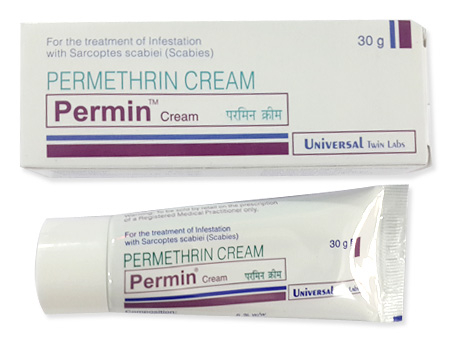
Permethrin
- In many pharmacies you can buy permethrin without a prescription—1% lice products are widely available OTC and can be purchased without a receipt; the 5% cream for scabies is prescription-only in many countries although classification varies by jurisdiction.
- Permethrin is used to treat scabies and head lice; it is a synthetic pyrethroid that disrupts parasite nerve cell membrane function, causing paralysis and death of mites and lice.
- Usual doses: for scabies adults and children ≥2 months use a full tube of 5% cream applied head-to-toe and left on for 8–14 hours (repeat in 7 days if needed); for head lice use a 1% lotion or cream applied to washed hair, saturate, leave ~10 minutes, rinse and repeat after 7 days if live lice persist; paediatric dosing reductions apply by age (see product label).
- Form of administration is topical: cream or lotion applied to skin for scabies, lotion/cream or spray for hair and scalp in lice kits; some products are supplied as combination lice kits.
- Onset: the insecticidal action begins within hours of application, though relief of itching and skin healing may take several days.
- Duration of action: residual activity can persist for several days; standard regimens commonly require only a single application with a possible repeat at 7 days if live parasites remain.
- Alcohol warning: there is no specific systemic alcohol interaction with topical permethrin, but avoid applying alcohol-containing products to treated skin and do not ingest; follow product instructions and avoid alcohol-based hair products on treated areas until rinsed.
- The most common side effect is local skin irritation—burning, stinging, itching or redness at the application site; less commonly numbness, tingling, headache or rash may occur.
- Would you like to try “permethrin” without a prescription?
Latest Research Highlights (UK & EU Studies 2022–2025)
Basic Permethrin Information
- INN (International Nonproprietary Name): Permethrin
- Brand Names Available In United Kingdom: Lyclear (UK/Europe); other global brands listed in source materials include Nix, Acticin and Elimite, but Lyclear is the primary UK/European brand specified.
- ATC Code: P03AC04 — Antiparasitic Products, Ectoparasiticides, Pyrethrins/Pyrethroids, Permethrin.
- Forms & Dosages: Cream 5% (scabies); Lotion 1% (head lice); Spray 0.25% and 0.5% (surface insecticide); combination kits for lice.
- Manufacturers In United Kingdom: GlaxoSmithKline (Lyclear) and Reckitt are named among major suppliers; exact local manufacturers are not specified.
- Registration Status In United Kingdom: Not specified in the supplied data.
- OTC / Rx Classification: 1% formulations for lice are generally OTC; 5% cream for scabies is commonly prescription-only in many countries according to the source data.
Recent UK and EU clinical reviews from 2022 to 2025 reconfirm permethrin 5% cream as a mainstay for scabies with high short-term cure rates.
Randomised controlled trials and systematic reviews across Europe report scabies cure rates commonly in the 80–95% range after a correctly applied 5% cream.
Surveillance papers note variable head-lice efficacy for 1% permethrin lotions where resistance is reported in some local populations.
European community studies document declining permethrin 1% effectiveness in parts of the UK and continental Europe, prompting discussion of malathion and dimeticone as alternatives in guidance and practice.
Safety summaries from national pharmacovigilance show mainly mild local reactions such as burning, erythema and paraesthesia with rare systemic reports.
Patient-centred data highlight that adherence — correct application and treating household contacts — is central to successful outcomes and preventing reinfestation.
Clinical Effectiveness In The United Kingdom
Do patients get better with standard NHS regimens?
UK NHS audits and primary-care series show permethrin 5% cream remains effective for typical scabies when applied head-to-toe overnight and repeated only when live mites persist.
NHS patient-reported outcome data emphasise that most adults notice itch reduction within one to two weeks, although post-scabetic itch can remain despite eradication of mites.
Over-the-counter permethrin 1% products for head lice deliver variable cure rates in community settings, with many patient forums reporting repeat treatments or product switches.
Safety and tolerability reported in NHS practice mirror EU pharmacovigilance findings: local irritation and transient paraesthesia are the common complaints.
UK clinics focus on practical counselling: demonstration of correct application, treating household contacts, laundering bedding and providing prompt access via NHS electronic prescription or pharmacy supply.
- Common Outcome Metrics: cure rate, itch reduction time, reinfestation rate, adverse local reactions.
- Patient Tips: full-body coverage for scabies, treat contacts simultaneously, repeat only if live mites or lice seen after 7 days.
Indications And Expanded Uses
When is permethrin licensed and when might clinicians use it differently?
Regulatory labels in the supplied data align with permethrin licensed primarily for scabies (5% cream) and pediculosis/head lice (1% lotion/kit).
In UK clinical practice MHRA-labelled indications guide prescribing for classical scabies and head lice, while specialist units may adopt off-label approaches in complex cases.
Off-label practices reported in specialist dermatology include repeat dosing schedules, adjunctive oral ivermectin for refractory or institutional outbreaks, and specific institutional outbreak management under specialist supervision.
Vehicle or surface insecticides for bedding and clothing are different products from those licensed for human topical use; veterinary permethrin products are not interchangeable.
Contraindicated uses such as in neonates under two months are emphasised in formularies and must be observed in routine practice.
- MHRA-Licensed: scabies 5% cream, lice 1% lotion (as per source classifications).
- Typical Off-Label Scenarios: adjunctive ivermectin in crusted scabies, specialist repeat regimens, institutional outbreak protocols (document rationale).
Composition And Brand Landscape
What formulations and brands should patients and pharmacists expect to see on shelves?
Permethrin is the INN and a pyrethroid-class topical ectoparasiticide with ATC code P03AC04.
Available formulation strengths listed in the data are cream 5% for scabies, lotion 1% for head lice, sprays 0.25% and 0.5% for surface use and combination lice kits.
In the UK and Europe the primary brand cited is Lyclear, supplied by GlaxoSmithKline, with generics and parallel imports also circulating.
Global brands referenced include Nix, Acticin and Elimite, which may appear with regional packaging differences outside the UK.
Patients must not substitute veterinary permethrin products for human medicines due to markedly higher concentrations and differing excipients.
- Common UK Formulations: Lyclear 5% cream (scabies), Lyclear 1% lotion (lice); generics available.
Contraindications And Special Precautions
Who should not use permethrin, and what checks should a pharmacist make?
Absolute contraindications in the supplied data are known hypersensitivity to permethrin or synthetic pyrethroids and neonates under two months of age where safety is not established.
Relative precautions include severely inflamed or weeping skin because compromised skin increases absorption and irritation risk.
Pregnancy and breastfeeding require a risk–benefit discussion; topical permethrin shows limited systemic absorption but clinical judgement is required.
Elderly patients may have fragile or thin skin and should be counselled on application technique and monitored for irritation.
There are no routine driving or alcohol restrictions after topical use, although patients should stop treatment and seek review if systemic symptoms such as dizziness or severe headache occur.
- Absolute Contraindications: allergy to permethrin/pyrethroids; neonates <2 months.
- Precautions Checklist: inflamed skin, pregnancy discussion, monitor elderly, advise to report neurological symptoms to MHRA via Yellow Card if suspected.
Dosage Guidelines
How should patients apply permethrin safely and effectively?
For scabies the standard regimen in the supplied data is permethrin 5% cream applied head-to-toe and left for eight to 14 hours, usually overnight.
Adults and children 12 years and older typically use a full tube (30g or 60g depending on pack); children have proportionate tube fractions: 6–12 years up to half a tube, 1–5 years up to a quarter tube, infants 2 months–1 year up to one-eighth tube.
Repeat a single full application after seven days only if live mites persist.
For head lice the 1% lotion is applied to washed, towel-dried hair, saturating the scalp and hair, left for approximately ten minutes and rinsed; repeat after seven days if live lice are still detected.
No routine dose adjustments are required for hepatic or renal impairment given minimal systemic absorption.
- Paediatric Fractions For Scabies: Adults/12+ = full tube; 6–12 yrs = up to ½ tube; 1–5 yrs = up to ¼ tube; 2 mo–1 yr = up to 1/8 tube; do not use under 2 months.
Interactions Overview
Will permethrin interact with other medicines or food?
Topical permethrin has minimal systemic exposure and clinically significant drug–drug interactions are rare according to the supplied safety data.
No specific food or alcohol interactions are documented in the data provided.
Caution is sensible when applying permethrin over large areas together with other topical agents such as potent corticosteroids, because altered skin barrier function may increase absorption.
Patients using multiple medicated shampoos or topical insecticides should be counselled to space applications and consult their GP or pharmacist about combined use.
Clinicians and patients are encouraged to report adverse events via the MHRA Yellow Card scheme, particularly neurological symptoms or unexpected systemic effects.
- Yellow Card Categories Noted: local irritation, paraesthesia, occasional dizziness or headache; reporting supports pharmacovigilance.
Cultural Perceptions And Patient Habits
What do UK patients worry about, and who do they ask first?
Qualitative review of UK forums and NHS contacts shows patients want clear, step-by-step instructions, reassurance about normal post-treatment itch and quick access to pharmacist counselling.
Many UK families consult community pharmacists at Boots, LloydsPharmacy or Superdrug first for lice, while scabies often leads to GP or urgent dermatology contact.
Stigma around scabies and lice affects reporting and household communication, so non-judgemental public health messaging and practical contact management are key.
Online pharmacies and e-prescriptions have improved access and discreet supply but can reduce face-to-face counselling; pharmacists mitigate this by supplying printed leaflets or short instructional videos.
- Common Misconceptions: that persistent itch always means treatment failure, that animal products are safe for humans, or that only poor hygiene causes infestation.
- Pharmacist Counselling Points: teach application, advise on household measures, signpost NHS 111 or GP if severe or refractory.
Availability And Pricing Patterns
How easy is it to get permethrin and what will it cost?
Permethrin 1% lice products are widely available over the counter in major UK chains and online sellers, while the 5% cream for scabies is commonly supplied on prescription.
OTC 1% lotions are generally low-cost and often subject to seasonal promotions in stores such as Boots, LloydsPharmacy and Superdrug.
Private purchase of 5% cream can be more expensive than NHS prescription supply, and regional prescription charging differences across England, Scotland, Wales and Northern Ireland influence whether patients choose an NHS prescription or private purchase.
Online pharmacies increasingly offer home delivery and e-prescription services, but patients should be aware of shortage risks during outbreak seasons and the potential for parallel imports.
In our online pharmacy, permethrin is available without a prescription, with discreet delivery to United Kingdom in 5-14 days.
| Product | Typical Retail Price Band | Rx Status |
|---|---|---|
| Permethrin 1% Lotion (lice) | Low-cost OTC | OTC |
| Permethrin 5% Cream (scabies) | Higher (often prescription) | Prescription in many countries |
| Lyclear Brand Packs | Varies by pack size | OTC (1%); Rx (5%) |
Comparable Medicines And Preferences
What are the NHS alternatives when permethrin is not ideal?
NHS alternatives for lice include malathion and dimeticone-based pediculicides, with dimeticone increasingly preferred where pyrethroid resistance is suspected because it acts physically rather than chemically.
For scabies, alternatives and adjuncts include crotamiton and, in specialist or refractory cases, oral ivermectin under clinician supervision.
Comparative evidence in the supplied data suggests malathion and dimeticone may outperform permethrin in resistant lice populations, while oral ivermectin is used effectively for institutional outbreaks and crusted scabies under specialist care.
Choice between agents should consider efficacy against local resistance patterns, safety in pregnancy and infancy, ease of application and availability as OTC or prescription product.
| Comparator | Pros | Cons |
|---|---|---|
| Malathion | Effective in some resistant lice populations | Prescription in some areas; flammable preparations |
| Dimeticone | Physical action, fewer resistance concerns | May require wet-combing for maximum effect |
| Ivermectin (oral) | Effective in institutional/crusted scabies | Specialist supervision; off-label for some uses |
FAQ
How long until I feel better after using permethrin 5% for scabies?
Itching may persist for one to two weeks despite successful eradication of mites, and symptomatic measures such as oral antihistamines or emollients are commonly recommended in NHS practice.
Do I need to treat everyone in the house?
Yes; simultaneous treatment of close household contacts is standard NHS advice to reduce reinfestation risk, and your pharmacist or GP can help plan who to treat and when.
Can I use permethrin in pregnancy or breastfeeding?
Discuss with your prescriber — topical permethrin has limited systemic absorption and many clinicians consider it when benefits outweigh risks, but documentation and local guidance should be followed.
My child’s lice treatment failed — what should I do next?
Failure is often due to resistance, inadequate application or missed contacts; consult a pharmacist who may recommend switching to dimeticone or malathion or advise a repeat per NHS guidance, and seek GP referral if problems persist.
Guidelines For Proper Use
What should pharmacists tell patients at the counter?
Demonstrate the correct quantity and coverage for scabies: apply permethrin 5% cream head-to-toe and leave on for eight to 14 hours, usually overnight.
Show the correct lice application: apply 1% lotion to washed, towel-dried hair, saturate the scalp and hair, leave for about ten minutes and rinse, repeating after seven days only if live lice remain.
Emphasise laundering or isolating bedding and clothing, treating household contacts at the same time, and checking close contacts for symptoms.
Use teach-back, offer printed or digital leaflets and signpost NHS resources such as NHS.uk and NHS 111 online for follow-up information.
- Key Counselling Points: full-body coverage for scabies, timing of applications, household measures, when to repeat and when to seek review.
- Follow-Up Triggers: persistent live mites/lice after correct application, severe local reaction, systemic symptoms, or institutional outbreaks.
Delivery Across United Kingdom
| City | Region | Delivery Time |
|---|---|---|
| London | England | 5-7 days |
| Birmingham | England | 5-7 days |
| Manchester | England | 5-7 days |
| Glasgow | Scotland | 5-7 days |
| Leeds | England | 5-7 days |
| Liverpool | England | 5-7 days |
| Edinburgh | Scotland | 5-7 days |
| Bristol | England | 5-7 days |
| Newcastle Upon Tyne | England | 5-7 days |
| Belfast | Northern Ireland | 5-7 days |
| Cardiff | Wales | 5-7 days |
| Nottingham | England | 5-9 days |
| Southampton | England | 5-9 days |
| Leicester | England | 5-9 days |
| Sheffield | England | 5-7 days |