Itraconazole
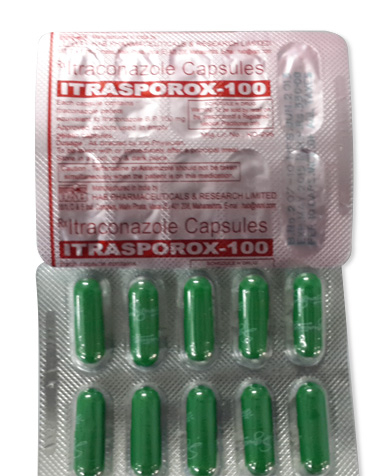
Itraconazole
- You can buy itraconazole from pharmacies and online medicine suppliers in many countries, but it is generally a prescription-only antifungal. In some places it may be available more easily through private or online pharmacies, yet medical supervision is still strongly recommended because of important drug interactions and liver, heart, and pregnancy-related risks.
- Itraconazole is used to treat fungal infections such as onychomycosis (nail fungus), oral and oesophageal candidiasis, dermatophyte skin infections, and certain systemic mycoses including histoplasmosis and aspergillosis. It works by inhibiting fungal ergosterol synthesis via blockade of the CYP51 enzyme, which weakens the fungal cell membrane and stops growth.
- The usual adult dose depends on the infection: for nail fungus, 200 mg daily is commonly used; for many systemic fungal infections, 200–400 mg daily may be required; and for some candidiasis or skin infections, 100–200 mg daily is typical. Your prescriber may adjust the dose and duration based on the condition and your overall health.
- Itraconazole is available as capsules or tablets, oral solution, and in some hospital settings as intravenous infusion. Capsules/tablets are commonly 50 mg, 100 mg, or 200 mg; the oral solution is usually 10 mg/mL.
- Itraconazole does not work immediately. For some fungal infections, symptom improvement may begin within a few days, but for nail infections and deeper systemic infections, noticeable benefits may take days to weeks, and full response can take much longer.
- The duration of action is prolonged, allowing once-daily or sometimes twice-daily dosing depending on the regimen. Treatment duration can range from 1–2 weeks for some mucosal or skin infections to several weeks or months for nail and systemic infections.
- There is no specific alcohol interaction, but alcohol should be limited or avoided because itraconazole can affect the liver and alcohol may increase the risk of liver irritation and side effects.
- The most common side effects are nausea, abdominal pain, diarrhoea, headache, dizziness, rash, and raised liver enzymes. Less commonly, it can cause serious liver problems, heart failure, or QT prolongation.
- Would you like to try itraconazole without a prescription?
Latest UK And EU Research On Itraconazole
Basic Itraconazole Information
- INN (International Nonproprietary Name): Itraconazole
- Brand names available in United Kingdom: Sporanox, Orungal, and generic itraconazole products may be encountered; availability can vary by supplier and route of supply.
- ATC Code: J02AC02
- Forms & dosages: Capsules/Tablets 50mg, 100mg, 200mg; Oral Solution 10mg/mL; IV Infusion 200mg/25mL
- Manufacturers in United Kingdom: Janssen Pharmaceutica/Johnson & Johnson, plus generic suppliers where stocked through UK pharmacy channels.
- Registration status in United Kingdom: Prescription-only antifungal.
- OTC / Rx classification: Prescription-only medication (Rx) nearly everywhere.
What has the more recent evidence actually shown?
Across 2022 to 2025, UK and EU practice has continued to place itraconazole as a useful systemic azole, but not a simple first-choice medicine for every fungal problem.
Systematic reviews and product information continue to support its activity against dermatophytes, yeasts, and selected systemic fungi, while also stressing that safety and interactions need careful checking.
Evidence for nail fungal disease remains mixed, which is why patient selection matters so much in real-world practice.
That is particularly relevant for people looking at itraconazole 100mg capsules online pharmacy listings and expecting a quick fix.
| Form | Typical use | Practical point |
|---|---|---|
| Itraconazole capsules | Convenient for standard courses | Absorption and food instructions matter |
| Itraconazole oral solution | Useful when absorption is a concern | 10mg/mL and taken differently from capsules |
Safety highlight: the major signals that keep appearing in MHRA and EMA product information are hepatic toxicity, cardiac risk, QT prolongation, and problematic drug interactions.
Systemic mycoses are still specialist-led in the UK, and that is sensible because the dose, monitoring, and duration are more complex than with routine skin infections.
Clinical Effectiveness In NHS And Specialist Practice
Where does itraconazole fit in day-to-day UK care?
For straightforward skin and nail disease, primary care may manage treatment, but complex or treatment-resistant fungal infections often need referral.
That includes nail fungus that keeps coming back, candidiasis that does not settle, and any suspected systemic infection.
In NHS practice, the most common use cases are onychomycosis, oropharyngeal or oesophageal candidiasis, dermatomycoses, and selected systemic infections.
Effectiveness depends a lot on adherence and absorption, so patients who miss doses or take the medicine incorrectly tend to do worse.
| Condition | Usual dose | Treatment length | Monitoring |
|---|---|---|---|
| Onychomycosis | 200mg/day | 6 weeks to 3 months | Response, liver function if prolonged |
| Oropharyngeal or oesophageal candidiasis | 100 to 200mg/day | 1 to 2 weeks | Symptom response and tolerance |
| Systemic mycoses | 200 to 400mg/day | Several months | Specialist-led clinical and laboratory monitoring |
For nail fungus treatment, the usual course is longer than many patients expect, and that often explains why people ask whether itraconazole is “worth it”.
In practice, it can be worth it when the diagnosis is correct and the patient is suitable for a systemic antifungal.
Mhra-Approved Indications And Expanded Use In Uk Practice
What is formally covered, and what needs specialist judgment?
- Indication
- Itraconazole is authorised by the EMA as a prescription-only antifungal for various indications, with UK use generally aligned to MHRA-regulated prescribing standards.
- Usual setting
- Primary care may handle simple dermatomycoses or nail disease, while consultant-led teams manage systemic mycoses and complicated candidiasis.
- Typical lead clinician
- GP for straightforward skin or nail cases, specialist for invasive fungal disease, significant comorbidity, or treatment failure.
- Systemic mycoses
- Includes infections such as histoplasmosis and aspergillosis, which are generally specialist-led.
- Mucosal candidiasis
- Oropharyngeal and oesophageal candidiasis are recognised uses in practice.
- Off-label use
- Any use outside the label should follow local trust or consultant protocols, because practice can vary.
That distinction matters because patients often see the same word, itraconazole, across very different clinical scenarios and assume the same rules apply.
They do not.
Composition, Brands And The United Kingdom Generic Landscape
Why does the same medicine show up under different names?
The active ingredient is itraconazole, but the pack may be branded, generic, or listed by the INN only.
In UK pharmacy practice, that means a patient may see Sporanox capsules, generic itraconazole, or an online pharmacy listing that uses the ingredient name rather than a brand.
Packaging commonly includes blister packs for capsules and tablets, bottles for oral solution, and hospital vials for IV use.
Some products are supplied through hospital or specialist routes, so local stock can differ from one pharmacy to another.
| Brand or description | Form | Packaging |
|---|---|---|
| Sporanox | Capsules, oral solution | Blister packs or bottles |
| Orungal | Tablets or capsules | Blister packs or bottles |
| Generic itraconazole | Capsules, tablets, oral solution | Varies by manufacturer |
Many patients are happy with generic substitution once a pharmacist explains that the active ingredient is the same.
For others, brand familiarity matters because it helps them feel more confident about starting treatment.
In our online pharmacy, itraconazole is available without a prescription, with discreet delivery to United Kingdom in 5-14 days.
Contraindications And Who Needs Extra Caution
Who should stop and check before starting itraconazole?
- Known hypersensitivity to itraconazole or excipients.
- Pregnancy, unless the infection is life-threatening.
- Active or chronic hepatic impairment.
- Use with certain CYP3A4 substrates, including terfenadine, cisapride, pimozide, quinidine, and dofetilide, because of serious arrhythmia risk.
- History of congestive heart failure, which needs particular caution.
- Liver or kidney disease, especially if treatment is prolonged.
- Older age and polypharmacy, because interaction risk rises.
People sometimes ask whether they can drive during treatment.
That depends on whether the medicine makes them dizzy or unwell, so the safe answer is to avoid driving if symptoms affect alertness.
Alcohol is best minimised because liver toxicity is one of the main concerns with this medicine.
If a patient has heart failure symptoms, jaundice, or unexplained weakness, treatment should be reviewed promptly.
Dosage Guidelines Used In United Kingdom Practice
How much is usually taken, and for how long?
| Condition | Usual dose | Duration | Key point |
|---|---|---|---|
| Onychomycosis | 200mg/day | 6 weeks to 3 months | Fingernails are usually treated for shorter periods than toenails |
| Systemic mycoses | 200 to 400mg/day | Several months | Specialist monitoring is expected |
| Oropharyngeal or oesophageal candidiasis | 100 to 200mg/day | 1 to 2 weeks | Check response and tolerability |
| Dermatomycoses | 200mg/day or 100mg twice daily | 7 to 15 days | Formulation choice can affect absorption |
Capsules and tablets are commonly available as 50mg, 100mg, and 200mg strengths, while the oral solution is 10mg/mL.
Oral solution may be preferred when absorption is a concern, whereas capsules are often chosen for convenience.
Children generally need specialist input and weight-based dosing.
Older adults should usually start at the lowest effective dose, with close monitoring of liver and renal function where appropriate.
For renal impairment, the oral solution is often preferred, and for liver impairment, caution is essential because the medicine is hepatically metabolised.
Interactions, Food Rules And Yellow Card Reporting
Why do pharmacists always spend so long on the medicine check?
Itraconazole has a heavy interaction burden, and that is not a small detail.
It affects and is affected by CYP3A4-related medicines, so the full medication list matters, including supplements and anything bought over the counter.
| Interaction | Risk | Action |
|---|---|---|
| Terfenadine, cisapride, pimozide, quinidine, dofetilide | Serious cardiac arrhythmias | Avoid coadministration |
| Other CYP3A4 medicines | Raised toxicity or reduced efficacy | Pharmacist or prescriber review |
| Food and drink | Absorption may change | Follow the product instructions exactly |
Food rules matter because capsules and oral solution are not taken in exactly the same way.
Patients should not assume coffee, tea, or alcohol are harmless just because the product is an antifungal.
Unexpected reactions should be reported through the MHRA Yellow Card scheme, especially if symptoms are severe, unusual, or persistent.
Pharmacists routinely screen for interaction risks before dispensing, which is one reason an medicines review is worth taking seriously.
Cultural Perceptions And Patient Habits In The United Kingdom
What do patients usually ask first?
- “Will it work for nail fungus, and how long will it take?”
- “Is it stronger than fluconazole?”
- “Can I drink alcohol on itraconazole?”
- “Will it interact with my other tablets?”
- “Is it worth taking if the nail is only mildly bad?”
Those questions come up in Boots, LloydsPharmacy, and Superdrug consultations, and they also appear in NHS 111 calls, Patient.info searches, and forum discussions.
Patients often want a quick answer before they commit to a longer course, especially when the problem is cosmetic but bothersome, like nail fungus.
There is also growing reliance on online pharmacies and patient portals for repeat prescriptions and follow-up advice.
That means good counselling needs to be clear, practical, and reassuring without pretending the medicine is risk-free.
People trust pharmacists for a reason: they want straight answers about side effects, interactions, and whether the treatment is likely to be worth the effort.
Availability And Pricing Across The United Kingdom
How do patients usually access itraconazole in the UK?
Access is commonly through NHS prescription, private prescription, or online pharmacy supply where clinically appropriate.
Because itraconazole is prescription-only almost everywhere, buying it should always mean proper clinical screening.
Major chains such as Boots, LloydsPharmacy, and Superdrug may stock or source it, while online pharmacies can often fulfil electronic prescriptions.
| Route | Typical access | Price note |
|---|---|---|
| NHS in England | Prescription supply | Standard prescription charge rules may apply |
| NHS in Scotland, Wales and Northern Ireland | Prescription supply | Usually free at the point of delivery under standard rules |
| Private prescription | Pharmacy or online fulfilment | Varies by strength, pack size, and brand |
Private prices vary, especially if the product is branded or hospital-supplied.
Strength, pack size, and whether the product is capsule, tablet, or oral solution all affect cost.
For patients comparing itraconazole price with other antifungals, the real cost is not just the pack price but also the likelihood of needing a specialist review or monitoring.
Comparable Medicines And When United Kingdom Prescribers Prefer Alternatives
Why might a prescriber choose a different antifungal?
The answer usually comes down to infection site, interaction profile, liver risk, and absorption issues.
- Fluconazole: often simpler for some candidiasis cases and usually easier to manage from an interaction perspective.
- Voriconazole: used for specific specialist indications, especially where broader systemic coverage is needed.
- Posaconazole: another specialist azole choice for selected infections.
- Isavuconazole: considered in some specialist settings when a different azole profile is needed.
- Caspofungin and amphotericin B: used for more severe systemic disease where oral azoles are not suitable.
Itraconazole remains attractive because it has broad activity against dermatophytes, yeasts, and some systemic fungi.
Still, itraconazole vs fluconazole is not a simple “better or worse” comparison.
The better choice depends on the infection, the patient’s medicines, and whether oral absorption is reliable.
Faq For United Kingdom Patients
- How long does itraconazole take to work for nail fungus? Nail treatment is slow.
Many people need 6 weeks to 3 months, and toenails usually take longer than fingernails. - Can I drink alcohol? It is best to minimise alcohol because of liver risk.
- What if I miss a dose? Take it when remembered unless the next dose is near, and do not double dose.
- Can I get it on the NHS? Yes, if a clinician decides it is appropriate and the prescription is issued through NHS care.
How To Use Itraconazole Properly In Everyday United Kingdom Practice
What helps people get the best result without avoidable problems?
- Take itraconazole exactly as prescribed, and do not share it with anyone else.
- Check whether you have capsules, tablets, or oral solution, because the instructions can differ.
- Pay close attention to food and drink advice on the label or patient information leaflet.
- Keep a full list of all medicines, including supplements, ready for the pharmacist or prescriber.
- Watch for side effects such as nausea, dizziness, rash, or unusual tiredness.
- Seek urgent help if you develop jaundice, palpitations, breathing problems, or severe weakness.
- For longer courses, expect liver monitoring and GP or specialist review where appropriate.
- Use pharmacist follow-up, GP advice, and patient portals for results or repeat prescriptions.
Storage also matters.
Capsules and tablets should be kept below 30°C, dry, and in the original packaging.
Oral solution should be stored at room temperature and not frozen.
IV vials should be protected from light and used immediately after opening.
Delivery Across United Kingdom
| City | Region | Delivery time |
|---|---|---|
| London | England | 5-7 days |
| Birmingham | England | 5-7 days |
| Manchester | England | 5-7 days |
| Leeds | England | 5-7 days |
| Liverpool | England | 5-7 days |
| Sheffield | England | 5-7 days |
| Bristol | England | 5-7 days |
| Newcastle upon Tyne | England | 5-7 days |
| Edinburgh | Scotland | 5-7 days |
| Glasgow | Scotland | 5-7 days |
| Cardiff | Wales | 5-7 days |
| Swansea | Wales | 5-9 days |
| Belfast | Northern Ireland | 5-7 days |
| Aberdeen | Scotland | 5-9 days |
For many patients, the main questions are still simple: will itraconazole work, is it safe with their other medicines, and is the course long enough to be worth it?
Those are the right questions to ask, and they are exactly why pharmacist counselling matters so much with this antifungal.