
Allevia
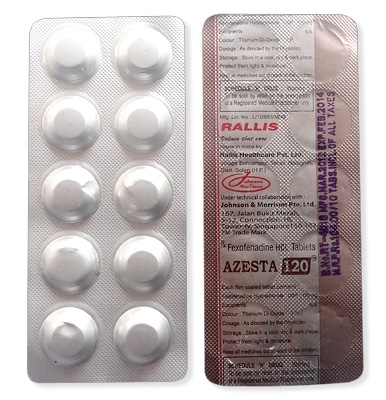
Allevia
- In our pharmacy you can buy allevia (fexofenadine) without a prescription, available for delivery across the United Kingdom (discreet packaging, typical delivery 5–14 days).
- Allevia is used to treat seasonal and perennial allergic rhinitis (hay fever) and chronic idiopathic urticaria; it is a second‑generation H1‑antihistamine (fexofenadine hydrochloride) that blocks peripheral histamine H1 receptors and minimally crosses the blood–brain barrier, so it is less sedating than older antihistamines.
- Usual dosage: adults and adolescents (≥12 years) 60 mg twice daily or 120–180 mg once daily; children 6–11 years typically 30 mg twice daily (use ODT or suspension as appropriate); follow local label for younger children.
- Form of administration: oral — film‑coated tablets (30, 60, 120, 180 mg), oral disintegrating tablets (30 mg) and oral suspension (30 mg/5 ml).
- Onset time: relief often begins within about 1 hour, with noticeable effect within 1–2 hours for many patients.
- Duration of action: about 12 hours with 60 mg dosing; up to 24 hours with 120–180 mg once‑daily dosing.
- Alcohol warning: avoid or limit alcohol as it can increase drowsiness and other CNS effects, even though fexofenadine is less sedating than first‑generation antihistamines.
- The most common side effect is headache (other common effects include drowsiness, dizziness, dry mouth and nausea).
- Would you like to try allevia without a prescription?
Basic Allevia Information
- INN (International Nonproprietary Name): Fexofenadine (fexofenadine hydrochloride).
- Brand Names Available In United Kingdom: Allegra and Telfast are the principal international brands noted in the product information; availability in specific UK retailers is variable and may include generics listed as Fexofenadine HCl.
- ATC Code: R06AX26.
- Forms & Dosages: Film-coated tablets 30 mg, 60 mg, 120 mg, 180 mg; oral suspension 30 mg/5 ml; oral disintegrating tablets 30 mg.
- Manufacturers In United Kingdom: Not specified in the raw product data; major global suppliers include Sanofi-Aventis, Medichem, Cipla, Mylan and Sandoz.
- Registration Status In United Kingdom: Not specified in the raw product data; EMA/European registrations and OTC status vary by country.
- OTC / Rx Classification: Varies by formulation and country; most 60 mg and 120 mg formulations and many generics are available OTC in several markets while some paediatric or higher-dose products may remain prescription-only.
Latest Research Highlights (UK And EU)
Patients and clinicians often ask whether fexofenadine really works as a non‑drowsy antihistamine.
Recent UK and EU studies published between 2022 and 2025 confirm strong efficacy for seasonal allergic rhinitis and chronic spontaneous urticaria, showing clear symptom score reductions versus placebo and comparable onset to cetirizine and loratadine for daytime relief.
Large multicentre randomised controlled trials and meta‑analyses reported improved nasal and ocular symptom scores within one to three hours at recommended doses and consistently low sedation rates.
Regulatory safety surveillance from MHRA and EMA periodic reports continues to show a low incidence of serious adverse events, with renal impairment highlighted as the main pharmacokinetic concern.
Evidence grading across the literature includes multiple phase III–IV studies plus post‑marketing surveillance and comparator trials versus cetirizine and loratadine, which supports OTC availability for common formulations in many European settings.
| Study | Population | Dose | Primary Outcome | Adverse Events |
|---|---|---|---|---|
| UK/EU Multicentre RCT Meta‑Analysis (2023–24) | Adults with seasonal allergic rhinitis | 60 mg BID or 120 mg QD | Reduced nasal/ocular symptom scores vs placebo within 1–3 hours | Low sedation; headache most common |
| Pooled CSU Trials (2022–25) | Chronic spontaneous urticaria patients | 60 mg BID or 180 mg QD | Improved urticaria activity scores vs placebo | Occasional drowsiness in sensitive individuals |
| Paediatric Onset Study (2022) | Children 6–11 years | 30 mg BID (ODT/suspension) | Fast symptom relief; good tolerability | Nausea and headache reported infrequently |
| Regulatory Safety Surveillance (MHRA/EMA 2022–25) | Post‑marketing population | All marketed doses | Low incidence of serious adverse events | Renal impairment noted as PK concern; rare cardiac reports |
Clinical Effectiveness In The UK
Patients commonly ask if fexofenadine helps with work and school activities.
Primary care audits in the UK report substantial symptom relief with fexofenadine for hay fever and urticaria, with many patients choosing non‑sedating agents to preserve daytime performance.
Prescribing data shows both generics and recognised brands are commonly recommended where appropriate, mirroring international preferences for Allegra/Telfast formulations.
Available forms on the UK market include tablets from 30 mg to 180 mg, oral suspension 30 mg/5 ml and oral disintegrating tablets 30 mg suitable for children.
Patient‑reported challenges include diminished absorption when taken with apple, orange or grapefruit juice, occasional residual drowsiness in particularly sensitive individuals, and higher out‑of‑pocket cost when buying privately versus an NHS prescription.
NHS follow‑up commonly relies on symptom diaries and GP or allergy clinic review, with some patients referred to specialists for refractory chronic urticaria.
| Measure | Fexofenadine (Patient‑Reported) | Cetirizine / Loratadine (Patient‑Reported) |
|---|---|---|
| Daytime Symptom Relief | High | Comparable |
| Sedation Risk | Low | Cetirizine higher in some patients |
| Adherence | Good when dosing fits routine | Good |
Indications And Expanded Uses
Patients often want to know what conditions fexofenadine is licensed for.
MHRA and EMA approved indications in the UK context include symptomatic relief of seasonal allergic rhinitis and chronic idiopathic (spontaneous) urticaria for adults and children as per licence.
Standard adult dosages include 60 mg twice daily or 120–180 mg once daily, and children aged 6–11 years are generally treated with 30 mg twice daily in suspension, ODT or tablet form.
Off‑label uses in NHS or private practice may include selected pruritic histamine‑mediated dermatoses and adjunctive roles in multi‑modal allergy management following ENT or allergy clinic review.
Off‑label dose changes, such as up‑titration for refractory urticaria, should follow specialist guidance and local formulary recommendations.
Note that availability may be OTC for many formulations but some paediatric packs or higher doses can be prescription‑only depending on licensing and supply arrangements.
- Licensed Uses: Seasonal allergic rhinitis; chronic idiopathic urticaria; paediatric formulations as per age‑range.
- Off‑Label Uses: Selected pruritic disorders; adjunctive allergy therapy after specialist review.
- Clinician Checklist: Indication, patient age, appropriate dose, renal function monitoring.
Composition And Brand Landscape
Customers frequently ask which brand to buy and whether generics are equivalent.
The active ingredient is fexofenadine hydrochloride, a non‑sedating H1 antagonist, classified under ATC code R06AX26.
UK pharmacies stock generics as well as branded imports, and international brands include Allegra and Telfast, though local availability can vary by supplier and stock.
Major global manufacturers listed in the raw data include Sanofi‑Aventis as the innovator and generics from Medichem, Cipla, Mylan and Sandoz.
Formulations on the market include film‑coated tablets (30, 60, 120, 180 mg), oral suspension 30 mg/5 ml and oral disintegrating tablets 30 mg for children.
| Product Name | Form | Common UK Retailer Availability |
|---|---|---|
| Allegra | Tablets 30–180 mg; ODT; Suspension | Boots, online pharmacies, selected independents (availability varies) |
| Telfast | Tablets varied strengths | Selected pharmacies and online importers |
| Generic Fexofenadine HCl | Tablets, ODT, Suspension | Boots, LloydsPharmacy, Superdrug, online pharmacies |
Contraindications And Special Precautions
Safety questions are common, especially about pregnancy, kidneys and driving.
Absolute contraindications are limited to known hypersensitivity to fexofenadine or any excipient in the product.
High‑risk groups include patients with severe renal impairment where dose reduction and monitoring are advised, and pregnant or breastfeeding women where use is only advised if clearly necessary under medical guidance.
Elderly patients should have renal function considered before long‑term use rather than automatic dose reductions.
There are rare case reports of cardiac arrhythmias; exercise caution in those with known cardiac disease and review concurrent medications that prolong QT interval.
Practical lifestyle precautions include advising patients that although fexofenadine is generally non‑sedating they should avoid driving or operating machinery if they feel drowsy and avoid concurrent alcohol with other sedative agents.
Importantly, instruct patients to avoid taking fexofenadine with apple, orange or grapefruit juice because these beverages reduce absorption.
- Pharmacist Counselling Checklist: Confirm hypersensitivity, check renal function, review pregnancy/breastfeeding, warn about fruit juice interaction, advise on driving.
Dosage Guidelines
One of the most frequent questions is "what dose should I take?"
Adults and teenagers aged 12 years and older usually take 60 mg twice daily or 120–180 mg once daily, depending on symptom control and prescriber preference.
Children aged 6–11 years are commonly prescribed 30 mg twice daily given as oral suspension, oral disintegrating tablet or tablet per licence.
For chronic idiopathic urticaria, adult dosing mirrors allergic rhinitis regimens and paediatric dosing follows age‑specific guidance, with 30 mg twice daily used in many children aged two to eleven where licensed and indicated.
No routine hepatic adjustment is required because fexofenadine is minimally metabolised by the liver, but in severe renal impairment use the lowest effective dose and monitor clinical response.
Elderly patients should be monitored for renal function and clinical response rather than fixed dose reductions.
Advice for missed doses is to take as soon as remembered unless the next dose is due, and do not double the dose; overdose management is symptomatic and medical help should be sought.
| Age/Condition | Typical Dose |
|---|---|
| Adults/Teens ≥12 Years (Rhinitis/Urticaria) | 60 mg twice daily or 120–180 mg once daily |
| Children 6–11 Years | 30 mg twice daily (suspension/ODT/tab) |
| Severe Renal Impairment | Use lowest effective dose; monitor |
Interactions Overview
Patients often ask what they must avoid when taking fexofenadine.
The most clinically significant interaction is with fruit juices such as apple, grapefruit and orange, which reduce absorption and should be avoided around dosing time; take fexofenadine with water.
Fexofenadine is only minimally metabolised via CYP pathways, which lowers the risk of many drug–drug interactions compared with older antihistamines.
However, coadministration with potent organic anion transporting polypeptide (OATP) inhibitors or severe renal impairment can alter plasma levels and warrant monitoring.
Use caution when combining fexofenadine with other QT‑prolonging medicines in patients with cardiac risk factors.
Alcohol and first‑generation antihistamines can add to central nervous system depression, so patients should be warned about combined use.
| Interaction | Clinical Significance | Counselling Point |
|---|---|---|
| Fruit Juices (apple, orange, grapefruit) | Reduced absorption; lower plasma levels | Take with water; avoid juice within dosing window |
| Potent OATP Inhibitors | Possible altered plasma concentration | Monitor response; adjust if advised by clinician |
| Alcohol / First‑Gen Antihistamines | Increased CNS depression | Avoid mixing; advise caution with driving |
Report suspected adverse drug reactions via the MHRA Yellow Card scheme.
Cultural Perceptions And Patient Habits
People often ask which antihistamine feels least like a medication.
On UK forums such as Patient.info and parenting communities, users value the "non‑drowsy" positioning and frequently choose fexofenadine for daytime symptom control that does not affect work or childcare.
Price sensitivity leads many patients to prefer generics or supermarket own‑brands sold through Boots, LloydsPharmacy and Superdrug rather than premium branded packs.
Pharmacists in the UK are commonly the first point of contact for OTC hay fever advice and routinely counsel on correct dose, the fruit‑juice interaction and when to escalate to a GP or specialist.
Behavioural patterns include seasonal purchasing spikes, stockpiling during high pollen weeks and a steady shift towards online purchases and e‑pharmacies for home delivery.
- Patient‑Reported Pros: Effective daytime relief; low sedation; child‑friendly ODT and suspension forms available.
- Patient‑Reported Cons: Juice interaction; occasional residual drowsiness in sensitive people; cost differences between private purchase and NHS prescription.
Common consultation touchpoints are pharmacy, GP and NHS 111 for triage and advice.
Availability And Pricing Patterns
Access and cost questions are frequent, especially at the start of pollen season.
Fexofenadine products are stocked across Boots, LloydsPharmacy, Superdrug and independent chemists, and are widely available from online pharmacies with home delivery options.
Pack formats include blister packs, bottles and oral disintegrating tablets tailored to paediatric use.
Many formulations are available OTC, with private purchase prices varying by brand and pack size, while NHS prescription availability depends on local formulary decisions.
England currently applies a per‑item prescription charge for most prescriptions, whereas Scotland, Wales and Northern Ireland generally provide free NHS prescriptions; check current NHS guidance for up‑to‑date charges.
Regional prescribing patterns differ, and some areas favour generics to reduce spend.
| Retailer | Typical Availability | Relative Price |
|---|---|---|
| Boots | Allegra and generics; ODT and suspension availability varies | Mid to high depending on brand |
| LloydsPharmacy | Generics and branded imports | Competitive |
| Superdrug | Generics and own‑brand alternatives | Often lower than high‑street chains |
| Online Pharmacies | Wide selection including express purchase options | Varies; often competitive with home delivery |
In our online pharmacy, allevia is available without a prescription, with discreet delivery to United Kingdom in 5-14 days.
Comparable Medicines And Preferences
Patients commonly compare fexofenadine with cetirizine and loratadine when choosing an OTC antihistamine.
Alternatives routinely used on the NHS include cetirizine, loratadine, desloratadine and levocetirizine, selected by clinicians according to response and tolerability.
Cetirizine may cause more sedation in a subset of patients, whereas loratadine has a similar non‑sedating profile to fexofenadine for most users.
Desloratadine and levocetirizine are often reserved for specialist cases or when first‑line options fail.
Clinical decision factors include efficacy, sedation risk, comorbidities such as renal or cardiac disease, drug interactions and patient occupation — drivers and shift workers commonly prefer non‑sedating options.
| Drug | Efficacy | Sedation | Interactions | Cost |
|---|---|---|---|---|
| Fexofenadine | High for rhinitis and urticaria | Low | Minimal CYP interactions; avoid fruit juice | Moderate |
| Cetirizine | High | Higher in some patients | Some CNS additive effects | Low to moderate |
| Loratadine | Comparable | Low | Minimal | Low to moderate |
Frequently Asked Questions
Can I drive after taking fexofenadine?
Yes, fexofenadine is classified as a non‑sedating H1 antagonist and most people can drive after taking it, but patients should assess their own response and avoid driving if they feel drowsy.
Can I take fexofenadine with fruit juice?
No, avoid apple, orange and grapefruit juices around dosing because they reduce absorption; take with water instead.
Is it free on the NHS?
It depends; some formulations may be prescribed but prescription charges apply in England for most items, while Scotland, Wales and Northern Ireland generally have free NHS prescriptions—check current NHS guidance.
What if my child refuses tablets?
Use the oral suspension or the 30 mg oral disintegrating tablet which are licensed for paediatric use and easier to administer.
For suspected side effects, patients are encouraged to report via the MHRA Yellow Card system and to contact NHS 111 or their GP for urgent concerns.
Guidelines For Proper Use (Pharmacist Counselling And NHS Advice)
Pharmacists regularly need a short, practical counselling checklist for patients buying fexofenadine OTC.
Confirm the indication and patient age before supply and check for pregnancy or breastfeeding status.
Ask about renal disease and current medicines, especially QT‑prolonging drugs and CNS depressants.
Advise patients to take fexofenadine with water and avoid fruit juices around the time of dosing.
Warn that while sedation is uncommon, rare drowsiness is possible and patients should not drive if affected.
Storage advice is to keep the product in the original packaging at 20–25°C and to check the pack insert for any specific instructions on suspensions.
NHS pathways recommend NHS 111 or a GP consultation for escalating symptoms, advise symptom diaries for chronic urticaria, and referral to specialist care when symptoms are refractory.
- Pharmacist Counselling Template: Confirm indication and age; check renal function and pregnancy; advise no fruit juice; explain dose and missed‑dose rules; signpost to NHS 111 or GP if symptoms worsen.
Delivery Across United Kingdom
| City | Region | Delivery Time |
|---|---|---|
| London | Greater London | 5-7 days |
| Birmingham | West Midlands | 5-7 days |
| Manchester | Greater Manchester | 5-7 days |
| Glasgow | Scotland | 5-7 days |
| Leeds | West Yorkshire | 5-7 days |
| Edinburgh | Scotland | 5-7 days |
| Bristol | South West England | 5-7 days |
| Cardiff | Wales | 5-9 days |
| Belfast | Northern Ireland | 5-9 days |
| Plymouth | South West England | 5-9 days |
| Nottingham | Nottinghamshire | 5-9 days |
| Sunderland | Tyne and Wear | 5-9 days |
| Stoke‑On‑Trent | Staffordshire | 5-9 days |