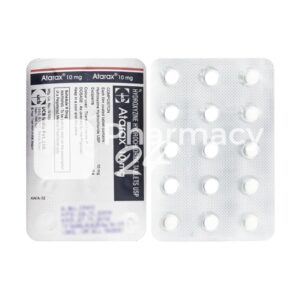
Atarax
In brief
- Atarax (hydroxyzine) is a prescription-only medicine in most major markets, including the UK and EU; however, in some online pharmacy settings it may be available without a prescription. Availability varies by country and local regulations.
- Atarax is used for itching due to allergies or skin conditions, short-term relief of anxiety, and as a sedative or pre-operative tranquiliser. It works by blocking histamine H1 receptors and also has sedative and anxiolytic effects on the central nervous system.
- The usual adult dose is 25 mg 3–4 times daily for itching, or 50–100 mg daily in divided doses for anxiety; doses should be adjusted by a doctor for children, older adults, and people with kidney or liver problems.
- It is usually taken as tablets or oral syrup/solution; injectable forms exist in some markets but are rare. Tablets are commonly available in 10 mg, 25 mg, and 50 mg strengths.
- It usually starts working within 15–60 minutes, with sedative effects often felt relatively quickly.
- The effects generally last around 4–6 hours, though this can vary depending on the dose and the person taking it.
- Avoid alcohol, as it can greatly increase drowsiness, dizziness, and impaired concentration.
- The most common side effect is drowsiness; other common effects include dry mouth, dizziness, headache, blurred vision, fatigue, and constipation.
- Would you like to try Atarax without a prescription?
Basic Atarax Information
- INN (International Nonproprietary Name): Hydroxyzine
- Brand names available in United Kingdom: Atarax (phased out), Generics; Hydroxyzine Hydrochloride Tablets
- ATC Code: N05BB01 – Psycholeptics, Anxiolytics, Diphenylmethane derivatives, Hydroxyzine; also R06AE03 for systemic antihistaminic use
- Forms & dosages: Tablets 10 mg, 25 mg, 50 mg; oral solution/syrup 10 mg/5 ml; injectable solution 25 mg/ml in some markets
- Manufacturers in United Kingdom: Original historical manufacturers included UCB and Pfizer; current generics include Zentiva, Teva, Sandoz, Mylan, Sun Pharma, and regional suppliers
- Registration status in United Kingdom: Atarax is phased out; hydroxyzine is used as a prescription medicine in the UK under generic supply
- OTC / Rx classification: Prescription Only (Rx) in all major markets; not available OTC
- Standard dosages per condition: Allergic pruritus 25 mg 3–4 times daily, anxiety/tension 50–100 mg/day divided, pre-operative sedation 50–100 mg single dose
Latest Research And Safety Updates On Hydroxyzine
What has changed in the last few years is not hydroxyzine’s place in treatment, but the way clinicians think about its risks.
Across the UK and EU, hydroxyzine still has a role as a sedating antihistamine for short-term symptom relief, yet regulators have kept the focus on cardiac safety, especially QT prolongation hydroxyzine warnings, dose limits, and avoiding use in people with higher-risk features.
That matters in day-to-day pharmacy counselling, because Atarax and hydroxyzine tablets are often chosen for itch or anxiety when a sedative effect is acceptable, but the same sedative effect can become a problem if the person is older, on other medicines, or already prone to palpitations.
The original Atarax brand is phased out in the UK, and hydroxyzine hydrochloride tablets are usually supplied as generics.
Hydroxyzine remains Prescription Only, and its dual coding matters in practice: ATC N05BB01 for anxiolytic use and R06AE03 for systemic antihistamine use.
Short-term use is where the evidence and guidance fit best, especially for pruritus and selected anxiety adjuncts rather than open-ended long-term prescribing.
Common adverse effects to watch for are drowsiness, dry mouth, dizziness, blurred vision, constipation and nausea.
| Study Or Regulatory Source | Population | Key Finding | Clinical Relevance |
|---|---|---|---|
| EMA / EU product safety updates | Adults prescribed hydroxyzine | Reinforced QT prolongation warnings and dose restriction advice | Supports careful patient selection and lower maximum doses |
| UK pharmacy and prescribing reviews | Routine primary care and community pharmacy use | Sedation is common and can affect function the next day | Useful for short-term symptom relief, but not ideal for all-day alertness |
| Updated SmPC-style safety messaging | Higher-risk patients | Avoidance advised in prolonged QT interval and in those taking other QT-prolonging medicines | Prescriber review is essential before starting treatment |
In practical terms, hydroxyzine research UK summaries continue to support its value, but they also support the same old pharmacy message: use the lowest effective dose for the shortest time needed.
Clinical Effectiveness In UK Practice: What Patients And Clinicians Actually See
Why do people ask for hydroxyzine at all if it can make them sleepy?
Because, for the right person, it can work quickly and make a miserable evening bearable.
In NHS and private practice, hydroxyzine for itching and hydroxyzine for anxiety are the two situations most often discussed, especially where sedation is acceptable or even helpful.
Patients with urticaria, dermatitis-related itch, or night-time scratching often notice relief early, and some people with short-lived anxiety symptoms also value the calming effect.
That same speed is why it shows up in dermatology and psychiatry, but it is also why the medicine needs review rather than automatic repeat prescribing.
- What improves: itch intensity, scratching, sleep disruption linked to itch, and short-term tension where a sedating antihistamine is acceptable.
- What limits use: next-day drowsiness, reduced concentration, difficulty driving, dry mouth, and the need to review benefit regularly.
Adult dosing used in practice is commonly 25 mg 3–4 times daily for allergic pruritus, with a maximum of 100–150 mg/day, while anxiety or tension is often managed with 50–100 mg/day divided, with a maximum of 100 mg/day.
That is why NHS-style counselling often starts with the simplest advice: start low if appropriate, see whether it helps, and do not keep taking it if the benefit is small.
Indications And Expanded Uses: Where Atarax Still Fits
What is hydroxyzine actually for, beyond the brand name people remember?
The clearest UK-relevant uses are antihistaminic treatment of pruritus, relief of allergic skin symptoms, and short-term anxiolytic use in selected patients.
In everyday practice, clinicians also use it in a few expanded situations where its sedating effect is part of the point.
- Approved use
- Pruritus, allergic skin symptoms, and short-term anxiety relief in selected patients.
- Off-label use
- Sleep disturbance linked to itch or anxiety, and occasional pre-operative sedation.
- Practical use
- Sometimes chosen when a sedating antihistamine is preferred over a less sedating one.
Available strengths in many markets include 10 mg, 25 mg and 50 mg tablets, plus 10 mg/5 ml oral syrup, while injectable forms exist rarely in some countries.
In the UK, tablets are the main format, although syrup can be useful where precise paediatric dosing is needed and local supply allows it.
Children should only receive hydroxyzine after the dose has been recalculated by weight, because the usual adult pattern does not apply.
For access, some patients use an online pharmacy UK service when their prescription is already in place, and in some cases our online pharmacy can arrange discreet delivery to United Kingdom in 5-14 days.
Composition, Brand Names And UK Product Landscape
Why do some people still say Atarax when the medicine on the label looks different?
Because the active ingredient is hydroxyzine hydrochloride, while the legacy Atarax brand has largely been phased out in the UK and replaced by generics.
Brand naming varies by country, but the medicine itself is the same active substance.
| Market | Typical Brand Or Description | Common Formulation |
|---|---|---|
| United Kingdom | Hydroxyzine Hydrochloride Tablets | Tablets |
| France And Many EU Markets | Atarax | 25 mg / 50 mg film-coated tablets; syrup |
| Germany And Italy | Atarax, generics | Tablets |
| Romania | Atarax, generics | Tablets, syrup |
Current generic suppliers across markets include Zentiva, Teva, Sandoz, Mylan and Sun Pharma, with historical manufacturers such as UCB and Pfizer linked to earlier product lines.
Brand labels can differ slightly between England, Scotland, Wales and Northern Ireland pharmacies, but the active ingredient remains hydroxyzine.
That is why a patient asking for Atarax 25 mg may be handed a generic hydroxyzine 25 mg tablets UK pack instead.
Contraindications And Special Precautions: Who Should Avoid Hydroxyzine
Who should be cautious before taking hydroxyzine?
The most important UK and EU safety messages are straightforward: avoid it in early pregnancy, known allergy to hydroxyzine, prolonged QT interval, and severe hepatic or renal impairment where local guidance advises against use.
Extra caution is needed in older adults, people with seizures, prostate enlargement, glaucoma, cardiovascular disease, and anyone taking other QT-prolonging medicines.
- Avoid: early pregnancy, allergy to hydroxyzine or excipients, prolonged QT interval, and severe hepatic or renal impairment.
- Use with caution: older adults, seizure history, prostate enlargement, glaucoma, cardiovascular disease, and moderate liver or kidney dysfunction.
- Ask a pharmacist: if you take other sedatives, drive for work, or have palpitations, fainting, or rhythm symptoms.
Common side effects include drowsiness, dry mouth, headache, dizziness, blurred vision, fatigue, constipation and nausea, while weight gain is rarer and usually linked to chronic use.
Practical restrictions matter too, especially driving, using machinery, and drinking alcohol.
High street pharmacists often repeat these points at collection, particularly where the medicine is ordered through an online pharmacy or supplied on repeat.
Atarax and alcohol are a poor mix, and the same is true for hydroxyzine driving advice: if the medicine makes you sleepy, do not assume you are safe to drive the next morning.
Dosage Guidance In UK-Style Patient Language
How much hydroxyzine is usually taken?
The answer depends on why it is being used, the person’s age, and whether the prescriber wants sedation or just symptom control.
For allergic pruritus, adults commonly take 25 mg 3–4 times daily, with a total maximum of 100–150 mg/day.
For anxiety or tension, 50–100 mg/day divided is common, with a maximum of 100 mg/day.
Pre-operative sedation may use a single 50–100 mg dose.
| Age Group | Typical Dose | Key Caution |
|---|---|---|
| Adults | 25 mg 3–4 times daily for itch; 50–100 mg/day divided for anxiety | Review benefit and sedation regularly |
| Children | 0.5–1 mg/kg/dose 3–4 times daily; syrup may help accuracy | Always recalculated by weight |
| Elderly | Start low, often 10–25 mg per dose | Higher risk of sedation, confusion and anticholinergic effects |
| Renal Or Hepatic Impairment | Lower dose with slower titration | Monitor more closely for accumulation and side effects |
Missed doses should be taken when remembered unless the next dose is close, and double dosing should be avoided.
For overdose, urgent medical help is needed because extreme drowsiness, seizures, cardiac arrhythmias and confusion can occur.
If hydroxyzine dose for anxiety or hydroxyzine dose for itching is unclear, the safest answer is always to check the prescription label or ask the pharmacist.
Interactions: Medicines, Alcohol And Everyday UK Habits
What tends to cause problems with hydroxyzine in real life?
Usually it is not tea or a standard meal routine.
The main concerns are other sedatives, opioids, benzodiazepines, alcohol, QT-prolonging medicines and drugs that add to anticholinergic burden.
- Do not combine without prescriber review: alcohol, opioids, benzodiazepines, and other QT-prolonging medicines.
- Check with a pharmacist: other sedating antihistamines, medicines that cause dry mouth or constipation, and anything affecting heart rhythm.
- Usually fine: normal food intake, coffee, and tea, although caffeine-heavy routines can make sleep and anxiety harder to manage.
Hydroxyzine interactions matter most when the person already has rhythm risk, because the regulatory focus on cardiac safety and QT prolongation remains a key issue.
If palpitations, unusual sleepiness or rhythm symptoms appear, the MHRA Yellow Card system and pharmacy safety checks are there for a reason.
Hydroxyzine and coffee or hydroxyzine and tea are not direct pharmacological clashes, but too much caffeine can make anxiety and sleep worse, which can make the medicine seem less effective than it really is.
Cultural Perceptions And Patient Habits In The United Kingdom
How do UK patients usually judge Atarax?
Very practically.
People want to know three things: does it work quickly, will it knock me out, and can I still work or drive?
That is why pharmacist counselling is so central in Boots, LloydsPharmacy, Superdrug, independent pharmacies and online dispensers.
- “I need the itch to stop tonight.”
- “I cannot afford to be groggy at work tomorrow.”
- “Is this stronger than cetirizine?”
- “Can I still drive after taking it?”
Because hydroxyzine is prescription only, most British patients meet it through a GP, specialist or private prescriber rather than buying it casually over the counter.
Many people also cross-check advice through NHS 111, the NHS website, Patient.info and community forums such as Mumsnet before deciding whether the sedation is worth it.
The common tension is simple: itch relief can be worth it, but daytime drowsiness can be a deal-breaker for commuters, shift workers and parents.
Availability And Pricing Patterns Across The United Kingdom Nations
Is hydroxyzine easy to get in the UK?
It is available on prescription rather than OTC, so access depends on NHS prescribing, private prescriptions and local pharmacy stock.
Atarax is phased out in the UK, so generic hydroxyzine hydrochloride tablets are the usual form supplied.
| Area | Access Pattern | Typical Cost Situation |
|---|---|---|
| England | NHS or private prescription, with pharmacy dispensing | Standard prescription charging rules apply |
| Scotland | NHS dispensing is available when prescribed | Different patient cost structure from England, often no charge |
| Wales | NHS dispensing is available when prescribed | Different patient cost structure from England, often no charge |
| Northern Ireland | NHS dispensing is available when prescribed | Different patient cost structure from England, often no charge |
| Private Purchase | Depends on strength, quantity and supply route | Varies by pharmacy and prescription source |
Boots, LloydsPharmacy and Superdrug may dispense it when prescribed, and growing online pharmacies now use electronic prescribing for convenience.
Some people compare overseas figures such as Atarax 25 mg price Romania, but UK patients should rely on local prescribing and dispensing rules rather than imported price comparisons.
Hydroxyzine price UK searches usually come down to whether the medicine is NHS supplied, privately prescribed, or part of an online pharmacy order.
Comparable Medicines And Patient Preferences
What do clinicians compare hydroxyzine with?
Usually the comparison is between sedation, speed, and how much the person still needs to function the next day.
Hydroxyzine is unusual because it bridges both allergy and anxiety treatment, which is why it often sits between the antihistamine and anxiolytic categories.
| Medicine | Best Known For | Main Drawback |
|---|---|---|
| Cetirizine | Non-sedating allergy relief | Less helpful if sedation is desired |
| Loratadine | Daytime allergy treatment | Less useful for short-term calming or sleep-related itch |
| Promethazine | Sedating antihistamine | Can also cause marked drowsiness |
| Diphenhydramine | Older sedating antihistamine | Anticholinergic effects can be troublesome |
| Buspirone | Anxiety treatment | Does not work like an antihistamine |
Hydroxyzine may suit someone with itch plus sleep disruption, while a less sedating antihistamine is usually better for daytime allergy symptoms.
Clinicians also think about falls risk, cardiac risk and whether the patient needs to stay sharp at school or work.
That is why cetirizine vs hydroxyzine and promethazine vs hydroxyzine remain common discussions in pharmacy counselling.
Frequently Asked Questions
Is Atarax still available in the UK?
The original Atarax brand is phased out in the UK, and hydroxyzine is usually supplied as a generic prescription medicine.
Can I drive after taking hydroxyzine?
If it makes you sleepy or slows your reactions, do not drive or use machinery.
Is hydroxyzine used for anxiety or just allergies?
It is used for both, but anxiety use is usually short-term and carefully reviewed.
What should I do if I miss a dose?
Take it when remembered unless the next dose is close, and do not double the dose.
Proper Use And Pharmacist Counselling In The United Kingdom
How should hydroxyzine be used safely at home?
Take it exactly as prescribed, start low where advised, and do not carry on longer than necessary for itch or short-term anxiety.
Keep it at room temperature, between 15 and 25°C, protect it from moisture, and do not freeze syrup.
Store it out of the reach of children.
- Take each dose at the time advised by the prescriber.
- Avoid alcohol, especially on the first few doses.
- Ask the pharmacist if you feel unusually sleepy, confused, or light-headed.
- Seek help urgently for palpitations, fainting, severe confusion or suspected overdose.
Electronic prescriptions, NHS patient portals and community pharmacy consultations now form a normal part of medicine use in the UK, so checking timing and interactions has never been easier.
Hydroxyzine works best when the goal is clear: itch relief, short-term anxiolysis, or pre-operative sedation, with ongoing review rather than routine long-term use.
Delivery Across United Kingdom
| City | Region | Delivery time |
|---|---|---|
| London | England | 5-7 days |
| Birmingham | England | 5-7 days |
| Manchester | England | 5-7 days |
| Leeds | England | 5-7 days |
| Glasgow | Scotland | 5-7 days |
| Edinburgh | Scotland | 5-7 days |
| Cardiff | Wales | 5-7 days |
| Belfast | Northern Ireland | 5-7 days |
| Liverpool | England | 5-7 days |
| Newcastle upon Tyne | England | 5-7 days |
| Sheffield | England | 5-7 days |
| Nottingham | England | 5-9 days |
| Stoke-on-Trent | England | 5-9 days |
| Aberdeen | Scotland | 5-9 days |
| Swansea | Wales | 5-9 days |