Tolvaptan
In brief
- Tolvaptan is a prescription-only medicine in the countries listed (UK, EU member states, USA, Canada, Australia and others) and is supplied via pharmacies, specialist clinics and authorised wholesalers under brand names such as Jinarc, Samsca and Jynarque; it should not be purchased over the counter without a valid prescription.
- Tolvaptan is used to treat hyponatraemia (for example SIADH, heart failure or cirrhosis) and to slow progression of autosomal dominant polycystic kidney disease (ADPKD); it is a selective vasopressin V2‑receptor antagonist that produces aquaresis (excretion of free water) and increases serum sodium.
- Usual doses: for ADPKD an initial regimen commonly starts 45 mg in the morning and 15 mg in the afternoon with gradual titration up to 90/30 mg as tolerated; for hyponatraemia start at 15 mg once daily and titrate as needed up to a maximum of 60 mg per day (individualise and monitor closely).
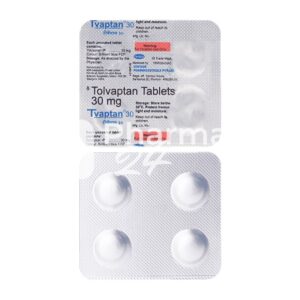
- Form of administration: oral tablets (commonly 15 mg, 30 mg, 45 mg and in some regions 60 mg), typically supplied in blister packs.
- Onset time: aquaretic effects and changes in urine output typically begin within about 2–4 hours, with serum sodium changes often evident within hours of dosing.
- Duration of action: effects generally persist for roughly 12–24 hours depending on dose and patient factors; dosing schedules vary by indication (once daily or split dosing for ADPKD).
- Alcohol warning: avoid or limit alcohol while taking tolvaptan because alcohol can increase the risk of dehydration, orthostatic hypotension and may exacerbate liver injury risk; ensure adequate monitoring and hydration.
- The most common side effect is thirst; other frequent adverse effects include dry mouth, increased urination or polyuria, nausea, diarrhoea and fatigue.
- Would you like to try tolvaptan without a prescription?
Latest Research Highlights (UK & EU, 2022–2025)
Basic Tolvaptan Information
- INN (International Nonproprietary Name): Tolvaptan.
- Brand Names Available In United Kingdom: Jinarc; Tolvaptan Accord.
- ATC Code: C03XA01.
- Forms & Dosages: Tablet (oral) 15mg, 30mg, 45mg, 60mg; typical blister packs (10–30 tablets).
- Manufacturers In United Kingdom: Otsuka Pharmaceutical Co., Ltd.; Accord Healthcare.
- Registration Status In United Kingdom: Registered with MHRA.
- OTC / Rx Classification: Prescription-only (Rx).
What does recent UK and EU research tell patients and prescribers about tolvaptan?
Post‑marketing pharmacovigilance and analyses from real‑world ADPKD registries between 2022 and 2025 repeatedly show two consistent messages.
First, eligible patients with rapidly progressive autosomal dominant polycystic kidney disease (ADPKD) generally experience a sustained slowing of eGFR decline while on treatment.
Second, hepatic safety signals persist and require active monitoring, prompting regulatory safety communications and reinforced risk‑management steps.
EMA and MHRA communications since 2022 have reiterated precautions around liver injury and the need for baseline and monthly liver testing early in therapy.
UK Yellow Card summaries have flagged hepatic adverse event reports that influenced intensified risk‑management measures in clinics.
Health technology assessments in several EU jurisdictions have modelled cost‑effectiveness, weighing long‑term renal outcome gains against high drug acquisition and monitoring costs, with benefits concentrated in rapid progressors.
| Study / Source | Design | Key Finding | Implication |
|---|---|---|---|
| ADPKD Registry Analyses (UK/EU, 2022–2025) | Observational, real‑world | Sustained slowing of eGFR decline in treated rapid progressors | Supports targeted prescribing and monitoring |
| Post‑Marketing Pharmacovigilance Reports | Spontaneous reports / Yellow Card summaries | Persistent hepatic event reports | Reinforced liver monitoring and patient counselling |
| EU HTA Cost‑Effectiveness Models | Modelled economic analyses | Benefit depends on patient selection and monitoring costs | Preferred for rapid progressors in funded pathways |
Data Highlights — Key Endpoints
- eGFR Slope: Reduced rate of decline versus untreated comparators in eligible patients.
- Discontinuation Rate: Often driven by aquaretic effects and monitoring burden.
- Hepatic Event Rate: Ongoing signal prompting monthly early LFT checks.
Short Definitions
- Jinarc: Originator brand of tolvaptan marketed by Otsuka for ADPKD.
- ADPKD Registries: Real‑world databases capturing kidney function and safety outcomes.
- HTA: Health technology assessment models used to compare costs and benefits over time.
Research evidence quality is mixed but complementary, combining randomised trial extension data, observational registry analyses, and HTA models.
Relevant product details used across studies include the INN tolvaptan, ATC C03XA01, tablet forms from 15mg up to 60mg, and licensed indications for ADPKD and hyponatraemia.
Clinical Effectiveness In The UK (NHS Outcomes & Patient‑Reported)
How do NHS renal units describe outcomes for patients taking tolvaptan?
Tolvaptan is prescribed in the NHS primarily for adults with rapidly progressive ADPKD and occasionally for selected hyponatraemia cases when fluid restriction fails.
Renal units report stabilisation or slower eGFR decline among responders, consistent with registry and trial extension data.
Real‑world discontinuation commonly occurs because of thirst, polyuria and the practical burden of monthly hepatic monitoring early in treatment.
Patient‑reported themes from NHS clinics and patient groups emphasise a greater sense of control over cyst progression but note daily life impacts from increased urination and fluid management.
- NHS Outcome Metrics — eGFR change over time (slope), percentage of patients continuing treatment at 12 months, reasons for discontinuation (thirst, polyuria, LFT abnormalities), monitoring frequency (baseline then monthly early LFTs).
| Setting | Effect Size Observed | Typical Drivers |
|---|---|---|
| Controlled Trial Extensions | Clear slowing of eGFR decline versus placebo | Strict inclusion criteria, close monitoring |
| Real‑World NHS Practice | Slower eGFR decline in responders, smaller average effect size | Wider patient mix, adherence and tolerability issues |
Practical prescribing notes used in NHS pathways include the ADPKD initiation dose of 45mg morning plus 15mg afternoon and hyponatraemia regimens starting at 15mg daily and titrating to 60mg when needed.
Specialist nephrologist initiation, baseline liver tests and monthly early monitoring per MHRA and NHS practice are standard before community supply is considered.
Indications & Expanded Uses (MHRA‑Approved And Off‑Label)
Which conditions is tolvaptan licensed for in the UK, and are there off‑label uses to be aware of?
- MHRA‑Approved Indications: Adult ADPKD to slow kidney‑function decline; selected hyponatraemia cases (SIADH, heart failure or cirrhosis) where fluid restriction is insufficient.
- Off‑Label Uses: Rare in NHS/private practice; some specialists may consider short‑term hyponatraemia control in complex cases outside the licence under multidisciplinary oversight.
| Indication | Typical NHS Regimen |
|---|---|
| ADPKD (licensed) | Initial 45mg morning + 15mg afternoon; titrate to a tolerated maintenance dose (up to 90/30mg) |
| Hyponatraemia (selected cases) | Start 15mg once daily; titrate up to 60mg maximum as needed |
Children are not approved for tolvaptan therapy.
Severe hepatic impairment is an absolute contraindication, and prescribers follow strict selection criteria including imaging, genetic considerations and shared decision‑making in NHS clinics.
Because long‑term use requires ongoing liver surveillance and lifestyle changes, documentation and informed consent are emphasised in UK practice.
Composition & UK Brand Landscape (Active Ingredient, Generics)
What will you find on the label when you collect tolvaptan in the UK?
| Brand | Strengths | Manufacturer | Typical Pack Size |
|---|---|---|---|
| Jinarc | 15mg, 30mg, 45mg | Otsuka | Blister packs, 10–30 tablets |
| Tolvaptan Accord | 15mg, 30mg, 45mg | Accord Healthcare | Blister packs, 10–30 tablets |
- Excipients / Formulation Notes: Standard film‑coated tablet presentations; specific excipients depend on manufacturer and appear on the pack insert — check the leaflet for allergy information.
- Regulatory Note: Tolvaptan is prescription‑only across the UK and packaging follows MHRA labelling requirements.
- Supply Routes: Hospital trusts typically dispense initiation packs for ADPKD clinics, while community pharmacies (for example Boots and LloydsPharmacy) may fulfil repeat NHS prescriptions when authorised.
Contraindications & Special Precautions (High‑Risk Groups)
Who should never take tolvaptan, and who needs extra caution?
- Absolute Contraindications: Severe hepatic impairment; hypovolaemia or anuria; hypersensitivity to tolvaptan or any excipients.
- High‑Risk Groups: Older adults (greater risk of dehydration and sodium shifts), patients with moderate to severe renal impairment, and people taking potent CYP3A4 inhibitors.
Pregnancy and breastfeeding require caution and tolvaptan is not recommended where foetal or infant risk cannot be ruled out.
Daily‑life restrictions include caution when driving if polyuria or dizziness occurs and advice to avoid excessive alcohol, which may worsen hepatic risk and dehydration.
In UK practice pharmacists and prescribers must record baseline liver function tests, counsel patients on early symptom reporting for hepatic injury and schedule monthly checks during the early months of therapy.
Key liver monitoring timeline: baseline LFTs, then monthly checks early in therapy, with further intervals defined by the specialist depending on results and local guidance.
Dosage Guidelines (NHS‑Recommended Regimens & Adjustments)
What doses are used for different conditions and patient groups?
Standard ADPKD initiation is 45mg in the morning and 15mg in the afternoon with stepwise titration to the highest tolerated dose, sometimes up to 90mg morning and 30mg afternoon in specialist settings.
For hyponatraemia the usual approach is 15mg once daily with titration up to a 60mg maximum as clinically required.
Children are not approved for tolvaptan use.
Elderly patients should start at lower doses with close monitoring for dehydration and sodium disturbances.
| Population | Dosage Adjustment |
|---|---|
| Elderly | Start lower; monitor fluid balance and serum sodium closely |
| Renal Impairment | Use caution; severe renal failure generally not recommended |
| Liver Impairment | Contraindicated in significant hepatic disease |
Missed dose rule: take the same day if remembered but do not double dose.
Overdose requires urgent medical attention because of the risk of dehydration and hypernatraemia.
NHS prescribing pathways require initiation by nephrology, with baseline LFTs and serum sodium and careful documentation for community repeat supply.
Interactions Overview (Food, Drink, And Medicines)
Which medicines and foods affect tolvaptan, and which should patients avoid?
Tolvaptan is metabolised primarily via CYP3A4 so strong CYP3A4 inhibitors (such as certain azole antifungals and macrolide antibiotics) increase tolvaptan exposure and raise risk.
CYP3A4 inducers may reduce tolvaptan efficacy and require specialist review if concomitant therapy is essential.
| Interaction | Examples | Action |
|---|---|---|
| Strong CYP3A4 inhibitors | Some azoles, certain macrolides | Avoid or adjust; consult specialist |
| Strong CYP3A4 inducers | Some anticonvulsants, rifampicin | May reduce effect; specialist advice needed |
| Alcohol / Dehydrating Agents | Excessive alcohol, OTC diuretics or stimulants | Avoid excessive use; monitor hydration |
- Patients should avoid grapefruit or grapefruit juice because of potential CYP interactions, and pharmacists routinely reconcile medicines and OTCs using e‑prescription records.
- Avoid excessive caffeine or other diuretics that could increase polyuria and dehydration risk.
Cultural Perceptions & Patient Habits (UK Patient Forums & NHS Behaviours)
How do UK patients talk about tolvaptan on forums and in clinics?
- Many patients express gratitude that a disease‑modifying option exists for ADPKD while also noting the lifestyle trade‑offs of polyuria and increased thirst.
- Renal patient groups and NHS clinic feedback show strong reliance on pharmacist counselling and renal nurse support to manage day‑to‑day effects.
- Forums sometimes discuss off‑label questions, but NHS guidance and clinic advice generally steer patient decisions.
Practical examples seen in UK practice include a working parent arranging longer comfort breaks at work, and a patient using the NHS App to view LFT results ahead of clinic review.
Community pharmacists at national chains remain trusted sources for medication advice and for signposting to renal services.
Electronic prescriptions and NHS patient portals help with repeat authorisation, lab result access and adherence support.
Availability & Pricing Patterns (Boots, LloydsPharmacy, Superdrug & NHS)
How is tolvaptan supplied and who pays for it in the UK?
Initial supply and monitoring are typically hospital‑based for ADPKD clinics, with community pharmacies dispensing authorised NHS repeats once hospital approval is in place.
Under NHS arrangements many patients receive funded treatment via hospital budgets or commissioned pathways, while private prescriptions involve higher patient costs.
Regional variations in commissioning can affect access and prioritisation between England, Scotland, Wales and Northern Ireland.
| Supply Channel | Likely Payer | Typical Pack Sizes |
|---|---|---|
| Hospital Renal Clinics | NHS specialist funding | Blister packs 10–30 tablets |
| Community Pharmacies (Boots, LloydsPharmacy, Superdrug) | NHS repeat prescription or private payer | Blister packs 10–30 tablets |
Available UK brands include Jinarc and Tolvaptan Accord in 15mg, 30mg and 45mg strengths.
In our online pharmacy, tolvaptan is available without a prescription, with discreet delivery to United Kingdom in 5‑14 days.
Comparable Medicines And Prescribing Preferences (NHS Alternatives)
Are there alternatives to tolvaptan for ADPKD or hyponatraemia?
- There are no widely used oral V2 antagonists for long‑term ADPKD management aside from tolvaptan.
- Conivaptan is an IV vaptan used in hospital for hyponatraemia but is not a maintenance ADPKD option.
- Older diuretics like furosemide and spironolactone manage fluid balance but do not alter ADPKD progression.
Investigational agents such as other vaptans remain under study and are not routine NHS options.
NHS prescribing preference is to reserve tolvaptan for eligible rapid progressors after multidisciplinary assessment, while conservative care and blood‑pressure control remain central to management.
| Option | Pros | Cons |
|---|---|---|
| Tolvaptan | Evidence of slowing eGFR decline in selected patients | Monitoring burden; hepatic safety concerns; high acquisition cost |
| Conservative Management | Blood‑pressure control, lifestyle measures; low monitoring costs | No proven disease‑modifying effect on cyst progression |
FAQ
Q: How will tolvaptan affect my daily life?
A: Expect increased thirst and urination, and plan for fluid intake, work breaks and access to facilities; your pharmacist can advise on coping strategies and practical tips.
Q: How often will I need tests?
A: You will need baseline liver function tests and serum sodium, then monthly liver tests early in therapy as per MHRA and NHS practice, with frequency adjusted once stable.
Q: Can I get it from my GP or community pharmacy?
A: Treatment is normally started by hospital nephrology, and ongoing supply may be arranged through community pharmacies after hospital approval and using e‑prescription systems.
Q: What if I miss a dose?
A: Take the dose the same day if you remember and do not double up; contact your clinic or pharmacist if uncertain.
Guidelines For Proper Use (UK Pharmacist Counselling & NHS Patient Support)
What should pharmacists cover when dispensing tolvaptan?
- Confirm the indication and brand (for example Jinarc or Tolvaptan Accord).
- Review baseline and recent LFTs and concurrent medicines, with attention to CYP3A4 interactions.
- Explain common side effects: thirst, dry mouth, polyuria, and offer practical advice on fluid routines.
- Advise patients to report symptoms suggestive of liver injury immediately (jaundice, dark urine, right upper‑quadrant pain).
- Reinforce the need for monthly early liver testing and documentation in electronic records.
Provide a short patient handout covering dosing, missed dose rules, storage (store below 25°C in original container) and Yellow Card reporting for adverse events.
Signpost patients to renal nurse clinics, the NHS App for lab results and patient charities that provide ADPKD education and peer support.
Document counselling and encourage patients to report any concerns to their clinic or community pharmacist promptly.
Delivery Across United Kingdom
| City | Region | Delivery Time |
|---|---|---|
| London | Greater London | 5-7 days |
| Birmingham | West Midlands | 5-7 days |
| Manchester | Greater Manchester | 5-7 days |
| Glasgow | Scotland | 5-7 days |
| Leeds | West Yorkshire | 5-7 days |
| Edinburgh | Scotland | 5-7 days |
| Bristol | South West England | 5-7 days |
| Cardiff | Wales | 5-7 days |
| Coventry | West Midlands | 5-9 days |
| Southampton | South East England | 5-9 days |
| Newcastle | North East England | 5-9 days |
| Plymouth | South West England | 5-9 days |
| Norwich | East of England | 5-9 days |
| Liverpool | Merseyside | 5-7 days |