
Semaglutide
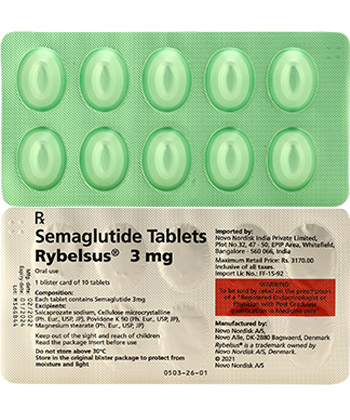
Semaglutide
- In our pharmacy, semaglutide can be purchased without a prescription, with delivery available in the United Kingdom and discreet packaging.
- Semaglutide is used for type 2 diabetes and, under the brand Wegovy, for weight management. It is a glucagon-like peptide-1 (GLP-1) receptor agonist, helping to lower blood glucose, slow gastric emptying, and increase feelings of fullness.
- The usual dose depends on the product: Ozempic 0.25 mg once weekly initially, increasing to 0.5 mg, 1 mg, or 2 mg; Wegovy 0.25 mg once weekly, titrated up to 2.4 mg; Rybelsus 3 mg once daily initially, then 7 mg or 14 mg once daily.
- The form of administration is either a subcutaneous injection pen or an oral tablet.
- Semaglutide begins to work gradually; some appetite and blood glucose effects may be noticed within the first week, but the full benefit usually develops over several weeks as the dose is increased.
- The duration of action is once weekly for injections and around 24 hours for the oral tablet, with treatment typically continued long term for ongoing benefit.
- Alcohol should be limited or avoided, as it may increase the risk of hypoglycaemia, worsen gastrointestinal side effects, and make diabetes control less predictable.
- The most common side effects are nausea, vomiting, diarrhoea, abdominal pain, constipation, and decreased appetite.
- Would you like to try semaglutide without a prescription?
Latest Research On Semaglutide In The UK And EU
Semaglutide has become one of the most closely watched GLP-1 analogue medicines in the UK and across the EU because the evidence keeps expanding.
For type 2 diabetes, recent studies continue to show meaningful HbA1c reduction alongside appetite suppression and weight loss, while obesity trials have strengthened the case for sustained body-weight reduction when treatment is maintained.
Cardiovascular outcome data have also helped place semaglutide at the centre of modern diabetes and weight-management discussions, especially for patients with established cardiometabolic risk.
That said, trial results do not always translate neatly into routine NHS practice, where dose delays, adherence problems, supply issues, and comorbidity burden can all blunt effect.
Semaglutide is classified as A10BJ06 and remains prescription-only in represented markets, including the MHRA and EMA framework that shapes UK prescribing.
| Study Type | Population | Main Outcomes | Safety Signals |
|---|---|---|---|
| Randomised clinical trials, 2022–2025 | Adults with type 2 diabetes or obesity in UK and EU-relevant cohorts | Lower HbA1c, clinically important weight loss, improved cardiometabolic markers | Gastrointestinal adverse effects, dose interruptions, treatment discontinuation |
| Cardiovascular outcome studies | Patients at increased cardiovascular risk | Risk reduction in major cardiovascular outcomes | Similar overall tolerability profile, with GI effects remaining the main issue |
Data highlight: In studies, the most common adverse effects were gastrointestinal, especially nausea, vomiting, diarrhoea and abdominal discomfort.
Discontinuation was usually linked to these early GI effects, particularly when titration was pushed too quickly or follow-up was inconsistent.
In practice, UK and EU clinicians now see semaglutide used across primary care, secondary care, and private prescribing pathways, but the best outcomes still depend on careful patient selection and ongoing review.
Basic Semaglutide Information
- INN (International Nonproprietary Name): Semaglutide
- Brand Names Available In United Kingdom: Ozempic, Wegovy, Rybelsus
- ATC Code: A10BJ06
- Forms & Dosages: Injection 0.25mg, 0.5mg, 1mg, 1.7mg, 2mg, 2.4mg; oral tablet 3mg, 7mg, 14mg
- Manufacturers In United Kingdom: Novo Nordisk
- Registration Status In United Kingdom: Prescription-only (Rx)
- OTC / Rx Classification: Prescription-only (Rx)
- Approved Indications: Type 2 diabetes, weight management
- Storage: Unopened pens 2–8°C; used pens up to 56 days at ≤30°C; tablets below 30°C in original packaging
- Contraindications: Medullary thyroid carcinoma, multiple endocrine neoplasia syndrome type 2, hypersensitivity to semaglutide or excipients
- Common Side Effects: Nausea, vomiting, diarrhoea, abdominal pain, constipation
Clinical Effectiveness In NHS Practice
Does semaglutide actually work the way patients hope it will once it leaves the clinical trial setting?
In NHS practice, the answer is usually yes, but only when it is used properly and reviewed regularly.
For type 2 diabetes, patients commonly notice lower glucose readings and a fall in HbA1c over time, especially when the dose is titrated as intended and the person keeps to follow-up.
For weight loss treatment, appetite control is often the first thing people mention, followed by gradual weight reduction and easier portion control.
Clinicians also look for broader cardiometabolic improvement, including better blood pressure trends, reduced waist size and improved overall risk profile.
- What patients often notice first: reduced hunger, fewer cravings, smaller meal portions, and sometimes early nausea.
- What clinicians monitor over time: HbA1c, body weight, tolerability, hydration, and whether the person is keeping to the titration plan.
- What can limit effectiveness: missed doses, delayed escalation, poor diet quality, and difficulty getting ongoing prescriptions.
- What tends to happen at 3 and 6 months: formal review of benefit, side effects, and whether chronic therapy should continue.
Semaglutide is usually a long-term medicine rather than a short course, so regular reassessment matters just as much as the starting dose.
In the real world, patients who combine the medicine with sensible diet changes and follow-up tend to do better than those relying on the injection or tablet alone.
Approved Indications And Where Off-Label Use Fits
What is actually licensed can be much clearer than what people see on social media or in private adverts.
Licensed use: A medicine is approved by the relevant regulator for a specific condition, dose, and route of use.
Off-label use: A licensed medicine is used in a way that is not covered by its formal approval, such as a different patient group or dose.
Prescription-only: The medicine cannot be supplied legally without an authorised prescriber’s involvement.
In UK practice, Ozempic is used for type 2 diabetes, Wegovy is used for weight management, and Rybelsus is used for type 2 diabetes as an oral option.
Semaglutide is not authorised for type 1 diabetes, and it is not first-line monotherapy in all regions.
Off-label use can appear in specialist care or private clinics, but it should not be presented as routine NHS practice.
The branded products and strengths that matter most to patients are the familiar Ozempic injection, Wegovy injection, and Rybelsus tablets, each with its own prescribing context.
Patients sometimes ask about online supply routes, and in our online pharmacy semaglutide is available without a prescription, with discreet delivery to United Kingdom in 5-14 days.
Composition, Brand Landscape And Dosage Forms
Are the injection pens and tablets all the same medicine?
Yes, the active ingredient is semaglutide, but the presentation changes the practical use.
Ozempic and Wegovy are subcutaneous pens, while Rybelsus is an oral tablet.
That distinction matters because the route affects counselling, timing, and how patients think about adherence.
| Brand | Strengths | Route | Packaging |
|---|---|---|---|
| Ozempic | 0.25mg, 0.5mg, 1mg, 2mg | Subcutaneous injection | Prefilled pens, various volumes |
| Wegovy | 0.25mg, 0.5mg, 1mg, 1.7mg, 2.4mg | Subcutaneous injection | Prefilled pens, graduated for titration |
| Rybelsus | 3mg, 7mg, 14mg | Oral tablet | Blister packs or tablet bottles |
All three brands are supplied by Novo Nordisk and sit within the GLP-1 medication class under ATC code A10BJ06.
Packaging can vary by market, and local language labelling, imported stock channels and pharmacy supply routes may differ across NHS, private and online dispensing.
Contraindications And Special Precautions
Who should stop and think before starting semaglutide?
That question matters because some risks need proper screening rather than a casual online order.
- Absolute contraindications: personal or family history of medullary thyroid carcinoma, multiple endocrine neoplasia syndrome type 2, or known hypersensitivity to semaglutide or excipients.
- Close monitoring needed: history of pancreatitis, diabetic retinopathy, gastrointestinal disease such as gastroparesis, and severe renal or hepatic impairment.
- Older adults: no age-based dose adjustment is usually needed, but sensitivity to side effects may be greater.
- Daily life cautions: nausea can affect working, driving, commuting, fluid intake and alcohol tolerance.
Warning: Seek urgent medical review if there is severe or persistent vomiting, signs of dehydration, suspected pancreatitis, or sudden worsening of vision.
Patients with diabetic retinopathy may need closer follow-up because rapid glucose improvement can be associated with worsening eye disease.
Severe renal or hepatic impairment does not automatically rule out use, but it does mean monitoring needs to be tighter and the benefit-risk balance checked carefully.
Dosage Guidelines And Dose Escalation In UK Use
Why do prescribers start low and go slowly?
Because the early weeks are where most gastrointestinal side effects happen.
Semaglutide usually begins with a low dose for around four weeks, then increases gradually to the maintenance dose if tolerated.
| Brand | Initial Dose | Escalation | Maintenance Dose | Route | Frequency |
|---|---|---|---|---|---|
| Ozempic | 0.25mg | Increase stepwise after about 4 weeks | 0.5mg to 1mg, with 2mg in some settings | Subcutaneous | Once weekly |
| Wegovy | 0.25mg | Gradual titration over several steps | 2.4mg | Subcutaneous | Once weekly |
| Rybelsus | 3mg | Step up after the initial period if needed | 7mg or 14mg | Oral | Once daily |
Maintenance dosing means the dose that is continued once the person has adjusted and the treatment goal is being met.
Missed-dose advice is different for each formulation, so weekly injection and daily tablet instructions should never be mixed up.
Mild to moderate renal or hepatic impairment does not usually require routine dose adjustment, but severe impairment calls for caution and closer monitoring.
Interactions With Medicines, Food And Drink
Most people focus on the injection or tablet itself, but the bigger issue is often what else is being taken at the same time.
The most important interactions to check are with medicines that can lower glucose too much.
- Insulin: combined use can increase hypoglycaemia risk.
- Sulfonylureas: also raise the chance of low blood glucose.
- Other diabetes medicines: combinations should be reviewed by a pharmacist or prescriber.
- Alcohol: may worsen nausea or complicate glucose control in some patients.
- Larger meals: can make nausea or fullness more noticeable.
- Tea and coffee: usually fine, but some patients find them aggravate stomach upset.
Because patient reports matter, unexpected effects and suspected interactions may also be reported through the MHRA Yellow Card system.
Always check over-the-counter medicines, herbal products and supplements as well, because they are easy to forget during a quick medication review.
Cultural Perceptions And Patient Habits In The UK
Why does semaglutide get so much attention from UK patients?
Partly because it is talked about in family groups, work chats, NHS 111 advice lines and online forums such as Patient.info and Mumsnet.
Patients often want straight answers about side effects, private versus NHS prescribing, and whether the weight loss they see online is realistic.
The British preference is usually for clear explanations, repeat checking and reassurance about technique, especially with injections or tablet timing.
Data highlight: recurring patient concerns in forum discussions usually include nausea, supply problems, whether the medicine is really suitable for weight loss, and what happens after the first few doses.
- Common patient worries: side effects, access, and whether treatment will continue long term.
- Common support points: pharmacist counselling, patient leaflets, NHS portals, and electronic messages from prescribers.
- Common misunderstandings: expecting instant results or assuming the same dose suits everyone.
When support is good, adherence tends to be better, because people feel more confident about injections, dosing windows, and what is normal during titration.
Availability, Supply And Pricing Patterns Across The United Kingdom
Can patients simply choose where to get semaglutide?
In practice, access depends on whether the route is NHS prescribing, private clinic supply, or a community pharmacy with stock.
Supply has been especially tight for Wegovy at times, and patients may have to wait or switch plans.
| Access Route | Typical Cost Considerations | Usual Counselling Point | Availability Note |
|---|---|---|---|
| NHS prescription | Depends on country and exemption status | GP or specialist review | Subject to local formulary and supply |
| Private clinic | Medicine plus consultation fees | Prescriber-led dosing advice | May offer broader access but still depends on stock |
| Pharmacy chain | Varies by service and prescription route | Pharmacist counselling in branch or remotely | Boots, LloydsPharmacy and Superdrug are familiar access points |
| Online pharmacy | Dispensing fees and delivery charges may apply | Digital assessment and written information | Legitimacy and registration should always be checked |
Prescribing and pricing differ across England, Scotland, Wales and Northern Ireland, especially where exemption rules and private dispensing fees are involved.
Patients looking to buy semaglutide UK should always check that the pharmacy is properly registered and that the product is prescription-only.
Electronic prescriptions and online pharmacy services have made access easier, but they have not removed the need for proper clinical screening.
Comparable Medicines And Prescribing Preferences
Is semaglutide always the first pick?
Not necessarily, because prescribers often choose based on the person in front of them, not just the drug list.
Here is the quick comparison patients usually want:
- Liraglutide: familiar GLP-1 option, but usually requires more frequent dosing.
- Dulaglutide: weekly injection option that some patients tolerate well.
- Tirzepatide: not a semaglutide analogue, but a GLP-1/GIP dual agonist with a different profile.
- Semaglutide: weekly or daily options depending on brand, strong weight-loss reputation, and wide recognition among patients.
- Supply: local availability may decide the choice as much as clinical preference.
- Tolerability: nausea and GI effects can make one medicine better suited than another.
For some people, the biggest advantage of semaglutide is its dosing convenience and established familiarity in diabetes and weight management.
For others, an alternative may be more practical if supply, administration preference or tolerability is better.
Common Questions UK Patients Ask
How long does semaglutide take to work?
Some people notice appetite change within weeks, but HbA1c and weight outcomes are usually assessed over months.
What happens if a dose is missed?
For weekly injections, take it as soon as remembered within 5 days; if more than 5 days have passed, wait until the next scheduled dose.
For oral tablets, skip the missed dose and take the next usual one; do not double-dose.
Can it be used for weight loss on the NHS?
Wegovy is the weight-management brand, but NHS access depends on local service criteria and review pathways.
Is it safe with other diabetes medicines?
It can be used with other diabetes treatment, but insulin and sulfonylureas need extra caution because of hypoglycaemia risk.
How should it be stored?
Unopened pens are refrigerated, used pens may be kept below 30°C for up to 56 days, and tablets should stay below 30°C in the original packaging.
Proper Use, Pharmacist Counselling And NHS Support
What does good counselling actually look like when semaglutide is dispensed?
It usually starts with simple, practical advice and ends with clear follow-up.
- Check which brand is being used and whether it is an injection or an oral tablet.
- Confirm the dose schedule and the titration plan before the first dose.
- Show or explain the injection technique, or the tablet timing rules for Rybelsus.
- Discuss expected side effects, especially nausea, vomiting, diarrhoea and constipation.
- Explain when to seek help, particularly if vomiting is severe or hydration is affected.
- Review storage, travel and how to keep the medicine safe at home.
- Arrange follow-up review and encourage use of written leaflets or patient portals.
| Topic | UK Counselling Point | Red Flag |
|---|---|---|
| Storage | Unopened pens 2–8°C; used pens up to 56 days at ≤30°C; tablets below 30°C | Freezing, overheating, or using damaged packaging |
| Missed dose | Follow brand-specific advice | Double-dosing |
| Side effects | Nausea and tummy upset can happen early on | Severe vomiting, dehydration, severe abdominal pain |
| Follow-up | Review response and tolerance regularly | No review for months on end |
Local formulary guidance, MHRA safety updates and prescriber instructions should always be checked, because semaglutide is a chronic therapy that works best when the patient is still being monitored at 3 and 6 months.
Delivery Across United Kingdom
| City | Region | Delivery time |
|---|---|---|
| London | England | 5-7 days |
| Birmingham | England | 5-7 days |
| Manchester | England | 5-7 days |
| Leeds | England | 5-7 days |
| Liverpool | England | 5-7 days |
| Newcastle upon Tyne | England | 5-7 days |
| Sheffield | England | 5-9 days |
| Bristol | England | 5-9 days |
| Nottingham | England | 5-9 days |
| Leicester | England | 5-9 days |
| Cardiff | Wales | 5-7 days |
| Edinburgh | Scotland | 5-7 days |
| Glasgow | Scotland | 5-7 days |
| Belfast | Northern Ireland | 5-7 days |