
Bempedoic Acid
In brief
- Bempedoic acid is prescription-only in major markets (USA, EU/EEA, UK, Australia, New Zealand) and is sold under brand names such as Nexletol, Nilemdo, Nustendi and Nexlizet; however, availability without a prescription varies by country and some pharmacies or online suppliers may supply it without a prescription — check local regulations and be aware this is not generally recommended.
- It is used to lower LDL‑cholesterol in primary hypercholesterolaemia and mixed dyslipidaemia, as an adjunct to diet and maximally tolerated statin therapy or for statin‑intolerant patients; mechanism of action: ATP citrate lyase (ACL) inhibitor, reducing cholesterol synthesis upstream of HMG‑CoA reductase.
- The usual adult dose is 180 mg orally once daily (monotherapy); fixed‑dose combination with ezetimibe is 180 mg/10 mg once daily; not approved for paediatric patients, and elderly patients generally use the same dose with clinical monitoring.
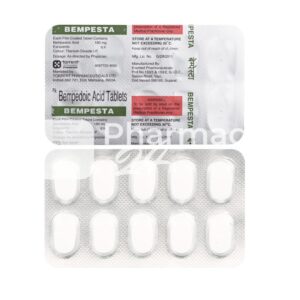
- Form of administration: oral film‑coated tablet (180 mg) or fixed‑combination tablet (180 mg/10 mg with ezetimibe); taken once daily, with or without food.
- Onset time: LDL‑C lowering is seen over weeks, with clinical reassessment typically at 4–12 weeks to evaluate effect.
- Duration of action: administered once daily; LDL‑C reduction is maintained with continued long‑term therapy while treatment is continued.
- Alcohol warning: avoid excessive alcohol intake; alcohol may worsen liver function and increase risks related to liver enzyme elevations and gout—discuss alcohol use with your clinician before starting treatment.
- The most common side effect is increased uric acid (hyperuricaemia), which can precipitate gout; other common adverse effects include muscle spasms, back or limb pain, upper respiratory tract infection, abdominal pain, diarrhoea, fatigue and elevations in hepatic enzymes.
- Would you like to try bempedoic acid without a prescription?
Basic Bempedoic Acid Information
- INN (International Nonproprietary Name): Bempedoic acid
- Brand Names Available In United Kingdom: Nilemdo (bempedoic acid 180 mg) and Nustendi (bempedoic acid/ezetimibe 180 mg/10 mg)
- ATC Code: C10AX21
- Forms & Dosages: Film-coated tablet 180 mg (monotherapy); film-coated tablet 180 mg/10 mg (fixed combination with ezetimibe)
- Manufacturers In United Kingdom: Daiichi Sankyo Europe (marketing and distribution for EU/EEA/UK)
- Registration Status In United Kingdom: Approved in the EU in April 2020 as Nilemdo (bempedoic acid 180 mg) and Nustendi (bempedoic acid/ezetimibe 180/10 mg); marketed in Europe and the UK under these brands
- OTC / Rx Classification: Prescription only (Rx)
Latest Research Highlights
Clinicians ask whether bempedoic acid meaningfully lowers LDL‑C and is well tolerated in place of, or on top of, statins.
Phase III randomised trials and pooled analyses reported LDL‑C reductions with monotherapy in the mid‑teens percentage range, with substantially larger drops when combined with ezetimibe at the fixed dose 180 mg/10 mg.
Safety signals that consistently emerged include rises in uric acid, musculoskeletal complaints such as muscle spasms, and occasional hepatic enzyme elevations.
European approval decisions in April 2020 were informed by these trials and by larger cardiovascular outcome studies completed during 2023–2024.
Regulatory labelling in the UK/EU reflects use as adjunctive therapy to diet and maximally tolerated statin, and as an option for adults with statin intolerance.
| Study/Analysis | Population | LDL‑C % Change | Key Adverse Events | Follow‑Up |
|---|---|---|---|---|
| Phase III Programme (pooled) | Adults with primary hypercholesterolaemia, some statin‑intolerant | Monotherapy: mid‑teens; Combination (180/10 mg): substantially larger | Increased uric acid, muscle spasms, LFT elevations | 12–52 weeks; outcomes studies to 2023–2024 |
| Cardiovascular Outcomes Studies | High cardiovascular risk on standard therapy | LDL‑C reductions consistent with above when added to background therapy | Similar safety pattern; rare serious events reported | Longer term; completed by 2023–2024 |
Clinical Effectiveness In The UK
Patients and GPs want to know how bempedoic acid performs in everyday NHS practice compared with trial results.
In UK practice the medicine is mainly used as add‑on therapy to a maximally tolerated statin or as an alternative for patients with statin intolerance.
Local NHS audits and primary care registries report meaningful LDL‑C reductions within 4–12 weeks that lead many clinicians to continue treatment.
Reported tolerability in primary care is often perceived as better than re‑challenging higher‑dose statins for patients who previously experienced adverse effects.
Pharmacovigilance data submitted via MHRA Yellow Card and primary care records echo trial safety signals: raised uric acid, muscle spasms and modest hepatic enzyme rises.
- LDL‑C Change: Measurable reduction at 4–12 weeks, consistent with mid‑teens for monotherapy and larger with ezetimibe.
- % Achieving Goal: A notable proportion reach local LDL targets when used as add‑on.
- Discontinuation Rate: Low to moderate, often due to gout flares or musculoskeletal complaints.
| Measure | Baseline | 12‑Week Value |
|---|---|---|
| Average LDL‑C (UK Cohorts) | Not specified | Lower by mid‑teens % (monotherapy); greater with 180/10 mg combo |
Reassess lipids at 4–12 weeks and communicate results via the NHS app or GP follow‑up so patients see objective benefit and remain engaged.
Indications And Expanded Uses
Patients typically ask what bempedoic acid is licensed to treat and whether it can be used off‑label.
- Licensed Indications
- Primary hypercholesterolaemia and mixed dyslipidaemia in adults as adjunct to diet and maximally tolerated statin, and for adults who are statin‑intolerant.
- Populations Not Recommended
- Children (no approval), pregnancy and breastfeeding (contraindicated), and severe hepatic impairment (not recommended).
- Monitoring Nodes
- Baseline and periodic checks of uric acid, liver function tests and renal function as clinically indicated.
Off‑label use in NHS practice is cautious and uncommon, but may include short‑term bridging when switching lipid agents or use in specific genetic dyslipidaemias under specialist care.
Local NHS formularies or Integrated Care Boards may restrict initiation to specialists or secondary care lipid services depending on commissioning decisions.
Composition And Brand Landscape
Prescribers and community pharmacists need quick clarity on available formulations and who supplies them in the UK market.
| Brand | Region | Formulation | Manufacturer |
|---|---|---|---|
| Nilemdo | Europe (EU/EEA, Switzerland, UK) | 180 mg tablet | Daiichi Sankyo Europe |
| Nustendi | Europe | 180 mg/10 mg tablet (bempedoic acid + ezetimibe) | Daiichi Sankyo Europe |
| Nexletol / Nexlizet | USA, Australia, New Zealand | 180 mg; 180/10 mg combo | Esperion Therapeutics / CSL Seqirus |
The active ingredient is bempedoic acid (INN) in a 180 mg film‑coated tablet, with a fixed‑dose combination available as 180 mg/10 mg with ezetimibe.
Packaging on the UK market commonly comprises 180 mg blister packs for Nilemdo and 180/10 mg for Nustendi where supplied.
Pharmacies should expect to see prescriptions specifying brand or generic according to local policy, and major chains and NHS‑linked online pharmacies stock these products subject to formulary rules.
Contraindications And Special Precautions
Patients often want to know who must not take bempedoic acid and what checks are needed before starting.
- Absolute Contraindications: Known hypersensitivity to bempedoic acid or excipients; pregnancy and breastfeeding are contraindicated.
- High‑Risk Groups: Severe renal impairment (eGFR <30), severe hepatic impairment, patients with history of gout or hyperuricaemia, and those with prior tendon disorders.
Baseline tests should include liver function tests, creatinine/eGFR and uric acid prior to initiating therapy.
Repeat monitoring is sensible at 4–12 weeks or earlier if symptoms develop, and more frequently in patients with moderate hepatic or renal disease.
Advise patients to report new tendon pain, joint swelling or signs of gout promptly and to seek urgent assessment for severe muscle pain or jaundice.
Encourage Yellow Card reporting to the MHRA for suspected serious adverse reactions so UK safety data remain robust.
Dosage Guidelines And Adjustments
Clear dosing instructions reduce errors and improve adherence for patients picking up prescriptions at community pharmacies.
| Population | Dosage | Comments |
|---|---|---|
| Adults | 180 mg orally once daily | May be taken with or without food; reassess lipids at 4–12 weeks |
| Combination Therapy | 180 mg/10 mg once daily (fixed tablet) | Use for greater LDL‑C reduction where indicated |
| Elderly | Same as adult dosage | No routine adjustment required |
Renal: no adjustment for mild to moderate impairment (eGFR ≥30), but exercise caution and consider specialist advice if eGFR <30.
Hepatic: use caution in moderate hepatic impairment and avoid in severe hepatic impairment.
Missed dose advice: take as soon as remembered unless it is near the next scheduled dose; do not double up.
Overdose management is supportive; monitor for muscle symptoms and hepatic changes.
Drug And Food Interaction Overview
Patients commonly ask whether bempedoic acid interacts with foods or other medicines they already take.
The interaction profile is relatively limited compared with some lipid agents, but there are important considerations.
- Approved Combination: Co‑formulation with ezetimibe is approved as 180 mg/10 mg and is a commonly used interaction‑managed option.
- Pharmacodynamic Concerns: Use caution with drugs that increase uric acid or predispose to tendon disorders.
No specific major food restrictions exist, though patients should be counselled on alcohol moderation and the increased gout risk linked to uric acid rises.
MHRA Yellow Card reports in the UK have repeatedly highlighted musculoskeletal events and hyperuricaemia; healthcare professionals should continue to report suspected reactions.
Always check the British National Formulary or local e‑prescribing systems for interaction flags and liaise with the dispensing pharmacist for polypharmacy in older adults.
Cultural Perceptions And Patient Habits In The UK
Patients often arrive asking whether non‑statin options are safer or better tolerated than statins.
Many UK patients place trust in the GP and the community pharmacist to explain new lipid therapies and monitoring plans clearly.
Online forums such as Patient.info and Mumsnet contain conversations about statin intolerance and curiosity about oral alternatives like bempedoic acid.
Pharmacist counselling is culturally central in the UK and patients expect to be told what to watch for, when tests will be done and when to contact NHS 111 or their GP.
Showing test results via the NHS app or patient portal often improves adherence because people can see their LDL‑C fall over weeks.
“Will this help if I couldn’t tolerate statins before?” is a common patient question heard at the pharmacy counter.Use plain English, give written leaflets or NHS links, and record counselling in the electronic record so the patient gets follow‑up reminders via the NHS app.
Availability And Pricing Patterns
Patients ask whether they can get bempedoic acid on the NHS, privately, or online and how much it will cost.
Access Route Typical Scenario Patient Charge NHS Prescription Initiation where commissioned by ICB or specialist; available on formulary where approved Standard prescription charge applies in England unless exempt; free in Scotland, Wales, Northern Ireland Private Prescription Available where patient opts to pay or GP prescribes privately Price varies by supplier and pharmacy Retail / Online Pharmacy Stocked by major chains and NHS‑linked online pharmacies; e‑prescription routing used for repeats Varies; check local pharmacy Integrated Care Board commissioning decisions affect availability and who can initiate therapy locally.
In our online pharmacy, bempedoic acid is available without a prescription, with discreet delivery to United Kingdom in 5‑14 days.
Pharmacists should confirm brand/generic policy and check stock for Nilemdo or Nustendi 180 mg formulations before dispensing.
Comparable Medicines And Prescribing Preferences
Clinicians weigh efficacy, safety and cost when choosing between statins, ezetimibe, PCSK9 inhibitors and bempedoic acid.
Agent Mechanism Typical LDL‑C Reduction Route Safety Notes Statins (Atorvastatin, Rosuvastatin) HMG‑CoA reductase inhibition High intensity: large reductions Oral Well‑established; some intolerance Ezetimibe Cholesterol absorption inhibitor Moderate; synergistic with others Oral Good tolerability; often combined PCSK9 Inhibitors (Alirocumab, Evolocumab) Monoclonal antibodies targeting PCSK9 Large reductions Injectable High efficacy; higher cost Bempedoic Acid ATP citrate lyase (ACL) inhibitor Moderate (mid‑teens monotherapy); larger with ezetimibe Oral Useful for statin‑intolerant patients; increases uric acid risk Choice depends on LDL‑C target shortfall, route preference, tolerability history and local commissioning or cost considerations.
Frequently Asked Questions Patients Ask In The NHS Setting
- Will This Replace My Statin?: Usually not first‑line; it is used as add‑on to a maximally tolerated statin or as an alternative for statin‑intolerant patients; discuss with your GP or specialist.
- How Soon Will My Cholesterol Fall?: Expect lipid checks at 4–12 weeks; measurable LDL‑C reductions are typically seen in that window.
- What Side Effects Should I Watch For?: Report joint or tendon pain, new gout symptoms, severe muscle pain, or jaundice; pharmacists and GPs will advise and report serious events to the MHRA.
- Can I Get This On The NHS Or Privately?: Availability depends on local formulary and ICB commissioning; check with your GP, pharmacist or NHS portal.
Signpost patients to NHS.uk for local formulary information and to the MHRA Yellow Card scheme for reporting suspected adverse reactions.
Guidelines For Proper Use And Pharmacist Counselling Script
Pharmacists should start by confirming the indication and reviewing concomitant medicines and allergy history.
Explain mechanism briefly: an ATP citrate lyase (ACL) inhibitor that lowers LDL‑cholesterol and is different to statins.
State the dose clearly: 180 mg once daily for monotherapy or 180 mg/10 mg once daily for the fixed combination.
Set expectations: arrange lipid tests at 4–12 weeks and explain that patients should expect to see their results via the NHS app where possible.
Cover safety: advise about gout risk, tendon pain and possible liver enzyme changes, and tell patients to seek urgent review for severe muscle pain or jaundice.
Practical points: missed dose advice, storage recommendation (15–30°C in original packaging) and MHRA Yellow Card reporting steps.
Document counselling in the NHS electronic record and provide a short patient handout with links to the NHS portal and Yellow Card reporting guidance.
Delivery Across United Kingdom
City Region Delivery Time London England 5–7 days Birmingham England 5–7 days Manchester England 5–7 days Glasgow Scotland 5–7 days Leeds England 5–7 days Edinburgh Scotland 5–7 days Bristol England 5–7 days Liverpool England 5–7 days Sheffield England 5–7 days Newcastle England 5–7 days Brighton England 5–9 days Cardiff Wales 5–9 days Belfast Northern Ireland 5–9 days Nottingham England 5–9 days Southampton England 5–9 days