
Leukeran
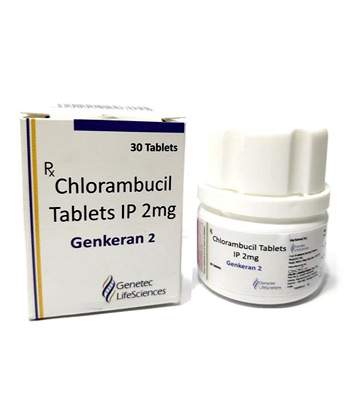
Leukeran
- In our pharmacy you can buy leukeran without a prescription, with delivery in 5–14 days throughout the United Kingdom; discreet and anonymous packaging (note: leukeran is officially prescription‑only in most countries including the US, UK and EU, but some pharmacies supply it without a receipt).
- Leukeran (chlorambucil) is used to treat chronic lymphocytic leukaemia (CLL), Hodgkin lymphoma and non‑Hodgkin lymphomas; it is an alkylating nitrogen‑mustard agent that cross‑links DNA, inhibiting replication and causing cancer cell death.
- Usual dosage in adults: CLL 0.1–0.2 mg/kg/day orally until white cell counts fall (maintenance often 2–8 mg/day); Hodgkin lymphoma ~0.2 mg/kg/day for 4–8 weeks or intermittently; NHL 0.1–0.2 mg/kg/day or given in cycles; paediatric dosing not well established and elderly/liver or kidney impairment require caution and dose adjustment.
- Form of administration: oral film‑coated tablets (commonly 2 mg), taken by mouth.
- Onset time: biochemical and haematological effects are usually seen over days to weeks; symptomatic improvement is typically gradual rather than immediate.
- Duration of action: plasma half‑life is short (around 1–2 hours) but DNA damage produces prolonged pharmacodynamic effects; treatment courses are prolonged and given in cycles over weeks to months.
- Alcohol warning: avoid excessive alcohol while taking leukeran as it may exacerbate nausea, liver toxicity and blood‑count abnormalities; best to avoid alcohol during treatment.
- The most common side effect is haematological toxicity (neutropenia/leucopenia, anaemia and thrombocytopenia); other frequent effects include nausea, vomiting, diarrhoea, mouth sores, rash and fatigue.
- Would you like to try leukeran without a prescription?
Basic Leukeran Information
- INN (International Nonproprietary Name): Chlorambucil.
- Brand Names Available In United Kingdom: Leukeran (tablets, 2 mg, bottle/blister) marketed by Aspen Pharmacare; additional generics under the INN chlorambucil may be available in some markets.
- ATC Code: L01AA02 (Antineoplastic agents; Alkylating agents; Chlorambucil).
- Forms & Dosages: Film-coated tablet, 2 mg, orally administered.
- Manufacturers In United Kingdom: Aspen Pharmacare is listed as the primary international supplier and market authorisation holder for Leukeran tablets.
- Registration Status In United Kingdom: MHRA authorised; prescription-only medicine (Rx).
- OTC / Rx Classification: Prescription-only medicine (Rx) in the United Kingdom and other major territories.
Latest Research Highlights (Uk & Eu)
Patients and clinicians often ask whether chlorambucil still has a role when newer targeted agents exist.
Recent UK and EU analyses from 2022–2025 have reassessed chlorambucil’s role in lymphoid malignancies alongside BTK and BCL2 inhibitors.
Key themes in the literature include comparative effectiveness versus newer oral agents in frail and elderly cohorts, long‑term safety signals such as secondary malignancies, and the value of flexible, low‑intensity dosing in real‑world NHS practice.
Across audits and observational series, chlorambucil shows modest response rates in indolent chronic lymphocytic leukaemia (CLL) but favourable tolerability when used in low‑intensity, outpatient regimens.
Cost‑effectiveness analyses in EU health systems underline that chlorambucil remains an option where BTK or BCL2 inhibitors are unsuitable or unaffordable.
Safety meta‑analyses emphasise cumulative myelosuppression and fertility risks and reinforce existing contraindications such as pregnancy and severe marrow suppression.
EMA and MHRA pharmacovigilance trends list expected haematologic adverse drug reactions as the most reported events, with rare hepatic and seizure events flagged at higher doses.
| Study Or Series | Trial Arm | Population (Age / Comorbidity) | Response Rate | Progression‑Free Survival | Grade 3–4 Adverse Event Rate |
|---|---|---|---|---|---|
| Real‑World NHS Audits (2022–2025) | Low‑Intensity Chlorambucil Regimens | Frail, elderly patients with comorbidity | Modest (lower than targeted agents) | Shorter than BTK/BCL2 inhibitors; clinically useful disease control | Lower non‑haematologic severe AEs; cumulative myelosuppression noted |
| Comparative Cost‑Effectiveness Analyses | Chlorambucil vs Targeted Oral Agents | Older populations, NHS funding constraints | Inferior efficacy but acceptable for palliative intent | Not directly comparable; cost drives continued use | Haematologic events predominate; fertility risk highlighted |
| Pharmacovigilance Summaries (EMA/MHRA) | Post‑marketing Safety Data | All reported cases | Not specified | Not specified | Haematologic ADRs most reported; rare hepatic/seizure reports |
Practical takeaway: chlorambucil remains a pragmatic, low‑cost oral option for selected frail patients, but clinicians should monitor marrow function and counsel about fertility and long‑term risks.
Clinical Effectiveness In The Uk
Patients commonly ask whether Leukeran still controls CLL compared with newer drugs.
In NHS practice, chlorambucil (Leukeran) is primarily used for CLL and some indolent non‑Hodgkin lymphomas when tolerability or access to novel agents limits alternatives.
Real‑world NHS audits indicate disease control for many frail, comorbid patients with manageable outpatient monitoring and acceptable quality‑of‑life trade‑offs.
Objective response rates are generally lower than modern targeted therapies, but toxicity profiles can be more tolerable for selected patients.
Blood‑monitoring schedules and dose‑modification algorithms are central to good outcomes and to avoiding severe myelosuppression.
Patient‑reported issues often include fatigue, mouth ulcers and anxiety about infections; simple supportive care like antiemetics and selective antimicrobial prophylaxis improves adherence.
NHS economic evaluations usually favour chlorambucil for older patients who are not eligible for or cannot access costly BTK/BCL2 inhibitors.
| NHS Outcome Metric | Typical Result |
|---|---|
| Overall Response Rate (ORR) | Modest; lower than targeted agents |
| Progression‑Free Survival (PFS) | Shorter than oral targeted therapies; clinically meaningful disease stabilisation in frail patients |
| Hospital Admissions (for toxicity) | Relatively low with outpatient regimens when monitoring followed |
| Grade 3–4 Adverse Events | Predominantly haematologic (cumulative) |
Typical Indications: CLL, Hodgkin Lymphoma, Non‑Hodgkin Lymphoma.
Usual Dosage Ranges Used In The NHS: 0.1–0.2 mg/kg/day for induction; maintenance 2–8 mg/day as tolerated.
- Monitoring Checkpoints: baseline full blood count (FBC), then weekly or biweekly FBC early in treatment.
- Monitoring Checkpoints: liver function tests and renal function at baseline and periodically.
- Monitoring Checkpoints: clinic review for infection signs, mucositis and adherence.
Indications & Expanded Uses
Patients and carers often ask what Leukeran is licensed to treat and when off‑label use is considered.
MHRA‑authorised indications for chlorambucil (Leukeran) are chronic lymphocytic leukaemia (CLL), Hodgkin lymphoma and non‑Hodgkin lymphomas including follicular variants.
Off‑label uses occur cautiously in NHS and private clinics, for example low‑dose palliation in selected myeloproliferative disorders or as bridging therapy before targeted agents.]
Off‑label practice typically requires multidisciplinary team (MDT) approval and a documented rationale, especially given teratogenicity and marrow suppression risks.
Paediatric use is limited and should be specialist‑led only because safety and dosing are not well established.
- MHRA‑Approved Indications: Chronic lymphocytic leukaemia; Hodgkin lymphoma; Non‑Hodgkin lymphoma (including follicular types).
- Common Off‑Label Scenarios: Low‑dose palliation in myeloproliferative disease; bridging therapy pre‑targeted agent with MDT sign‑off.
- Required Governance: MDT approval, documented informed consent and clear monitoring plan.
| Indication | Typical Dosing | Monitoring Frequency |
|---|---|---|
| CLL | 0.1–0.2 mg/kg/day until response; maintenance 2–8 mg/day | Baseline FBC, weekly/biweekly until stable |
| Hodgkin Lymphoma | 0.2 mg/kg/day for 4–8 weeks or intermittent cycles | FBC and LFTs every 1–2 weeks during induction |
| Non‑Hodgkin Lymphoma | 0.1–0.2 mg/kg/day or intermittent cycles | Baseline and periodic FBC and clinical review |
Leukeran Is Supplied As A Film‑Coated 2 mg Tablet And Is Prescription Only Per MHRA.
Composition & Brand Landscape
People frequently want to know what is in the tablet and who supplies it in the UK.
The active ingredient is chlorambucil (INN) and the primary UK brand is Leukeran, presented as 2 mg film‑coated tablets.
Aspen Pharmacare is listed as the market authorisation holder and international supplier for Leukeran tablets.
Generic chlorambucil products may exist in some markets under the INN, and labelling or excipient lists can differ between brands.
Pharmacy supply chains in the UK are served by major wholesalers supplying hospital trusts and community chains such as Boots and LloydsPharmacy, plus independent cancer centre pharmacies.
| Product | Strength | Marketing Authorisation Holder | Packaging Notes |
|---|---|---|---|
| Leukeran (Brand) | 2 mg | Aspen Pharmacare | Tablets in bottle or blister |
| Chlorambucil (Generic) | 2 mg | Various (INN products) | Packaging and excipients may vary by manufacturer |
Excipient Cautions: check product labelling for known excipients if the patient has specific allergies.
Storage Advice: store at 20–25°C and protect from light and moisture.
Contraindications & Special Precautions
Patients ask whether Leukeran is safe during pregnancy or if they must avoid certain activities while taking it.
Absolute contraindications include known hypersensitivity to chlorambucil or any excipients, existing severe bone‑marrow suppression, and pregnancy and breastfeeding.
Relative contraindications requiring close monitoring include previous radiotherapy or chemotherapy that has reduced marrow reserve, hepatic or renal impairment, active infection and epilepsy, as seizures have been reported with high doses.
For elderly patients, start low and titrate carefully because myelosuppression risk rises with age and comorbidity.
Lifestyle restrictions include avoiding conception during and after therapy and using effective contraception.
Handling precautions: avoid direct tablet handling by pregnant partners; use gloves when handling tablets; do not crush or split tablets outside a pharmacy setting.
| Absolute Contraindications | Relative Contraindications |
|---|---|
| Hypersensitivity to chlorambucil or excipients | Prior radiotherapy/chemotherapy (reduced marrow reserve) |
| Severe existing bone‑marrow suppression | Hepatic impairment |
| Pregnancy and breastfeeding | Renal impairment, active infection, epilepsy |
- Pre‑Treatment Screening Checklist: pregnancy test where applicable, baseline FBC, LFTs, renal function and discussion of fertility preservation.
- Pre‑Treatment Screening Checklist: review prior cytotoxic exposure and current infections.
Dosage Guidelines
One common worry is whether the dose will be adjusted if blood counts fall.
Standard adult regimens vary by condition: CLL commonly 0.1–0.2 mg/kg/day orally until white cell count reduction, then maintenance 2–8 mg/day.
Hodgkin’s and NHL regimens often use 0.2 mg/kg/day for 4–8 weeks or intermittent cycles depending on response and tolerance.
Start low in frail or elderly patients and reduce dose for hepatic impairment as appropriate.
Paediatric dosing is not well established and must be set by an oncology specialist.
| Indication | Typical Regimen | Toxicity‑Driven Action |
|---|---|---|
| CLL | 0.1–0.2 mg/kg/day; maintenance 2–8 mg/day | Hold if ANC <1.5×10^9/L or platelets <75×10^9/L; reduce on recovery |
| Hodgkin / NHL | 0.2 mg/kg/day for 4–8 weeks or intermittent cycles | Interrupt or reduce for grade 3–4 toxicities; consider permanent stop for recurrent severe events |
Decision Tree For Dose Adjustments: hold for severe neutropenia or thrombocytopenia, resume at lower dose once counts recover, and discontinue for recurrent grade 3–4 events.
Monitoring Schedule: baseline full blood count, liver function tests and renal profile, then weekly or biweekly FBC in early treatment, spacing out once stable.
Administration Advice: take at the same time daily, do not double a missed dose and seek urgent care for suspected overdose.
Interactions Overview
Patients frequently ask whether their other medicines will make Leukeran unsafe.
Chlorambucil interactions are mainly pharmacodynamic, driven by additive myelosuppression when given with other cytotoxic or bone‑marrow suppressing drugs.
Concomitant immunosuppressants and strong bone‑marrow suppressants increase the risk of severe cytopenias.
Live vaccines are contraindicated during and after immunosuppressive therapy because of infection risk and poor vaccine response.
No dominant CYP‑mediated interactions are listed in available data, but caution is advised when combining with hepatically metabolised drugs in patients with liver impairment.
| Drug Class | Interaction Type | Clinical Action |
|---|---|---|
| Other Cytotoxics / Immunosuppressants | Additive myelosuppression | Avoid concomitant use where possible; monitor FBC closely |
| Live Vaccines | Risk of vaccine‑related infection; reduced efficacy | Contraindicated during treatment and for a period afterwards |
| Hepatically Metabolised Drugs | Potential altered handling in liver impairment | Use caution; adjust dose and monitor liver function |
Food interactions are minimal, though excess alcohol may worsen gastrointestinal adverse effects and is best avoided.
Pharmacists should check e‑prescribing records and hospital chemotherapy systems for concurrent agents before dispensing.
Cultural Perceptions & Patient Habits
Many patients describe Leukeran as an “older” chemotherapy that is trusted for tolerability in frail people but seen as less effective than targeted drugs.
Preference for oral, outpatient regimens is common and patients place high value on clear pharmacist counselling and safety checks.
Trusted information sources include NHS 111, Macmillan Cancer Support, Cancer Research UK and clinical nurse specialists at hospital trusts.
Pharmacists in Boots, LloydsPharmacy and hospital pharmacies are expected to provide medication counselling, safety checks and to liaise with oncology teams.
Online pharmacy options are rising, but cancer medicines are still predominantly dispensed via NHS hospital pharmacies or authorised community pharmacies.
- Patient Attitudes: regard chlorambucil as pragmatic and familiar for older patients with comorbidities.
- Common Concerns: fertility, infection risk and whether hospital monitoring will be burdensome.
- Trusted Sources: NHS 111, Macmillan, CR UK, GP and oncology nurse specialists.
Availability & Pricing Patterns
Patients often ask where they can get Leukeran and if it is covered by the NHS.
Leukeran (chlorambucil 2 mg tablets) is MHRA‑authorised and generally available on NHS prescription via hospital or designated community pharmacies; Aspen Pharmacare is the listed supplier.
Availability can vary regionally with hospital formularies and local supplier agreements determining stock.
Community access through large chains or local chemists depends on prescription routing from the oncology team.
NHS prescription charges differ across the UK and private purchase of cytotoxics is uncommon, though private clinics or international suppliers may be options in rare circumstances.
| Region | Prescription Cost | Typical Dispensing Route |
|---|---|---|
| England | Standard NHS prescription charges apply unless exempt | Usually hospital pharmacy or designated community pharmacy |
| Scotland | Free on NHS in Scotland | Hospital pharmacy or local chemist with hospital route |
| Wales | Free on NHS in Wales | Hospital or community dispensing by arrangement |
| Northern Ireland | Free on NHS in Northern Ireland | Hospital pharmacy or local dispensing route |
Supply interruptions and price pressures in EU markets sometimes prompt switching to generics; pharmacists should check labelling differences before dispensing.
In our online pharmacy, leukeran is available without a prescription, with discreet delivery to United Kingdom in 5‑14 days.
Comparable Medicines And Preferences
Patients often ask what the alternatives are and why one would choose chlorambucil.
Alternatives depend on disease and patient fitness and include bendamustine, cyclophosphamide and fludarabine, as well as newer oral agents such as ibrutinib and venetoclax for CLL.
Pros of chlorambucil include oral dosing, outpatient suitability and lower direct drug cost.
Cons include lower efficacy compared with many targeted therapies, cumulative myelosuppression and potential irreversible fertility effects.
| Drug | Typical Setting | Relative Efficacy | Toxicity Highlights |
|---|---|---|---|
| Chlorambucil | Frail/older patients, palliative intent | Modest | Cumulative myelosuppression, fertility risk |
| Bendamustine | Fit patients with indolent NHL or CLL combinations | Higher than chlorambucil for many settings | Myelosuppression, infusion‑related reactions |
| Ibrutinib / Venetoclax | Targeted therapy for CLL, high‑risk patients | Superior efficacy in many CLL subgroups | Drug‑specific toxicities; higher drug cost |
For frail elderly or palliative intent, chlorambucil remains appropriate in many NHS settings.
For fitter patients or those with high‑risk cytogenetics, targeted agents are generally preferred when available and appropriate.
Frequently Asked Questions (Nhs Patient Questions)
-
How Is Leukeran Taken And Monitored?
Answer: Leukeran is taken as oral 2 mg tablets as prescribed and requires regular blood tests including full blood count and liver tests with clinic reviews.
-
Can I Drive Or Drink Alcohol On Chlorambucil?
Answer: There is no specific ban on alcohol but avoid excess as it may worsen GI effects; driving is allowed unless you feel tired or dizzy—report any side effects to your team.
-
Fertility And Pregnancy—What Should I Do?
Answer: Chlorambucil is contraindicated in pregnancy and breastfeeding and may cause irreversible sterility; discuss fertility preservation before starting treatment.
-
What If I Miss A Dose?
Answer: Take the missed dose when you remember unless it is close to the next scheduled dose; do not double up and contact your oncology team for advice if unsure.
-
What Happens In An Overdose?
Answer: Overdose may cause severe bone marrow suppression and requires urgent medical attention and supportive care.
| Question | Action |
|---|---|
| Missed Dose | Take when remembered unless near next dose; do not double up |
| Suspected Overdose | Seek emergency medical care immediately |
Guidelines For Proper Use (Pharmacist & Nhs Counselling)
Pharmacists and clinicians need a concise checklist for counselling and safe dispensing.
Confirm MHRA authorisation and the hospital formulary choice before dispensing and verify whether Leukeran or a generic chlorambucil product is prescribed.
Check pregnancy status where relevant and discuss contraception and fertility preservation prior to starting treatment.
Advise patients on glove use when handling tablets and discourage crushing or splitting tablets outside a pharmacy setting.
Explain the dosing schedule clearly and provide a monitoring timetable including FBC and liver tests with timing explained.
Emphasise infection precautions and clear triggers for urgent review such as fever, unexplained bleeding or severe mucositis.
Provide written patient information and signpost to NHS 111, local oncology nurse, Macmillan and Cancer Research UK for support.
| Pharmacy Checklist | Action |
|---|---|
| Product Verification | Confirm Leukeran vs generic chlorambucil and check manufacturer (Aspen supplied products) |
| Safety Checks | Pregnancy test where applicable; baseline FBC/LFTs; review concomitant medicines |
| Patient Counselling | Explain dosing, missed dose rules, handling, storage (20–25°C), and infection signs |
Document counselling in the patient record and note any supply chain issues to the prescriber if the product is not available.
Delivery Across United Kingdom
| City | Region | Delivery Time |
|---|---|---|
| London | England | 5–7 days |
| Birmingham | England | 5–7 days |
| Manchester | England | 5–7 days |
| Glasgow | Scotland | 5–7 days |
| Edinburgh | Scotland | 5–7 days |
| Liverpool | England | 5–7 days |
| Leeds | England | 5–7 days |
| Bristol | England | 5–7 days |
| Newcastle Upon Tyne | England | 5–9 days |
| Sheffield | England | 5–9 days |
| Coventry | England | 5–9 days |
| Cardiff | Wales | 5–7 days |
| Belfast | Northern Ireland | 5–7 days |