
Diamox
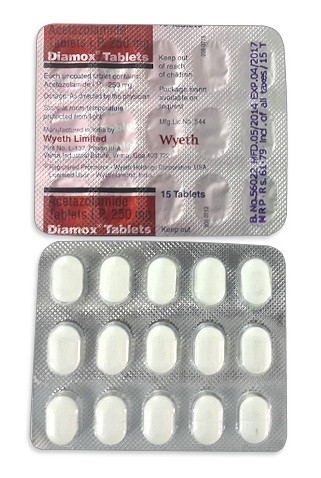
Diamox
- Diamox (acetazolamide) is a prescription medicine in most countries, but in some pharmacy settings it may be available without a prescription. It is used for glaucoma, certain types of epilepsy, fluid retention (oedema), idiopathic intracranial hypertension, and prevention or treatment of acute mountain sickness.
- Diamox is a carbonic anhydrase inhibitor. It works by reducing the activity of the carbonic anhydrase enzyme, which decreases fluid production in the eye, increases bicarbonate and salt loss in the kidneys, and helps reduce pressure in the eye and brain.
- The usual adult dose depends on the condition: for glaucoma, 250–1,000 mg per day in divided doses; for oedema, 250–375 mg once daily; for epilepsy, 250–1,000 mg per day; and for altitude sickness prevention, 500–1,000 mg per day, usually started before ascent.
- Diamox is usually taken by mouth as tablets or extended-release capsules. In some hospitals it may also be given as an injectable powder for reconstitution.
- It usually starts working within a few hours after oral administration, although for altitude sickness it is commonly started 24–48 hours before travel to high altitude for best effect.
- The duration of action is typically around 10–15 hours, which is why it is often taken 2–4 times daily depending on the formulation and indication.
- Avoid alcohol or keep intake to an absolute minimum, as alcohol can increase dizziness, dehydration, and drowsiness while taking Diamox.
- The most common side effects include tingling in the hands or feet, increased urination, altered taste, tiredness, nausea, and stomach upset. It can also cause electrolyte imbalance and metabolic acidosis in some people.
- Would you like to try Diamox without a prescription?
Latest Research Highlights In The UK And EU
Is Diamox still relevant, or has newer medicine pushed it aside?
The short answer is that acetazolamide remains clinically important across UK and European specialist care, especially for glaucoma, idiopathic intracranial hypertension, altitude sickness prevention, epilepsy and selected fluid-retention cases.
Between 2022 and 2025, UK and EU evidence has not replaced Diamox; it has refined how it is used, with more emphasis on the lowest effective dose, monitoring, and better tolerability at altitude.
That matters because patients often arrive expecting a one-size-fits-all tablet, but the evidence base is pushing prescribing towards more careful titration and safety checks.
Recent reviews continue to support acetazolamide tablets as a carbonic anhydrase inhibitor with established use in glaucoma, epilepsy, oedema and altitude sickness.
European product information and the UK SmPC still position it as relevant in specialist care, while newer data are sharpening dose selection and monitoring advice.
One consistent finding is that 125 mg twice daily is often better tolerated for altitude prophylaxis, without losing useful protection.
Another is that kidney stone risk and electrolyte shifts deserve more respect than they used to.
| Evidence theme | What recent UK and EU work is showing | Practical relevance |
|---|---|---|
| Idiopathic intracranial hypertension | Acetazolamide remains first-line pharmacological treatment in specialist care. | Supports visual protection and pressure reduction with monitoring. |
| Altitude sickness prophylaxis | 125 mg twice daily is increasingly favoured for tolerability. | Useful for travellers who need prevention rather than rescue treatment. |
| Heart failure adjunct use | IV acetazolamide is being discussed as an adjunct in acute volume overload. | Specialist hospital use, not routine self-care. |
| Kidney stone risk | Higher and longer exposure is linked with increased stone risk. | Use the lowest effective dose and monitor renal status. |
That research direction fits what pharmacists already see in practice: patients do best when Diamox is prescribed with clear instructions, realistic expectations and sensible follow-up.
Basic Diamox Information
- INN (International Nonproprietary Name): acetazolamide
- Brand names available in United Kingdom: Diamox, Diamox 250 mg Tablets
- ATC Code: S01EC01
- Forms & dosages: tablets, usually 250 mg; some specialist regimens use different strengths or schedules
- Manufacturers in United Kingdom: not specified
- Registration status in United Kingdom: prescription-only medicine
- OTC / Rx classification: prescription-only
Clinical Effectiveness In The United Kingdom
How well does Diamox actually work when UK patients start taking it?
In specialist NHS settings, the answer depends a lot on the indication and on how closely the dose is adjusted.
Ophthalmology, neurology and travel medicine clinics use acetazolamide because it can produce a meaningful physiological effect rather than just masking symptoms.
Patients with glaucoma may notice a reduction in eye pressure, while those with IIH often describe less head pressure and better visual stability over time.
Travellers using altitude sickness tablets commonly report better sleep, less nausea and improved tolerance when they climb.
Real-world reviews suggest the benefits are often clear, but satisfaction can be held back by tingling, fatigue and taste changes.
That is why pharmacists in the UK spend so much time on counselling, especially when patients are starting treatment after an electronic prescription.
The difference between a good and a poor experience is often whether the person understands what is expected, what is temporary, and what needs medical review.
- Benefits: lower eye pressure, reduced head pressure, better altitude tolerance, specialist-led symptom control
- Challenges: tingling, tiredness, increased urination, taste disturbance, gradual improvement in some conditions
If a patient wants reassurance, pointing them to NHS patient information pages and follow-up routes usually helps more than giving them vague promises.
Approved Uses And Specialist Off-Label Care
What is Diamox prescribed for in UK and EU practice?
The approved picture is straightforward, but specialist practice sometimes goes further where the benefit-risk balance is judged carefully.
- Glaucoma
- Used to lower intraocular pressure in chronic simple glaucoma, secondary glaucoma and peri-operative acute angle-closure situations.
- Oedema
- Used for abnormal fluid retention, including congestive heart failure and drug-induced oedema, usually as an adjunct rather than a stand-alone diuretic.
- Epilepsy
- Used as adjunctive treatment in certain seizure types, including centrencephalic epilepsy patterns.
- Acute mountain sickness
- Used to prevent or reduce symptoms before ascent and during early exposure at altitude.
- Idiopathic intracranial hypertension
- Common in specialist neurology and neuro-ophthalmology practice, where it helps lower cerebrospinal fluid production.
In NHS care, prescribing for these conditions is specialist-led, which is sensible because the medicine affects electrolytes, renal handling and acid–base balance.
Private travel medicine clinics may also use it for altitude prophylaxis after a proper assessment.
For search intent, the most useful phrases are acetazolamide indications, Diamox for glaucoma, Diamox for altitude sickness and Diamox for epilepsy.
Composition, INN And United Kingdom Brand Landscape
People often search for the brand when they really need the active ingredient.
That is why acetazolamide and Diamox are both important terms in the UK market.
Diamox is the originator brand, while acetazolamide is the generic name used internationally.
On UK and EU packaging, the carton commonly states acetazolamide 250 mg, even when the product is sold as Diamox 250 mg Tablets.
Patients in Britain will usually see prescription medicines supplied through community pharmacy chains or online services linked to NHS or private e-prescribing systems.
| Item | What patients see | UK relevance |
|---|---|---|
| Brand | Diamox | Recognised originator brand |
| Generic | Acetazolamide | Common search term in the UK |
| Packaging | Acetazolamide 250 mg | Typical tablet strength |
| Supply route | Prescription pharmacy | NHS or private dispensing |
That means a patient asking for “Diamox tablets” and a patient asking for “acetazolamide 250mg tablets” are usually talking about the same medicine.
Contraindications And Special Precautions
Who should not take Diamox, or needs extra caution?
This is the section where pharmacists earn their keep, because the risks are easy to overlook if the medicine is being used for travel or a specialist appointment.
Acetazolamide should be avoided in sulfonamide hypersensitivity, marked kidney disease, liver disease or cirrhosis, hyponatraemia, hypokalaemia, metabolic acidosis and adrenal failure.
It also needs caution in pregnancy and breastfeeding, because it crosses the placenta and enters breast milk.
That does not mean it is always impossible to use, but it does mean a clinician should judge the situation carefully.
For everyday life, patients also need to think about dehydration risk, driving if they feel dizzy, and alcohol if they are already feeling unwell.
- Avoid: sulfonamide allergy, marked kidney disease, cirrhosis, metabolic acidosis, low sodium, low potassium, adrenal failure
- Caution: pregnancy, breastfeeding, older age, renal impairment, dehydration risk, alcohol
- Speak to a doctor urgently: rash, confusion, breathing problems, severe weakness, significant vomiting
In UK-style counselling, the goal is not alarmism.
It is making sure the person knows when the tablet is suitable and when it should be reviewed first.
Dosage Guidelines By Indication
How much Diamox is usually taken?
The dose depends on why it is being used, and the UK pattern is to start low and adjust based on response and tolerability.
| Condition | Standard adult dosage | Typical timing |
|---|---|---|
| Glaucoma | 250–1000 mg/day | As prescribed, often divided doses |
| Oedema | 250–375 mg once daily | Usually in the morning |
| Epilepsy | 250–1000 mg/day | Divided doses |
| Altitude sickness prophylaxis | 125–250 mg twice daily | Start 24–48 hours before ascent |
For altitude prevention, many UK clinicians and travel clinics now favour 125 mg twice daily because it is often better tolerated.
For glaucoma and IIH, the dose may be titrated over time, with monitoring of renal function and electrolytes.
Children and older adults need specialist tailoring, especially if kidney function is reduced.
Pharmacists in Britain often end up explaining timing, missed-dose advice and why the dose may not look like a simple “one tablet a day” medicine.
Interaction Overview: Food, Drink And Medicines
What should patients avoid while taking acetazolamide?
The big practical issues are electrolytes, acid-base balance and dehydration, rather than a long list of food bans.
Acetazolamide may interact with high-dose aspirin and salicylates, and extra caution is sensible with medicines that affect potassium or renal function.
Alcohol can worsen dizziness, drowsiness and dehydration, which is especially relevant for people travelling to altitude or working in hot weather.
Caffeine is not forbidden, but if a patient is already feeling shaky, tired or dehydrated, sensible moderation is sensible.
- Medicines: high-dose aspirin, drugs affecting potassium, medicines affecting kidney function or acid–base balance
- Drink: alcohol increases dehydration and dizziness risk
- Daily advice: keep fluids up unless a doctor says otherwise
When in doubt, the safest UK advice is to check with a pharmacist, GP or NHS 111 rather than guessing.
Cultural Perceptions And Patient Habits In The United Kingdom
British patients often want plain English, not a lecture.
That shows up clearly with Diamox.
People are likely to trust the pharmacist’s explanation, double-check side effects through NHS pages, and call NHS 111 or their GP callback line if something feels off.
Patient forums such as Patient.info and Mumsnet often discuss tingling, fatigue, taste changes and whether the timing of the dose matters.
That tells you a lot about how people actually use the medicine: they compare notes, look for reassurance and want to know what is “normal”.
Common patient habits include taking the tablet with water, watching for tingling in the hands or feet, and asking if the side effect will settle.
Those are sensible questions, and they deserve clear answers rather than vague reassurance.
Typical patient concern: “Is this side effect expected, or should I stop now?”
That is exactly the sort of question a UK pharmacist should be ready to answer with confidence.
Availability And Pricing Patterns Across The United Kingdom
Can you get Diamox easily in the UK, and what does it cost?
Diamox is prescription-only, so access usually runs through an NHS prescription, a private prescription, or an online pharmacy that accepts electronic prescribing.
Pricing varies by nation and by the route used.
In England, eligible patients usually face the standard NHS prescription charge, while Scotland, Wales and Northern Ireland do not have a standard NHS prescription charge.
Private prices vary by chain and stock availability, especially for niche medicines.
That is why Boots, LloydsPharmacy, Superdrug and online pharmacies all matter in the UK market.
Stock can fluctuate when travel demand rises, which is why some patients who leave things until Friday evening end up paying more for urgency than for the medicine itself.
In our online pharmacy, Diamox is available without a prescription, with discreet delivery to United Kingdom in 5-14 days.
| Access route | Likely cost pattern | Stock pattern |
|---|---|---|
| NHS prescription | Standard charge rules apply where relevant | Usually depends on specialist prescribing |
| Private prescription | Varies by pharmacy and pack size | May depend on current wholesaler supply |
| Online pharmacy | Can differ by service and fulfilment model | Useful for convenient ordering and delivery |
For people searching terms like Diamox price UK or acetazolamide price, the main message is simple: it is not an everyday over-the-counter product, and access is best planned ahead.
Comparable Medicines And Prescribing Preferences
What are the usual alternatives to Diamox?
That depends on the condition being treated, because acetazolamide is a specialist tool rather than a universal substitute.
For glaucoma, alternatives include topical carbonic anhydrase inhibitors, beta-blockers, prostaglandin analogues and specialist combination regimens.
For migraine prevention, topiramate and propranolol are usually preferred because the evidence base is stronger.
Diamox is often a useful option when pressure-related symptoms are part of the picture, or when the goal is to change physiology quickly rather than simply blunt pain.
| Medicine | Main use | Relative position |
|---|---|---|
| Diamox | Glaucoma, altitude sickness, IIH, adjunct uses | Specialist tool |
| Topiramate | Migraine prevention | More established for migraine |
| Propranolol | Migraine prevention, cardiovascular uses | First-line migraine option |
| Topical glaucoma drops | Eye pressure lowering | Common first-line glaucoma approach |
So if a patient asks for the best substitute for Diamox, the honest answer is that the substitute depends on the indication, not just the brand.
Frequently Asked Questions
What is Diamox used for?
Diamox is used for glaucoma, fluid retention, certain forms of epilepsy and altitude sickness prevention or treatment.
Do I need a prescription?
Yes, in the UK it is a prescription-only medicine.
When should I start it for altitude sickness?
Usually 24–48 hours before ascent.
Can I take it with food or alcohol?
It can usually be taken with food, and alcohol is best avoided or kept minimal because it can worsen dizziness and dehydration.
Guidelines For Proper Use And Patient Support
How should Diamox be used safely day to day?
Take it exactly as prescribed and do not double doses if one is missed.
Drink enough fluid unless a clinician has told you otherwise, because dehydration makes side effects more likely.
Watch for tingling, nausea, tiredness, rash, severe fatigue, breathing problems or confusion, and seek help if symptoms are worrying.
Because the drug is excreted largely unchanged and can alter electrolytes and acid-base balance, follow-up matters more than many patients expect.
That is why UK support routes such as NHS 111, your GP, specialist clinic and patient portal messaging can be helpful if something changes after starting treatment.
British patients often want reassurance about what is expected and what is urgent, and that is exactly the right question to ask.
When a medicine is this useful but this physiologically active, clear counselling is part of the treatment.
Delivery Across United Kingdom
| City | Region | Delivery time |
|---|---|---|
| London | Greater London | 5-7 days |
| Birmingham | West Midlands | 5-7 days |
| Manchester | North West England | 5-7 days |
| Glasgow | Scotland | 5-7 days |
| Edinburgh | Scotland | 5-7 days |
| Leeds | West Yorkshire | 5-7 days |
| Liverpool | North West England | 5-7 days |
| Cardiff | Wales | 5-7 days |
| Bristol | South West England | 5-7 days |
| Newcastle upon Tyne | North East England | 5-7 days |
| Sheffield | South Yorkshire | 5-9 days |
| Nottingham | East Midlands | 5-9 days |
| Leicester | East Midlands | 5-9 days |
| Aberdeen | Scotland | 5-9 days |