
Arimidex
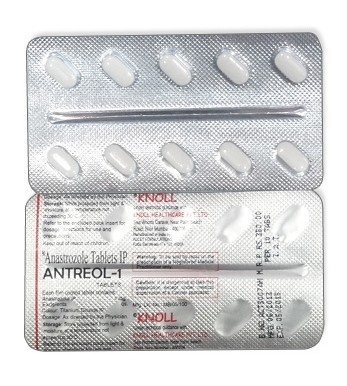
Arimidex
- Arimidex (anastrozole) is a prescription-only medicine in most regulated markets and is supplied as an oral tablet; however, availability without a prescription may vary by pharmacy and country.
- Arimidex is used mainly to treat hormone receptor-positive breast cancer in postmenopausal women. It is an aromatase inhibitor that works by blocking the aromatase enzyme, lowering oestrogen levels and helping slow the growth of oestrogen-sensitive cancer cells.
- The usual dose of Arimidex is 1 mg once daily.
- The form of administration is an oral tablet, taken by mouth, with or without food.
- Arimidex starts to work quickly, with oestrogen suppression beginning within 24 to 48 hours and peak blood levels reached in about 2 hours after a dose.
- The duration of action is about 40 to 50 hours, which is why it is taken once daily.
- Alcohol should be used with caution; there is no major direct interaction, but heavy drinking is not advisable, especially if you have liver problems or feel unwell.
- The most common side effects are hot flushes, joint and muscle pain, fatigue, headache, nausea, and bone thinning or fractures with longer-term use.
- Would you like to try Arimidex without a prescription?





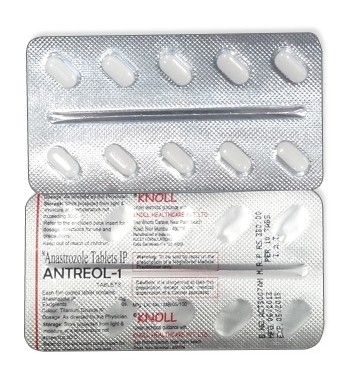

Basic Arimidex Information
- INN (International Nonproprietary Name): Anastrozole
- Brand names available in United Kingdom: Arimidex; generic anastrozole is also widely used
- ATC Code: L02BG03
- Forms & dosages: Oral tablet, 1 mg once daily
- Manufacturers in United Kingdom: AstraZeneca is the originator company; generic manufacturers may vary by supplier and pharmacy
- Registration status in United Kingdom: Prescription only medicine
- OTC / Rx classification: Rx only
Arimidex is the brand name for anastrozole, a non-steroidal aromatase inhibitor used mainly in postmenopausal women with hormone receptor-positive breast cancer.
The standard presentation is an oral 1 mg tablet, taken once daily, with or without food.
In UK practice, patients may be given Arimidex or generic anastrozole depending on local formulary, stock and prescribing preference.
It is used as adjuvant treatment after surgery and as first-line endocrine therapy in locally advanced or metastatic disease when appropriate.
Because it is prescription only, treatment should always be led by an oncology team rather than self-directed.
Latest Research Highlights In The UK And EU
Wondering whether Arimidex has changed much in recent years?
The short answer is that the medicine’s core place in breast cancer care has not changed, but the evidence base around long-term outcomes and safety has become sharper.
In the UK and EU, that matters because prescribing is still framed by MHRA and EMA approvals, NHS oncology pathways, and ongoing monitoring of bone and cardiovascular health.
The strongest recent signal is not a new indication, but better follow-up data on who benefits, how long treatment should continue, and what risks deserve the most attention.
| Study or evidence source | Main finding | Why it matters in practice |
|---|---|---|
| FALCON final overall survival report | Extended the evidence base for first-line anastrozole in advanced breast cancer | Supports continued use in selected postmenopausal patients |
| 2025 observational cardiovascular data | Longer aromatase inhibitor exposure was associated with lower stroke risk and lower all-cause and cardiovascular mortality | Reassuring for long-term safety in appropriately selected patients |
| Long-term safety literature | Bone mineral density loss and fracture risk remain important | Reinforces the need for bone health monitoring |
| Generic availability | Arimidex is now widely available as generic anastrozole | Improves access and usually lowers cost |
- FALCON remains the most relevant recent trial update tied directly to anastrozole in advanced disease.
- Cardiovascular fear has become more measured, with newer real-world data looking more reassuring than older assumptions.
- Bone safety is still the main long-term concern, especially in women already at risk of osteoporosis.
- What has not changed is that Arimidex remains a standard aromatase inhibitor for postmenopausal hormone receptor-positive breast cancer.
- What has changed is the way clinicians think about duration, adherence and survivorship monitoring.
For NHS prescribers, the practical message is straightforward: the drug still works, but long-term follow-up matters just as much as the initial prescription.
Patients often ask whether a newer tablet has replaced Arimidex.
It has not.
The newer research mainly helps oncologists decide who should stay on therapy, who needs bone protection, and which patients may tolerate a switch to a different endocrine option.
Clinical Effectiveness Of Arimidex In UK Practice
What does Arimidex actually do for a patient day to day?
It usually does not create a noticeable “feeling” of improvement, which is why many people find preventive treatment difficult to judge.
The benefit is measured by what does not happen: fewer recurrences, better disease-free survival, and better control of hormone-sensitive disease over time.
- Adjuvant
- Treatment given after the main cancer treatment, such as surgery, to reduce the chance of the cancer coming back.
- First-line
- The first treatment chosen for a condition, especially when chemotherapy is not immediately needed.
- Metastatic
- Cancer that has spread beyond the original site to other parts of the body.
In UK practice, Arimidex tablets are used for hormone receptor-positive early breast cancer and for locally advanced or metastatic breast cancer in postmenopausal women.
The standard dose is 1 mg once daily, and that simple schedule helps with repeat dispensing through GP systems, hospital follow-up and community pharmacy counselling.
Patients usually stay on treatment for years rather than weeks, so adherence becomes a genuine issue.
A missed month of repeat prescriptions, a delay after oncology review, or side effects that are not discussed early can all affect persistence with treatment.
- Recurrence reduction is the key benefit in early disease.
- Disease control is the main aim in advanced disease.
- Patient-reported benefit often comes as peace of mind rather than a direct physical sensation.
- Pharmacy counselling can make a real difference to adherence, especially when side effects start to build.
A common UK scenario is someone collecting a repeat prescription from the GP and asking the pharmacist whether the tablet “is still doing anything” because they feel no different.
That concern is normal, and it is also why clear counselling matters.
MhRA-Approved Indications And Expanded Uses
It helps to separate what is officially approved from what may be discussed in specialist settings.
Arimidex is a prescription-only medicine, and in the UK it should be used under oncology-led prescribing rather than self-selection.
- Approved uses:
- Adjuvant treatment of hormone receptor-positive early invasive breast cancer in postmenopausal women.
- First-line treatment of hormone receptor-positive or hormone receptor-unknown locally advanced or metastatic breast cancer in postmenopausal women.
- Treatment of advanced breast cancer in postmenopausal women whose disease progressed after tamoxifen.
- Specialist or off-label discussions:
- Risk reduction in high-risk postmenopausal women.
- Other hormone-modulation uses in specialist clinics.
- Changes in endocrine sequencing decided by oncology teams.
These extra uses should never be self-directed.
If a patient rings NHS 111 asking whether Arimidex is “for them”, the safest answer is that the prescriber needs to confirm the indication.
In the UK, that is usually a consultant oncologist, breast cancer nurse specialist, or another clinician working within the cancer pathway.
Composition, Brand Names And UK/European Market Landscape
Buying guides often start with the name on the box.
That is sensible, because patients may see either Arimidex or generic anastrozole depending on where the medicine is dispensed.
| Feature | Arimidex | Generic anastrozole |
|---|---|---|
| Active ingredient | Anastrozole | Anastrozole |
| Class | Non-steroidal aromatase inhibitor | Non-steroidal aromatase inhibitor |
| Dose form | Oral tablet | Oral tablet |
| Standard strength | 1 mg | 1 mg |
| Prescription status | Prescription only | Prescription only |
| ATC code | L02BG03 | L02BG03 |
In the UK market, originator branding is seen less often than generic anastrozole, mainly because generics are now the routine NHS and private-pharmacy option.
Hospital oncology teams may use whichever version is stocked locally, and community pharmacists often dispense the manufacturer supplied by the contractor or wholesaler.
That is one reason patients sometimes notice a different box even though the medicine itself is unchanged.
In our online pharmacy, arimidex is available without a prescription, with discreet delivery to United Kingdom in 5-14 days.
The practical point for patients is simple: check the active ingredient, the strength and the dosing instructions rather than worrying about the brand alone.
Contraindications And Special Precautions
Who should not take Arimidex, and who needs closer monitoring?
The strongest safety points are pregnancy, breastfeeding, hypersensitivity and premenopausal use.
After that come the groups who may still use it, but only with extra caution and follow-up.
- Absolute contraindications:
- Known hypersensitivity to anastrozole or any excipient.
- Pregnancy.
- Breastfeeding.
- Premenopausal use is not appropriate because safety and efficacy are not established.
- Relative precautions:
- Severe hepatic impairment.
- Severe renal impairment.
- Osteoporosis or high fracture risk.
- Cardiovascular risk factors, including coronary artery disease or uncontrolled hyperlipidaemia.
- Children and adolescents.
Patients in oncology clinics often worry most about joint pain and bone loss, and that is not a trivial concern.
Arimidex lowers oestrogen, and lower oestrogen can reduce bone mineral density over time.
That is why bone health discussions are common in UK breast cancer services, especially for women who already have low bone density or a previous fracture history.
Cardiovascular monitoring matters too, although newer long-term observational data are more reassuring than older fears suggested.
Dosage Guidelines And Administration
The dosing pattern is refreshingly simple, which helps with adherence.
The challenge is usually not how to take it, but how long to stay on it and how to keep going when side effects creep in.
| Indication | Standard dose | Typical duration | Notes |
|---|---|---|---|
| Adjuvant treatment of early breast cancer | 1 mg once daily | Usually up to 5 years | Often used after surgery, with or without other cancer treatment |
| First-line treatment of locally advanced or metastatic disease | 1 mg once daily | Until progression or unacceptable toxicity | May continue for as long as it is helping |
| Advanced disease after tamoxifen failure | 1 mg once daily | Until progression or unacceptable toxicity | Used under oncology supervision |
- Take the tablet once daily, ideally at the same time each day.
- It can be taken with or without food.
- Swallow it whole with water.
- If you miss a dose, take it when remembered unless the next dose is close.
- Do not take two tablets together to make up for a missed dose.
- Older adults usually do not need a dose change.
- Patients with mild to moderate renal impairment usually do not need a dose change.
- Moderate or severe hepatic impairment needs specialist caution.
UK dispensing practice varies a bit.
Some patients receive 28-day supplies, others 30 days, depending on local systems, electronic prescribing settings and stock from the supplying pharmacy.
That can be mildly confusing, but the medicine itself is still taken one tablet daily.
Interactions Overview: Food, Drinks And Medicines
Patients often worry about everyday things like a glass of wine, vitamins or herbal supplements.
Those are sensible questions, especially during long-term breast cancer endocrine therapy.
- Food and drink:
- Arimidex can be taken with or without food.
- No major food restrictions are required.
- Alcohol has no well-documented direct interaction, but moderation is sensible, especially if liver issues are present.
- Supplements:
- DHEA supplements may reduce effectiveness by increasing oestrogen.
- Herbal menopause products and phytoestrogen supplements should be discussed with the oncology team.
- Always mention any over-the-counter hormone product or “natural” therapy.
- Medicines:
- Clinically relevant interactions are not extensive, but the whole medicines list should be reviewed.
- Warfarin or other anticoagulants, if used, should be discussed with the prescriber.
- Any new prescription should be checked by a pharmacist, particularly during cancer treatment.
If a side effect or suspected interaction is not listed in the leaflet, UK patients can use the Yellow Card reporting pathway.
That is a useful safety net, especially when symptoms are unusual or persistent.
Cultural Perceptions And Patient Habits In The UK
What does Arimidex feel like in real life?
For many women, it feels like a trade-off: protection against recurrence on one side, and joint pain, hot flushes or sleep problems on the other.
Because the benefit is preventive, the medicine can feel invisible day to day.
- What it feels like
- Often nothing at first, then gradually more aches, stiffness, hot flushes, fatigue or sleep disruption.
- Why people continue
- Peace of mind, recurrence protection, and trust in the oncology team.
- Why some stop early
- Joint pain, insomnia, mood changes, low libido or the sense that side effects outweigh the invisible benefit.
In the UK, people commonly look for reassurance from pharmacists, Patient.info, Mumsnet, NHS forums and NHS 111 when they are unsure whether a symptom is “normal”.
That habit is understandable.
A lot of patients want a quick answer about whether their aches are from the tablet, menopause or something else entirely.
Pharmacy counselling is often the turning point because it turns vague worry into a plan.
- Morning stiffness can be discussed before it becomes unbearable.
- Hot flushes can be managed with practical coping strategies.
- Sleep problems should be raised early, not ignored for months.
- Sexual health concerns deserve direct, non-awkward conversation.
People often keep going when they feel heard and supported.
Availability And Pricing Patterns Across The UK
Access to Arimidex is usually straightforward, but the route depends on where you live.
England, Scotland, Wales and Northern Ireland do not all handle prescription charges in the same way, and that affects what patients pay at the counter.
| City | Region | Access pattern |
|---|---|---|
| London | England | 5-7 days |
| Birmingham | England | 5-7 days |
| Manchester | England | 5-7 days |
| Liverpool | England | 5-7 days |
| Leeds | England | 5-7 days |
| Glasgow | Scotland | 5-7 days |
| Edinburgh | Scotland | 5-7 days |
| Cardiff | Wales | 5-7 days |
| Swansea | Wales | 5-9 days |
| Belfast | Northern Ireland | 5-7 days |
| Newcastle upon Tyne | England | 5-9 days |
| Nottingham | England | 5-9 days |
| Sheffield | England | 5-9 days |
| Leicester | England | 5-9 days |
| Aberdeen | Scotland | 5-9 days |
In England, standard prescription charges may apply unless the patient is exempt.
Scotland, Wales and Northern Ireland follow free-prescription systems, which makes access simpler for many patients.
Boots, LloydsPharmacy and Superdrug all play a role in dispensing endocrine therapy, alongside hospital pharmacies and online pharmacies using electronic prescriptions.
Stock can vary, and Arimidex may be supplied as the originator brand or as generic anastrozole depending on the contractor and local availability.
Comparable Medicines And Prescribing Preferences
Arimidex sits alongside a small group of endocrine therapies used in breast cancer care.
Choice is usually about tolerability, treatment sequence and bone risk rather than brand rivalry.
| Medicine | Class | Common use | Practical pros and cons |
|---|---|---|---|
| Arimidex (anastrozole) | Non-steroidal aromatase inhibitor | Adjuvant and advanced postmenopausal breast cancer | Standard option; joint pain and bone loss can limit tolerability |
| Letrozole | Non-steroidal aromatase inhibitor | Alternative first-line AI | May be chosen when maximal oestrogen suppression is desired |
| Exemestane | Steroidal aromatase inhibitor | After tamoxifen or after AI intolerance | Sometimes better tolerated if non-steroidal AIs are difficult to manage |
| Tamoxifen | Selective oestrogen receptor modulator | Alternative endocrine option | Different side-effect profile; useful in some sequencing strategies |
Clinicians may choose one over another because of menopausal status, previous tamoxifen use, osteoporosis risk, or the way side effects are affecting daily life.
Some women do better on a different aromatase inhibitor after switching, and that is a normal part of breast cancer care rather than a sign of treatment failure.
Frequently Asked Questions For UK Patients
These are the questions pharmacists hear most often at the counter.
- How do I take Arimidex? Take 1 mg once daily, at roughly the same time each day, with or without food.
- What if I miss a dose? Take it when you remember unless the next dose is nearly due; do not double up.
- How long is it usually taken for? Often about 5 years after surgery, sometimes longer depending on risk and tolerability.
- Is it chemotherapy? No, it is endocrine therapy.
- What side effects are common? Hot flushes, joint pain, fatigue, headache, nausea, mood changes and bone thinning.
- Can I drink alcohol? Moderate alcohol is usually the sensible approach, but check with your cancer team if liver issues exist.
- What about vaginal dryness or low libido? These can happen, and they should be discussed rather than silently endured.
If symptoms persist, do not wait until the next routine appointment.
Speak to the oncology team or a pharmacist so the problem can be addressed early.
Guidelines For Proper Use And NHS Support
The safest way to use Arimidex is also the simplest.
Take it exactly as prescribed, keep your monitoring appointments, and report problems early.
- Do not stop Arimidex without oncology advice.
- Take one 1 mg tablet once daily.
- Keep to a regular routine so you are less likely to miss doses.
- Tell your team about bone pain, persistent joint pain, severe hot flushes, mood change or sleep problems.
- Ask about bone density checks if you are on long-term treatment.
- Use the NHS App, hospital oncology team, breast cancer nurse specialists and community pharmacists for support.
- Raise sexual health concerns openly; they are common and manageable.
- Report suspected side effects through the Yellow Card system if needed.
UK patients often do best when follow-up is shared between oncology, GP and pharmacy rather than left to one appointment alone.
That shared approach is what helps long-term treatment stay realistic.
Delivery Across United Kingdom
| City | Region | Delivery time |
|---|---|---|
| London | England | 5-7 days |
| Birmingham | England | 5-7 days |
| Manchester | England | 5-7 days |
| Liverpool | England | 5-7 days |
| Leeds | England | 5-7 days |
| Glasgow | Scotland | 5-7 days |
| Edinburgh | Scotland | 5-7 days |
| Cardiff | Wales | 5-7 days |
| Belfast | Northern Ireland | 5-7 days |
| Sheffield | England | 5-9 days |
| Nottingham | England | 5-9 days |
| Newcastle upon Tyne | England | 5-9 days |
| Aberdeen | Scotland | 5-9 days |
| Leicester | England | 5-9 days |
Final Takeaway
Arimidex remains a well-established part of UK breast cancer treatment for the right patient.
Its job is prevention and control, not a quick symptomatic fix, which is why good counselling matters so much.
For postmenopausal women with hormone receptor-positive disease, the evidence still supports its use, while long-term bone health, cardiovascular review and adherence support remain central to safe treatment.
If you have questions about Arimidex, generic anastrozole, repeat dispensing or side-effect management, speak to the oncology team or a pharmacist before making any change.