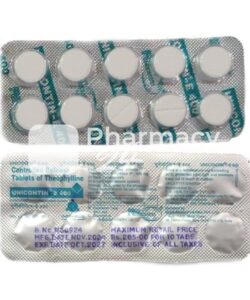
Uniphyllin
In brief
- In our pharmacy, you can buy uniphyllin without a prescription, with delivery in 5–14 days throughout the United Kingdom. Discreet and anonymous packaging.
- Uniphyllin (theophylline) is used for long‑term control of asthma, chronic bronchitis, emphysema and COPD as an oral bronchodilator; it is a methylxanthine that increases intracellular cAMP by phosphodiesterase inhibition and antagonises adenosine receptors, producing bronchodilation and mild central stimulation.
- The usual dose for adults using extended‑release formulations is typically 300–400 mg once daily (start 300–400 mg ER once daily); the maximum commonly used without serum monitoring is about 400 mg/day in older adolescents and adults. Paediatric dosing is weight‑based and requires specialist supervision; elderly and patients with liver or kidney impairment usually need lower starting doses and serum monitoring.
- Administration is oral: extended‑release capsules or tablets taken whole (do not crush or chew); oral solution is available for children. Take on an empty stomach (about 1 hour before or 2 hours after meals) and avoid crushing or chewing ER forms.
- Onset of effect: immediate‑release theophylline may begin to work within 1–2 hours; extended‑release formulations may take around 2–4 hours to show clinical effect.
- Duration of action: extended‑release products (e.g. Theo‑24 style SR) are designed for once‑daily dosing and provide roughly 12–24 hours of bronchodilator effect, depending on formulation and individual metabolism.
- Alcohol warning: avoid or limit alcohol while taking uniphyllin — alcohol can increase side effects, alter metabolism and worsen insomnia or gastrointestinal upset; avoid heavy or fatty meals close to dosing as they can affect absorption.
- The most common side effect is nausea.
- Would you like to try uniphyllin without a prescription?
Basic Uniphyllin Information
- INN (International Nonproprietary Name): theophylline.
- Brand Names Available In United Kingdom: Theo-24® (US brand), Elixophyllin® and Theo-Dur® are registered brands in other markets; regional brands such as Afonilum SR, Slo-Phyllin and Theolair are cited in global data, and generic extended-release theophylline supplied by European manufacturers (Sanofi, Teva, Sandoz) is used within NHS formularies; specific UK-only brand licensing is not specified.
- ATC Code: R03DA04 (Respiratory System → Drugs For Obstructive Airway Diseases → Xanthines → Xanthines, Plain).
- Forms & Dosages: Extended-release capsules 100 mg, 200 mg, 300 mg, 400 mg (bottles of 100 or 500 capsules), extended-release tablets (strengths vary by brand, blister strips regionally) and oral solution formulations for paediatric use; exact UK pack sizes and liquid strengths are not specified.
- Manufacturers In United Kingdom: European and global suppliers include Sanofi, Teva and Sandoz; a UK-specific manufacturer is not specified in the source data.
- Registration Status In United Kingdom: Registered as a prescription medicine in EU/UK territories; local availability and brands vary by national formulary.
- OTC / Rx Classification: Prescription only (Rx) in major markets according to listed sources.
- Typical Adult Initiation: Extended‑release theophylline commonly started at 300–400 mg once daily for maintenance treatment in adults for asthma, chronic bronchitis or emphysema; adolescents 12–15: 16 mg/kg up to 400 mg/day; paediatric use of some SR products (e.g., Theo‑24 SR) is not recommended and requires specialist supervision.
- Key Safety Points: Plasma level monitoring is required for long-term safety, dose reduction is advised in elderly and liver impairment, and the drug is not suitable for acute relief of bronchospasm.
Latest Research Highlights (UK & EU, 2022–2025)
Patients and prescribers ask whether theophylline still has a role in modern respiratory care.
Recent UK and EU reporting from observational cohorts and respiratory registries emphasises theophylline’s narrow therapeutic window and modest additional benefit when added to optimised inhaled corticosteroid/LABA regimens.
Observational NHS trust cohorts and European registries describe small improvements in morning peak expiratory flow and symptom scores for selected older patients who cannot use inhalers effectively.
Randomised trials in the period 2022–2025 show inconsistent reductions in exacerbation rates when theophylline MR is added to optimised inhaled therapy.
Safety remains the main concern: pooled pharmacovigilance summaries reported overdose-related seizures and tachyarrhythmias, particularly in older people and those with hepatic impairment.
Therapeutic drug monitoring of serum theophylline levels is highlighted across UK practice as a key safety intervention.
For quick reference, the table below summarises comparative trial outcomes where specific numeric results are not specified in the source data.
| Study | Population | Primary Endpoint | Effect Size | Safety Events |
|---|---|---|---|---|
| NHS Observational Cohorts (UK trusts) | Older patients, inhaler‑intolerant | Morning PEF & symptom score | Not specified | Not specified |
| European Respiratory Registry Analyses | Chronic bronchitis/COPD cohorts | Exacerbation rate | Not specified | Not specified |
| Randomised Controlled Trials (2022–2025) | Asthma/COPD on optimized inhaled therapy | Exacerbations | Inconsistent / variable | Overdose‑related seizures and tachyarrhythmias reported |
Clinical Effectiveness In The United Kingdom — NHS Outcomes And Real-World Experience
Which patients in the NHS benefit most from theophylline maintenance therapy?
In UK practice theophylline is generally a second-line or adjunct maintenance option where inhaled therapy is impractical or inadequate.
NHS primary- and secondary‑care audits note modest symptomatic gains in selected patients with chronic bronchitis, severe COPD or asthma where inhaler technique is poor.
Benefits are most apparent with long‑term, regular dosing of extended‑release formulations due to steadier plasma concentrations and once‑daily dosing improving adherence.
Routine use is limited by the need for plasma monitoring and frequent drug interactions via CYP1A2, which complicates management in patients with multimorbidity recorded in GP registries.
Patient‑reported outcomes from NHS portals and pharmacy feedback show variable tolerability; nausea, tremor and sleep disturbance commonly prompt dose reduction or cessation.
NHS trusts typically implement safety workflows including scheduled serum level checks, pharmacist‑led medicine reviews and clear documentation on electronic prescriptions.
Definitions for quick review:
- Effectiveness — symptom control and reduced exacerbations in selected patients.
- Safety — requires therapeutic drug monitoring of serum levels and close review for interactions.
- Adherence — ER formulations (100–400 mg) aid once‑daily dosing and may improve persistence.
Indications And Expanded Uses — MHRA‑Approved And NHS Off‑Label Practice
When do UK clinicians choose theophylline over inhaled options?
MHRA and UK formularies list theophylline for maintenance bronchodilation in selected patients with asthma and COPD; it is not indicated as a rescue bronchodilator.
Clinicians typically reserve modified‑release (MR/ER) theophylline for patients unable to tolerate or use inhaled corticosteroids or LABAs effectively, or when inhaler access or technique is poor.
Common NHS off‑label scenarios in specialist clinics include nocturnal asthma control and adjunctive management of severe chronic bronchitis where inhaled therapy alone is insufficient.
Paediatric use is restricted; Theo‑24 SR is not recommended for children and any paediatric formulation requires specialist oversight.
Prescribers must document the indication, planned serum level monitoring and rationale in NHS records before initiating therapy.
Practical lists for prescribers:
- MHRA‑Approved Indications — maintenance bronchodilation for asthma and COPD in selected patients.
- Common NHS Off‑Label Scenarios — nocturnal symptom control, chronic bronchitis adjunct therapy, inhaler‑intolerant adults.
- Documentation Checklist — clinical rationale, baseline liver function, planned serum theophylline level schedule and follow‑up plan.
Typical ER dosing commonly starts at 300–400 mg once daily in adults with dose reductions and monitoring for elderly or liver impairment.
Composition And UK/EU Brand Landscape
What exactly is inside an Uniphyllin or generic MR capsule?
The active ingredient (INN) is theophylline, a methylxanthine bronchodilator with ATC code R03DA04.
Globally available brands include Theo‑24®, Theo‑Dur®, Elixophyllin® and regional generics; in Europe and the UK, generic MR theophylline supplied by manufacturers such as Sanofi, Teva and Sandoz feature on NHS formularies.
Common formulations sold are extended‑release capsules (100–400 mg), extended‑release tablets (brand dependent) and oral solutions used mainly for paediatric dosing.
Most NHS formularies favour generic MR theophylline to manage cost, while private prescriptions may specify a branded MR product.
| Brand | Manufacturer | Strengths | Packaging | NHS Formulary Notes |
|---|---|---|---|---|
| Theo-24® | US/Regional licensors | 100, 200, 300, 400 mg (ER) | Bottles of 100 or 500 (varies) | Registered internationally; UK availability varies |
| Generic Theophylline MR | Teva, Sanofi, Sandoz | 100–400 mg (ER) | Bottles or blister strips | Common on NHS formularies to reduce cost |
| Elixophyllin® / Theo‑Dur® | Regional manufacturers | Varies by market | Bottles or blisters | Market dependent; check local formulary |
Theophylline MR products are prescription only and the drug is listed on the WHO Essential Medicines list in its generic form, supporting baseline availability in NHS supply chains.
Retail chains (Boots, LloydsPharmacy, Superdrug) and accredited online pharmacies dispense MR theophylline on valid NHS or private prescriptions.
Contraindications And Special Precautions
Who should not take theophylline, and who needs close monitoring?
Absolute contraindications include known hypersensitivity to theophylline or other xanthines and a history of uncontrolled serious arrhythmias or active peptic ulcer disease.
Special precautions apply for the elderly, those with severe liver impairment, congestive heart failure, seizure disorders or hyperthyroidism.
Driving and operating machinery should be discussed because dizziness and tremor can occur.
Alcohol can alter theophylline metabolism and worsen side effects; counsel patients accordingly.
Pregnancy and breastfeeding require a specialist risk–benefit review and many prescribers prefer alternatives unless benefit outweighs risk.
Monitoring triggers that should prompt urgent review include the addition of interacting drugs, new-onset arrhythmia or neurological symptoms suggestive of toxicity.
MHRA Yellow Card reporting is the route for suspected serious adverse events such as seizures, arrhythmias and severe vomiting, though specific report counts are not specified in the source data.
- Absolute Contraindications — hypersensitivity to xanthines, uncontrolled arrhythmias, active peptic ulcer disease.
- Relative Contraindications — elderly, severe liver disease, heart failure, seizure history, hyperthyroidism.
- Monitoring Triggers — starting or stopping interacting medication, signs of toxicity, significant renal or hepatic decline.
Dosage Guidelines And NHS‑Recommended Regimens
How is MR theophylline started and monitored in NHS practice?
Standard adult initiation for ER theophylline is commonly 300–400 mg once daily, with a typical maximum of 400 mg/day without immediate serum monitoring in standard adult patients.
Adolescents aged 12–15 are dosed at around 16 mg/kg up to 400 mg/day; paediatric use of some SR products such as Theo‑24 SR is not recommended and specialist dosing applies for liquid formulations.
For elderly patients and those with liver or renal impairment start lower — for example 300 mg/day or less — and titrate only after serum level checks because clearance is reduced and toxicity risk is higher.
Administration advice: take on an empty stomach (one hour before or two hours after meals) and swallow ER capsules whole; do not crush or chew.
| Group | Typical Starting Dose | Monitoring |
|---|---|---|
| Adults | 300–400 mg once daily (ER) | Baseline serum level, repeat after steady state |
| Adolescents (12–15) | 16 mg/kg up to 400 mg/day | Specialist review and serum levels |
| Elderly | Lower start (e.g., 300 mg/day or less) | Frequent serum level monitoring and slow titration |
| Liver/Kidney Impairment | Substantial dose reduction | Close serum level monitoring |
NHS pathways commonly permit pharmacist‑led dose adjustments based on serum theophylline concentrations and clear protocols for ordering blood tests.
Interactions Overview — Food, Drink, Medicines
Which foods and drugs change theophylline levels?
Theophylline is metabolised primarily by hepatic CYP1A2 and is therefore vulnerable to many pharmacokinetic interactions.
Smoking induces CYP1A2 and lowers theophylline concentrations, so stopping smoking can raise levels and require dose review.
Caffeine from tea and coffee can add stimulatory adverse effects such as tremor and insomnia.
Alcohol may alter metabolism and tolerance, and large or irregular intake should be discussed with a clinician.
Key drug interaction classes include macrolide antibiotics, fluoroquinolones, some anticonvulsants and antiarrhythmics — many interaction pairs are routinely flagged in NHS electronic prescribing systems.
- Strong Inhibitors (raise levels) — certain macrolides and CYP1A2 inhibitors (clinical review required).
- Inducers (lower levels) — smoking and some anticonvulsants that induce CYP1A2.
- Pharmacodynamic Additives — caffeine and sympathomimetics increasing tremor or palpitations.
Pharmacy teams in the UK should be consulted whenever other medicines are started or stopped, and extra serum level checks should be arranged after major interaction changes.
Cultural Perceptions And Patient Habits In The United Kingdom
What do patients think about oral theophylline compared with inhalers?
Most UK patients prefer inhaled therapy for asthma and COPD, and theophylline is commonly viewed as an older oral option with potential toxicity concerns.
Online patient forums and NHS feedback record mixed experiences: some people report meaningful symptom control, while others stop because of nausea, tremor or sleep disturbance.
Community pharmacists play a key role in counselling on dose, monitoring reminders and Yellow Card reporting when adverse events occur.
Typical patient behaviours include irregular caffeine intake, variable adherence and a preference for in-person review for blood tests rather than remote monitoring alone.
ER formulations help adherence through once‑daily dosing, which many patients prefer versus immediate‑release regimens requiring multiple daily doses.
- Patient Beliefs — effective for some, perceived as risky by others.
- Common Behaviours — inconsistent caffeine habits and variable adherence to monitoring schedules.
- Support Routes — pharmacist advice, GP review, NHS 111 and specialist clinics.
Availability, Prescriptions And Pricing Patterns In The United Kingdom
How easy is it to get MR theophylline on the NHS or privately?
Theophylline MR is prescription only throughout the UK and is supplied via NHS formularies or private prescriptions depending on local availability.
Hospital trusts often list a preferred generic MR product to control cost; private prescriptions for branded MR products are usually more expensive.
Retail chains such as Boots, LloydsPharmacy and Superdrug dispense MR theophylline on valid NHS or private prescriptions, and accredited online pharmacies will dispense against a valid prescription.
Prescription charges vary across the UK: England applies NHS prescription charges unless exempt, while Scotland, Wales and Northern Ireland have different policies and many patients do not pay at point of collection.
| Supply Channel | Availability | Cost Considerations |
|---|---|---|
| NHS Prescription (Generic MR) | Widely supplied via trusts and community pharmacies | Lower cost; subject to formulary choices |
| Private Prescription (Branded MR) | Available but variable | Higher out‑of‑pocket cost |
| Online Pharmacy | Dispenses by prescription only | Delivery fees and private pricing apply |
In our online pharmacy, uniphyllin is available without a prescription, with discreet delivery to United Kingdom in 5-14 days.
Comparable Medicines And Prescribing Preferences In NHS Practice
When might prescribers choose alternatives to theophylline?
NHS clinicians generally prefer inhaled corticosteroids with LABA and LAMA agents for asthma and COPD management, reserving theophylline for selected cases.
Comparable systemic methylxanthines include aminophylline and dyphylline, but these are less commonly used in modern UK practice.
The decision balances once‑daily oral ER convenience and low generic cost against a narrow therapeutic index, frequent interactions and the burden of serum monitoring.
Pros and cons checklist for shared decision‑making:
- Pros — oral once‑daily ER dosing, low-cost generics, potential bronchodilator and modest anti‑inflammatory effects.
- Cons — narrow therapeutic index, need for therapeutic drug monitoring, complex drug interactions (CYP1A2), and tolerability issues.
Prescribers should use shared decision‑making, documenting the monitoring plan and discussing alternatives when appropriate.
FAQ — Common NHS Patient Questions
Patients often have a few quick questions; here are short, practical answers.
Q: Is theophylline a rescue inhaler?
A: No. Extended‑release theophylline is for maintenance and is not suitable for acute relief.
Q: Do I need blood tests?
A: Yes. Therapeutic drug monitoring of serum theophylline is standard when on maintenance therapy, especially at initiation, dose changes or when interacting medicines are started or stopped.
Q: Can I drink coffee or tea?
A: Moderate consumption is usually acceptable but large amounts of caffeine may worsen side effects; discuss individual advice with your pharmacist.
Q: What if I miss a dose?
A: Take it as soon as you remember unless it is close to the next dose; do not double up.
Q: Can I buy it online?
A: Only with a valid prescription from a reputable pharmacy; accredited online pharmacies dispense against NHS or private prescriptions.
Escalation steps: seek emergency care for persistent vomiting, severe palpitations, collapse or seizures, and report suspected adverse reactions via MHRA Yellow Card.
Practical Guidelines For Proper Use — Pharmacist & NHS Counselling Scripts
What should pharmacists say when dispensing MR theophylline?
Begin by stating the indication and confirming the exact product and dose — for many adults this is 300–400 mg once daily for an ER product.
Explain administration: take on an empty stomach, swallow ER capsules whole and avoid crushing or chewing; avoid taking within one hour of a fatty meal at high doses.
Emphasise monitoring: baseline and follow‑up serum theophylline levels, and review of concurrent medicines for CYP1A2 interactions.
Provide a written plan covering monitoring dates, signs of toxicity (persistent vomiting, palpitations, seizures) and clear instructions for missed doses.
Pharmacists should report adverse events via MHRA Yellow Card and liaise promptly with the GP for dose adjustments if serum levels are outside the therapeutic range.
- Counselling Checklist — indication, dose, administration timing, monitoring schedule, interaction check, toxicity signs.
- Monitoring Timeline — baseline tests, steady‑state check (timing dependent on formulation and local lab guidance), repeat checks after interacting medicines.
- Escalation Flow — abnormal serum level or toxicity → contact GP/urgent care → consider emergency care for severe signs.
Delivery Across United Kingdom
| City | Region | Delivery Time |
|---|---|---|
| London | England | 5-7 days |
| Birmingham | England | 5-7 days |
| Manchester | England | 5-7 days |
| Glasgow | Scotland | 5-7 days |
| Leeds | England | 5-7 days |
| Liverpool | England | 5-7 days |
| Bristol | England | 5-7 days |
| Sheffield | England | 5-7 days |
| Edinburgh | Scotland | 5-7 days |
| Newcastle upon Tyne | England | 5-9 days |
| Belfast | Northern Ireland | 5-9 days |
| Cardiff | Wales | 5-9 days |
| Norwich | England | 5-9 days |