
Tofranil
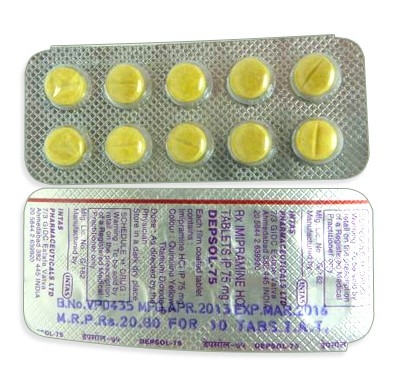
Tofranil
- Tofranil (imipramine) is prescription‑only in major markets (UK, EU, USA), though some pharmacies or online suppliers may offer it without a prescription; purchasing or using prescription medicines without medical supervision can be unsafe or illegal, so consult a healthcare professional before obtaining it.
- Tofranil is used to treat major depressive disorder in adults and nocturnal enuresis in children; it is a tricyclic antidepressant that works by non‑selectively inhibiting the reuptake of serotonin and norepinephrine, increasing their levels in the synaptic cleft.
- Typical dosages: adults with depression often start at 75 mg/day in divided doses, titrating to 150–200 mg/day as needed (maximum up to 300 mg/day in severe cases); childhood enuresis often starts at 10–25 mg at bedtime and may be increased to 50 mg (ages 6–12) or 75 mg (over 12); elderly and children require lower starting doses.
- Administered orally as tablets (imipramine hydrochloride 10 mg, 25 mg, 50 mg) or capsules (imipramine pamoate 75 mg, 100 mg, 125 mg, 150 mg); no standard topical or injectable forms.
- Onset: plasma levels peak about 2–6 hours after dosing and some effects (for example sedation) can occur within hours, but meaningful antidepressant improvement typically takes several weeks (commonly 2–6 weeks).
- Duration: imipramine has a relatively long half‑life allowing once‑ or twice‑daily dosing and maintains therapeutic levels over 24 hours; antidepressant treatment is usually continued for weeks to months with maintenance therapy as required.
- Alcohol warning: avoid alcohol while taking tofranil — alcohol increases sedation and dizziness and can exacerbate side effects such as orthostatic hypotension and impaired coordination.
- The most common side effect is drowsiness (sleepiness), with other frequent effects including dry mouth, dizziness, constipation and orthostatic hypotension.
- Would you like to try “tofranil” without a prescription?

Basic Tofranil Information
- INN (International Nonproprietary Name): Imipramine
- Brand Names Available In United Kingdom: Tofranil® and generic imipramine hydrochloride preparations are marketed in the EU and are commonly available in the United Kingdom.
- ATC Code: N06AA02
- Forms & Dosages: Tablets 10 mg, 25 mg, 50 mg (imipramine hydrochloride); capsules 75 mg, 100 mg, 125 mg, 150 mg (imipramine pamoate — less common in EU).
- Manufacturers In United Kingdom: Originator Novartis (Tofranil) and multiple generic manufacturers such as Teva, Mylan and Sandoz supply imipramine products via local distributors and pharmacy e‑commerce platforms.
- Registration Status In United Kingdom: Authorised via national licences in the EU framework and supplied as a prescription medicine (Rx‑only).
- OTC / Rx Classification: Prescription Only (Rx).
Latest Research Highlights (UK + EU)
Clinicians ask: Is imipramine still relevant given newer antidepressants?
Recent UK and EU analyses from 2022–2024 reaffirm imipramine’s clinical signal for treatment‑resistant depression and childhood nocturnal enuresis while emphasising safety trade‑offs versus newer options.
Systematic reviews and pooled observational cohorts across Europe show remission rates comparable to other tricyclic antidepressants in resistant cases, but higher anticholinergic and cardiovascular adverse events when compared with selective serotonin reuptake inhibitors.
Regulatory summaries stress careful cardiac screening before starting therapy, especially in older adults with comorbidities.
Pharmacokinetic studies confirm peak plasma levels at approximately 2–6 hours after dosing and a long elimination half‑life that supports once‑ or twice‑daily regimens.
Post‑marketing surveillance and MHRA Yellow Card reports (2020–2024) list orthostatic hypotension, anticholinergic effects and rare arrhythmias as leading safety signals, most often reported in elderly patients on multiple medicines.
Evidence gaps remain: few recent UK randomised controlled trials compare imipramine head‑to‑head with modern SSRIs or SNRIs in primary care settings.
Research takeaway for UK clinicians: imipramine is an effective option for selected cases such as resistant depression and nocturnal enuresis, but baseline ECG, medication reconciliation and patient consent about side‑effects are essential.
Clinical Effectiveness In The UK
Patients want to know: Will Tofranil work when SSRIs fail?
NHS practice positions imipramine (INN: imipramine; brand: Tofranil® and generics) as a second‑ or third‑line antidepressant reserved for non‑responders to SSRIs or SNRIs and for specific comorbidities such as nocturnal enuresis.
Real‑world NHS audits and patient‑reported outcome datasets indicate meaningful symptom reduction in treatment‑resistant cohorts, with remission rates similar to other TCAs but a higher rate of discontinuation driven by side‑effects.
Treatment response generally appears over several weeks, and maintenance duration mirrors other antidepressants — continue at therapeutic dose after response to reduce relapse risk.
In paediatric nocturnal enuresis, short courses of 1–3 months reduce bedwetting frequency when combined with behavioural strategies, and NHS pathways recommend the minimal effective dose and reassessment.
UK implementation emphasises a baseline assessment including ECG and blood pressure, a review of concomitant medicines and closer follow‑up in the first 2–6 weeks to manage tolerability.
Clinical effectiveness therefore depends on careful patient selection, dose optimisation and active monitoring to balance benefit and risk.
Indications And Expanded Uses
People often ask: What is Tofranil licensed to treat?
MHRA and national product licences align with international approvals; primary authorised indications are moderate‑to‑severe depression and childhood nocturnal enuresis.
Standard dosing regimes for adults and children correspond with these licensed uses and local formularies list imipramine for those indications.
Off‑label NHS and private uses include neuropathic pain, chronic tension‑type headache, some anxiety‑spectrum presentations and adjunctive roles in treatment‑resistant obsessive‑compulsive disorder where multidisciplinary review supports use.
Off‑label prescribing is typically documented with a clear rationale and explicit informed consent, and practice varies between NHS trusts and specialist services.
Paediatric enuresis remains the clearest paediatric indication with age‑stratified dosing and short treatment windows to limit exposure.
Important regulatory note: concomitant monoamine oxidase inhibitors (MAOIs) are contraindicated and must not be co‑administered.
Composition And Brand Landscape
Patients ask: Which product should I expect from the pharmacy?
The active ingredient is imipramine (INN), most commonly supplied as imipramine hydrochloride tablets in the United Kingdom and EU markets.
Historical capsule strengths (imipramine pamoate) exist but tablets of 10 mg, 25 mg and 50 mg predominate in UK practice.
| Brand / Generic | Formulation | Common Pack Sizes | Manufacturer |
|---|---|---|---|
| Tofranil® | Tablets 10 mg, 25 mg, 50 mg | Varies by market (commonly 28, 30) | Novartis |
| Generic Imipramine Hydrochloride | Tablets 10 mg, 25 mg, 50 mg | 28, 30 tablet packs | Teva, Mylan, Sandoz and other generic manufacturers |
| Imipramine Pamoate (less common) | Capsules 75–150 mg | 30 capsules | Various (regional availability) |
ATC classification is N06AA02, placing imipramine within the tricyclic antidepressant subclass.
Community pharmacies in the UK commonly dispense generics on cost grounds, while hospital formularies may specify a preferred supplier to manage stock and costs.
Contraindications And Special Precautions
Common worry: Who must not take imipramine?
Absolute contraindications include known hypersensitivity to imipramine or other TCAs, recent myocardial infarction and concomitant use with MAOIs.
Relative contraindications requiring enhanced monitoring include significant cardiac disease such as arrhythmias or conduction defects, seizure disorders, narrow‑angle glaucoma, urinary retention and severe liver or renal impairment.
Pregnancy and breastfeeding require specialist liaison; avoid imipramine unless no safer alternative is available and discuss neonatal adaptation risks.
Elderly patients need low starting doses (for example 10–25 mg/day) because of increased fall risk, orthostatic hypotension and anticholinergic burden.
Advise caution with driving and operating machinery until tolerance is established because of drowsiness and dizziness.
Alcohol potentiates sedation and can worsen mood — advise minimisation during therapy.
Clinicians should perform a baseline ECG and review concomitant QT‑prolonging drugs and report serious suspected adverse reactions to the MHRA Yellow Card scheme.
Dosage Guidelines (NHS‑Aligned Regimens)
Key question: What dose should I start on?
Standard adult dosing for depression in UK practice commonly starts at around 75 mg/day in divided doses, titrating gradually to 150–200 mg/day as required, with a maximum of 300 mg/day in severe cases.
Elderly or sensitive patients should start at lower doses such as 10–25 mg/day with slow titration and close monitoring.
| Condition / Age | Typical Starting Dose | Maximum |
|---|---|---|
| Major Depression (Adult) | 75 mg/day (divided) | 300 mg/day |
| Older Adults / Sensitive Patients | 10–25 mg/day | As tolerated |
| Nocturnal Enuresis (6–12 yrs) | 25 mg at bedtime | 50 mg/night |
| Nocturnal Enuresis (>12 yrs) | 25–50 mg at bedtime | 75 mg/night |
Prefer once‑daily night dosing for enuresis and split dosing for depression to improve tolerance when needed.
Reduce doses in renal or hepatic impairment and consider therapeutic drug monitoring in complex cases.
Missed dose advice: take when remembered unless close to the next scheduled dose — do not double up.
Interactions Overview
Patients ask: Which medicines must I avoid with Tofranil?
The major contraindicated interaction is with monoamine oxidase inhibitors; combined use risks severe serotonin‑toxicity and hypertensive crises.
Clinically important interactions include other QT‑prolonging drugs, additive anticholinergic agents (which increase dry mouth, constipation and confusion), and CNS depressants such as alcohol and benzodiazepines that increase sedation.
Imipramine is metabolised via CYP2D6 and may both be affected by and affect other CYP2D6 substrates, so check for interactions with drugs metabolised by this enzyme.
Combining SSRIs or SNRIs with TCAs can lead to pharmacodynamic and pharmacokinetic interactions and may increase TCA plasma levels; cautious cross‑titration and monitoring are required.
In older patients on polypharmacy, MHRA Yellow Card reports link drug interactions with arrhythmias and falls, so medication reconciliation and pharmacist review are essential.
Practical UK workflow: use electronic prescribing alerts, perform a pharmacist medication review and double‑check OTC antihistamines or cold remedies for anticholinergic effects.
Cultural Perceptions And Patient Habits
People often wonder: What do patients in the UK think about TCAs?
Imipramine’s cultural positioning in the United Kingdom is nuanced; many patients regard tricyclic antidepressants as older medicines with more side‑effects than SSRIs, yet clinicians retain trust in their efficacy for resistant cases.
Online patient forums such as Patient.info and parenting boards report mixed experiences — some describe rapid symptom relief, while others discontinue due to anticholinergic effects or drowsiness.
Community pharmacists at chains like Boots and LloydsPharmacy are a frequent first point of advice and are trusted to counsel on dosing and side‑effects.
The NHS 111 service and NHS 111 online are commonly used for urgent medication queries, while the NHS App and e‑prescribing platforms have increased remote monitoring and repeat‑prescription workflows.
Stigma around mental health has reduced, but families often request lower anticholinergic options for older relatives to avoid falls and confusion.
Clinicians should use plain‑language counselling, provide written side‑effect checklists and signpost to NHS mental health resources to support adherence and informed decisions.
Availability And Pricing Patterns In The UK
A typical question: Where can I get Tofranil and what will it cost?
Tofranil® and generic imipramine hydrochloride are prescription‑only medicines available from community pharmacies, major chains such as Boots and LloydsPharmacy, hospital pharmacies and online/mail‑order pharmacies.
On the NHS, prescriptions supply medicine where clinically indicated; prescription charging differs by UK nation — Scotland, Wales and Northern Ireland operate no‑charge systems for standard prescriptions, while England retains per‑item charges for non‑exempt patients (check current NHS guidance for fees).
Generic substitution is common and usually reduces patient costs, and hospital formularies may select a single supplier for budgetary or supply reasons.
Supply levels vary by manufacturer and occasional shortages can occur; pharmacists will typically advise on suitable alternatives if a branded product is unavailable.
In our online pharmacy, tofranil is available without a prescription, with discreet delivery to United Kingdom in 5–14 days.
Pharmacists counsel at point of supply and can advise on cost‑effective options and availability through major chains and accredited online services.
Comparable Medicines And Prescribing Preferences
Clinicians ask: When should I pick imipramine over alternatives?
Alternatives include other tricyclics such as amitriptyline and nortriptyline, and modern antidepressants such as SSRIs (for example fluoxetine or sertraline).
The NHS usually recommends SSRIs first‑line for depression because of a more favourable tolerability profile; TCAs are retained for resistant cases or when their pharmacology offers benefit, such as efficacy in neuropathic pain.
Decision factors include prior response history, side‑effect tolerance particularly anticholinergic burden, cardiac risk, patient age, comorbid pain syndromes and drug–drug interaction risk.
Pros of imipramine: established efficacy in treatment‑resistant depression and proven benefit in nocturnal enuresis.
Cons: higher anticholinergic side‑effects, orthostatic hypotension and greater toxicity in overdose compared with many SSRIs.
For older adults or those with cardiac risk, nortriptyline may be preferred for a somewhat lower anticholinergic profile, and close ECG monitoring is advised when choosing any TCA.
Frequently Asked Questions
Q1: Is Tofranil available on the NHS?
A: Yes — imipramine is a prescription‑only medicine and is available on NHS prescriptions when clinically indicated, though formulary choices vary by trust.
Q2: How long until I feel better?
A: Antidepressant effects commonly take several weeks to emerge; some symptoms such as sleep or appetite may change earlier, and routine review at 2–4 weeks is recommended to optimise dose.
Q3: Can I stop suddenly if I feel worse?
A: No — do not stop abruptly; tapering under clinician guidance helps prevent withdrawal symptoms and relapse.
Q4: Is it safe for my elderly parent?
A: Use caution — start low (for example 10–25 mg/day), monitor blood pressure and ECG and assess fall risk and anticholinergic effects; involve a pharmacist in medication review.
Practical signposts: contact your GP, community pharmacist, NHS 111 or local mental health services for urgent concerns and report serious adverse reactions via the MHRA Yellow Card scheme.
Guidelines For Proper Use
Patients often want to know: What should the pharmacist tell me at collection?
Pharmacist counselling should confirm the indication, review current medicines and allergies, explain the dosing schedule and set expectations for onset of effects.
Warn patients about drowsiness, orthostatic hypotension and anticholinergic effects such as dry mouth and constipation and advise on driving and alcohol avoidance until tolerance is known.
Provide written leaflets and signpost to NHS patient portals and local trust information for ongoing support.
Storage: keep at 20–25°C, away from moisture and light and out of reach of children.
Missed dose advice: take as soon as remembered unless it is near the next dose — do not double the dose.
Overdose is a medical emergency; arrange immediate ambulance attendance and inform clinicians of risks such as seizures and cardiac arrhythmias.
Document counselling in electronic records and schedule a follow‑up within 1–2 weeks to assess tolerability and adherence, with regular review for long‑term prescribing and deprescribing when stable.
Delivery Across United Kingdom
| City | Region | Delivery Time |
|---|---|---|
| London | England | 5–7 days |
| Birmingham | England | 5–7 days |
| Manchester | England | 5–7 days |
| Glasgow | Scotland | 5–7 days |
| Leeds | England | 5–7 days |
| Edinburgh | Scotland | 5–7 days |
| Liverpool | England | 5–7 days |
| Sheffield | England | 5–9 days |
| Bristol | England | 5–9 days |
| Newcastle Upon Tyne | England | 5–9 days |
| Cardiff | Wales | 5–9 days |
| Belfast | Northern Ireland | 5–9 days |
| Plymouth | England | 5–9 days |