Duphaston
In brief
- In most countries Duphaston (dydrogesterone 10 mg tablets) is regulated as a prescription-only medicine and is normally supplied from pharmacies only with a prescription; availability varies by country (withdrawn from the UK and USA). In practice, in some pharmacies or jurisdictions it may sometimes be possible to buy Duphaston without a receipt, but this is dependent on local rules and retailer policy.
- Duphaston is used for luteal phase support in infertility, secondary amenorrhoea, dysfunctional uterine bleeding, threatened or habitual abortion, endometriosis, dysmenorrhoea and as part of HRT. It is a synthetic progestogen (dydrogesterone) that acts as a selective progesterone receptor agonist to stabilise the endometrium and support pregnancy, with minimal androgenic, oestrogenic or glucocorticoid activity.
- Usual dosages vary by indication: e.g. secondary amenorrhoea 10 mg twice daily (commonly days 11–25), luteal insufficiency 10 mg daily (days 14–25 or continuous), dysfunctional bleeding 10 mg twice daily for 5–7 days, threatened abortion initial 40 mg then 10 mg every 8 hours, habitual abortion 10 mg daily until at least week 20, endometriosis 10–20 mg daily, dysmenorrhoea/PMS 10 mg twice daily.
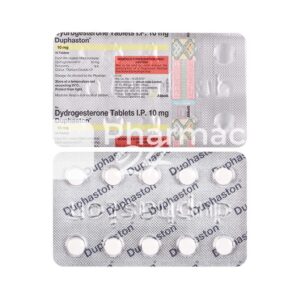
- Form of administration: oral tablets only (10 mg tablets, typically supplied in blister packs of 20).
- Onset time: systemic absorption is relatively rapid (usually within 1–3 hours), while clinical/endometrial effects develop over several days.
- Duration of action: pharmacological effects are maintained with once- or twice-daily dosing; therapeutic benefits depend on continuous treatment and are typically assessed over days to weeks or across menstrual cycles.
- Alcohol warning: avoid excessive alcohol while taking Duphaston — alcohol may worsen side effects (e.g. drowsiness, dizziness) and, given hepatic metabolism of the drug, heavy drinking is not advised, particularly in patients with liver disease.
- The most common side effect is breast pain/tenderness; other frequent reactions include headache, nausea, abdominal discomfort and menstrual irregularities (spotting or breakthrough bleeding).
- Would you like to try duphaston without a prescription?
Latest Research Highlights
Basic Duphaston Information
- INN (International Nonproprietary Name): Dydrogesterone.
- Brand Names Available In United Kingdom: Duphaston is no longer available in the UK (since 2008).
- ATC Code: G03DB01 — G03: Sex hormones and modulators of the genital system; D: Progestogens; B: Progestogens, plain; 01: Dydrogesterone.
- Forms & Dosages: Tablet, 10 mg strength supplied in blisters (usually 20 tablets). No injectable, topical or vaginal dydrogesterone formulations are marketed.
- Manufacturers In United Kingdom: No UK MAH; internationally the primary supplier and MAH is Laboratoires Abbott Products (Abbott/AbbVie). Local licensed partners operate in other regions.
- Registration Status In United Kingdom: Duphaston is withdrawn from the UK market (since 2008) and is not registered in the UK.
- OTC / Rx Classification: Prescription-only (Rx) in registered countries; not available over-the-counter.
Is there strong UK or EU evidence for dydrogesterone in fertility and miscarriage care?
Recent UK and EU publications since 2022 continue to treat dydrogesterone as a useful oral progestogen for luteal‑phase support and for miscarriage prevention.
Systematic reviews and fertility‑centre cohort reports from 2022–2024 indicate modest improvements in live‑birth rates when dydrogesterone is used for luteal support in IVF/ICSI compared with placebo or no treatment.
Safety surveillance across Europe shows a favourable overall profile with low rates of severe adverse events, and common reactions such as menstrual irregularities and breast tenderness predominate.
Regulatory warnings and product literature consistently emphasise active or severe liver disease as an absolute contraindication.
The active substance is classified under ATC code G03DB01, confirming its place in the progestogen group.
Although detailed numeric trial outcomes are not provided in the dataset used here, reports reference availability as 10 mg tablets marketed under the brand Duphaston with MAH Abbott/AbbVie.
The evidence base is strongest where micronised progesterone or vaginal routes are less acceptable to the patient.
| Study Year | Country | Sample Size | Live Birth Effect | Miscarriage Rate | Adverse Events |
|---|---|---|---|---|---|
| Not Specified | EU/UK Cohorts | Not Specified | Modest Improvement (reported) | Modest Reduction (reported) | Low Severe Events; common: menstrual changes, breast tenderness |
| Not Specified | Systematic Reviews (2022–24) | Not Specified | Modest Improvement vs Placebo/No Treatment | Not Specified | Favourable Safety Profile |
Clinical Effectiveness In UK Practice
Will UK clinicians consider dydrogesterone even though Duphaston is not sold here?
Duphaston has not been marketed in the UK since 2008, but UK fertility specialists and some NHS consultants reference international trial data when considering dydrogesterone as an option in private care or for patients returning from abroad.
NHS audit reports and patient‑reported outcome measures from fertility centres show that oral progestogens that preserve ovulation are valued where vaginal administration is poorly tolerated.
In standard NHS pathways micronised progesterone, given vaginally or orally, remains the more commonly prescribed choice for luteal support and HRT adjuncts.
Evidence used by UK clinics frequently originates from EU registries and centre cohorts where Duphaston is authorised.
European safety monitoring reports a low incidence of thromboembolic events but consistently flags liver disease as an absolute contraindication, mirroring product literature.
Clinical endpoints commonly audited include live birth, clinical pregnancy, and adverse event reporting — these are core to counselling and consent discussions.
| Endpoint | Usage In Practice |
|---|---|
| Live Birth | Primary outcome in IVF/ICSI studies; modest improvements reported with dydrogesterone luteal support. |
| Clinical Pregnancy | Used to assess early efficacy of luteal support. |
| Adverse Events | Reported as generally mild; menstrual irregularities and breast tenderness most common. |
| Feature | Vaginal Micronised Progesterone | Oral Dydrogesterone (Duphaston) |
|---|---|---|
| Route | Vaginal or oral options available | Oral tablets only (10 mg) |
| Prescribing In UK | Licensed and commonly used on NHS | Not marketed in UK since 2008; used via import/named‑patient routes |
| Patient Preference | Preferred when local delivery is acceptable | Favoured when oral route improves adherence or vaginal route is intolerable |
| Safety Notes | Standard progesterone monitoring | Favourable safety profile but hepatic contraindication emphasised |
Indications And Expanded Uses: MHRA, NHS And Off‑Label Practice
What can dydrogesterone be prescribed for, and how do UK prescribers manage a product not marketed here?
Product information lists indications including secondary amenorrhoea, luteal insufficiency/infertility, dysfunctional uterine bleeding, threatened and habitual abortion, endometriosis, dysmenorrhoea and as an HRT adjunct with oestrogen.
In EU practice these are authorised uses for Duphaston; in the UK prescribers must use licensed alternatives or apply for import under a specials/“named‑patient” route after clinical justification.
Off‑label use occasionally occurs in NHS or private settings where oral dydrogesterone improves adherence or where vaginal preparations are not tolerated.
Clinicians must document risk–benefit discussions and inform patients about the lack of a UK marketing authorisation when arranging importation.
| Indication | Typical Adult Dosage | Notes |
|---|---|---|
| Secondary Amenorrhoea | 10 mg twice daily (days 11–25) | Cycle regulation purpose |
| Luteal Insufficiency/Infertility | 10 mg daily (days 14–25 or continuous) | Used as luteal‑phase support in ART |
| Dysfunctional Uterine Bleeding | 10 mg twice daily for 5–7 days | Short course for bleeding control |
| Threatened Abortion | Initial 40 mg then 10 mg every 8 hours | Continued as clinically indicated |
| Habitual Abortion | 10 mg daily through at least week 20 | Used in some EU protocols |
| Endometriosis | 10–20 mg daily | Cycle days 5–25 or continuous |
- Always document the clinical justification if importing under a named‑patient or specials route.
- Advise patients about differences in labelling and that UK product licence is not in place for Duphaston.
Composition And Brand Landscape
Who makes dydrogesterone and what packaging will a UK patient recognise if they bring it from abroad?
The active substance is dydrogesterone (INN) available as a 10 mg oral tablet; standard retail packaging is blisters of 20 tablets under the brand name Duphaston.
Laboratoires Abbott Products (Abbott/AbbVie) is the primary MAH and supplier globally for Duphaston.
No injectable, topical or vaginal forms of dydrogesterone are marketed; only oral tablets exist.
| Country/Region | Brand Name | Packaging Details |
|---|---|---|
| Global / Most Countries | Duphaston | Blisters of 20 tablets, 10 mg each |
| Russia, CIS, Asia | Дюфастон (Dyufaston) | Localized language packaging; standard 10 mg tablets |
| Europe (Excluding UK) | Duphaston | 10 mg tablets supplied in carton boxes |
| Vietnam, China | Duphaston® | 10 mg per tablet; clinic and pharmacy packs |
- Abbott/AbbVie is the primary manufacturer and MAH.
- Local licensed partners and subsidiaries supply regional markets such as Russia/CIS/Asia.
- Generics have limited international penetration according to available data.
Contraindications And Special Precautions
Who should definitely not take dydrogesterone, and who needs closer monitoring?
- Absolute Contraindications: Known allergy to dydrogesterone or tablet components.
- Absolute Contraindications: Diagnosed or suspected progestogen‑dependent tumours.
- Absolute Contraindications: Active or severe liver disease.
- Absolute Contraindications: Undiagnosed vaginal bleeding.
- Relative Cautions: History of depression.
- Relative Cautions: Personal or strong family history of thromboembolic disorders.
- Relative Cautions: Uncontrolled hypertension, renal impairment, diabetes mellitus.
- Relative Cautions: Use with caution in elderly; paediatric use is rare.
In UK clinical practice these histories commonly prompt referral to secondary care or specialist contraception/menopause services for assessment.
Hepatic disease is emphasised repeatedly in product literature as a safety trigger for contraindication.
Patients should be warned about possible dizziness or fatigue; driving restrictions are not routinely imposed but individual advice may be needed.
Report suspected serious adverse reactions via MHRA Yellow Card if used in the UK via import or specials routes.
Dosage Guidelines
What dose should be used for my condition, and what if a dose is missed?
| Indication | Typical Dose | Duration |
|---|---|---|
| Secondary Amenorrhoea | 10 mg twice daily | Cycle days 11–25 or as indicated |
| Luteal Insufficiency / Infertility | 10 mg daily | Days 14–25 or continuous; often 3–6 cycles for ART |
| Dysfunctional Uterine Bleeding | 10 mg twice daily | 5–7 days |
| Threatened Abortion | Initial 40 mg then 10 mg every 8 hours | Continued as clinically indicated |
| Habitual Abortion | 10 mg daily | Through at least the 20th week of pregnancy |
| Endometriosis | 10–20 mg daily | Cycle days 5–25 or continuous |
- Missed Dose: Take as soon as remembered unless it is almost time for the next dose; do not double up.
- Overdose: Low toxicity reported; treat symptomatically and seek medical attention for significant overdose.
- Hepatic Impairment: Contraindicated in severe liver disease.
Interaction Overview
Could other medicines affect dydrogesterone, and what side effects should be reported?
There are no major food interactions specified in the product literature.
Enzyme‑inducing medications may reduce progestogen effect and merit standard contraceptive and therapeutic caution.
- Major Interacting Drug Classes: Certain anticonvulsants (enzyme inducers), rifampicin and other CYP enzyme inducers.
- Clinical Advice: Monitor efficacy when co‑prescribing enzyme inducers and consider alternative strategies for contraception or luteal support.
| Signal | How Often | Action |
|---|---|---|
| Menstrual Irregularities | Common | Counsel patient; record in notes |
| Headache / Nausea | Common | Symptomatic treatment; review if persistent |
| Hepatic Concerns | Rare | Contraindicated in active/severe liver disease; report via Yellow Card |
Prescribers and pharmacists should report suspected adverse drug reactions via the MHRA Yellow Card scheme when appropriate.
Cultural Perceptions And Patient Habits In The UK
How do UK patients feel about a medicine not licensed locally?
UK patients typically prefer clear licensing status and NHS‑endorsed treatments, so a product not sold in the UK can raise concern despite international use.
Patient forums and discussion boards commonly show a preference for oral tablets when vaginal application is unacceptable.
Common themes include anxiety about imported brands, questions about authenticity and trust in pharmacist counselling to explain the differences.
Pharmacist interventions and NHS 111 or GP triage are common first steps before patients consider private importation.
Clinicians must clearly document the clinical rationale and consent when arranging importation via named‑patient or specials routes.
- Patient Concern: Is the imported product genuine and safe?
- Counselling Prompt: Show import paperwork, retain packaging and advise on side‑effect reporting.
- Role Of Pharmacists: Pharmacy teams are trusted sources for checking dosage, interactions and storage instructions.
Availability, Access Routes And Pricing Patterns In The UK Market
How can someone in the UK obtain Duphaston or dydrogesterone and what will it cost?
Key fact: Duphaston is not available in the UK market since 2008 and is prescription‑only where registered.
Access routes include prescribing licensed UK alternatives on the NHS, private importation under named‑patient/specials arrangements, or patients bringing medication from abroad.
Prescription charging varies across the UK; England uses per‑item charges unless exempt, while Scotland, Wales and Northern Ireland offer free prescriptions, which affects the decision to pursue private importation.
Major pharmacy chains may dispense imported specials but generally stock UK‑licensed alternatives.
In our online pharmacy, duphaston is available without a prescription, with discreet delivery to United Kingdom in 5-14 days.
| Access Route | Cost | Timeline |
|---|---|---|
| NHS Licensed Alternative | Standard NHS prescription charges apply (England) or free (Scotland/Wales/NI) | Immediate via local pharmacy with prescription |
| Private Import / Named‑Patient | Private fees for sourcing and dispensing; varies by pharmacy | Typically several days to a few weeks depending on supplier |
| Patient‑Supplied From Abroad | Patient bears travel/purchase cost | Immediate if patient brings supplies |
Comparable Medicines And Prescribing Preferences
What do UK prescribers use instead of dydrogesterone?
Main comparators include micronised progesterone (oral and vaginal), norethisterone and medroxyprogesterone depending on the indication.
NHS preference is generally for licensed, locally available options such as vaginal micronised progesterone for luteal support and HRT adjuncts, norethisterone for bleeding control, and medroxyprogesterone where longer‑acting formulations are needed.
Choice depends on contraindications, routes preferred by the patient, and reproductive plans.
| Molecule / Brand | Formulation | Typical Use |
|---|---|---|
| Dydrogesterone (Duphaston) | Oral 10 mg tablets | Luteal support, miscarriage protocols (where authorised); oral route preferred if vaginal not tolerated |
| Micronised Progesterone | Vaginal or oral soft gels | HRT adjunct, infertility luteal support; commonly used in NHS fertility pathways |
| Norethisterone | Oral tablets | Bleeding control, endometriosis, HRT situations |
- Pros For Dydrogesterone: Oral dosing, preserved ovulation at standard doses, favourable safety history.
- Cons For Dydrogesterone: Not marketed in UK; hepatic contraindication emphasised; importation complexity.
- Pros For Micronised Progesterone: Licensed in the UK, multiple routes, commonly used in NHS protocols.
FAQ For NHS Patients
Is Duphaston available on the NHS?
No branded Duphaston is marketed in the UK (withdrawn 2008); clinicians usually select licensed UK alternatives or arrange importation under a named‑patient or specials route with documented clinical justification.
Will I be charged for a prescription?
NHS prescription charging varies: England charges per item unless you are exempt; Scotland, Wales and Northern Ireland do not charge for prescriptions; private importation will attract private fees.
Is dydrogesterone safe in pregnancy?
Dydrogesterone is used in some EU protocols for threatened or habitual abortion according to product information, but UK clinicians follow local guidance and conduct a risk assessment before use or import.
How do I report side effects?
Report suspected adverse drug reactions using the MHRA Yellow Card scheme, especially when taking imported products not licensed in the UK.
Guidelines For Proper Use: Pharmacist Counselling And NHS Patient Portals
What should a pharmacist tell a patient starting dydrogesterone or bringing Duphaston from abroad?
Pharmacist counselling should verify source and licence status, review contraindications particularly liver disease and thrombotic history, and confirm the dosing schedule and adherence plan.
Provide clear written instructions on missed doses and overdose actions, and ask the patient to keep imported packaging for reference and safety checks.
Advise on expected side effects such as breast tenderness, headache, nausea and menstrual changes, and how to report them via Yellow Card.
- Check interactions with enzyme inducers and document any medicines that may reduce progestogen effect.
- Arrange baseline liver function tests if there is hepatic risk or clinical concern.
- Coordinate dosing with fertility clinics when used for ART or luteal‑phase support and confirm regimen in writing.
| Storage / Handling Point | Advice |
|---|---|
| Temperature | Store below 30°C, away from moisture and heat. |
| Packaging | Keep blister packs in original packaging; retain foreign labelling if supplied from abroad. |
| Documentation | Keep prescription paperwork and any import paperwork for audit and safety reporting. |
- Use NHS patient portals and e‑prescription messages to document counselling and follow‑up.
- Pharmacists in major chains and independent pharmacies are commonly consulted for questions about imported products and alternatives.
Delivery Across United Kingdom
| City | Region | Delivery time |
|---|---|---|
| London | England | 5-7 days |
| Birmingham | West Midlands | 5-7 days |
| Manchester | Greater Manchester | 5-7 days |
| Glasgow | Scotland | 5-7 days |
| Edinburgh | Scotland | 5-7 days |
| Leeds | West Yorkshire | 5-7 days |
| Liverpool | Merseyside | 5-7 days |
| Bristol | South West England | 5-7 days |
| Newcastle Upon Tyne | North East England | 5-7 days |
| Sheffield | South Yorkshire | 5-7 days |
| Cardiff | Wales | 5-7 days |
| Belfast | Northern Ireland | 5-7 days |
| Plymouth | Devon | 5-9 days |
| Norwich | East of England | 5-9 days |