Clomiphene
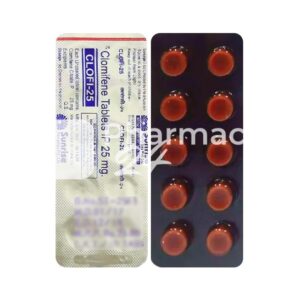
In brief
- Clomiphene is sold in many countries under brand names such as Clomid, Serophene, Omifin, Clostilbegyt, Clomiphène®, Réprefol and Fertomid, mainly as oral tablets in packs of 10, 30 or 50. It is a prescription-only medicine in general, although some pharmacies may offer it without a prescription.
- Clomiphene is used mainly to induce ovulation in women with anovulatory infertility, and it is also used off-label in some men for infertility. It is a selective oestrogen receptor modulator (SERM) that works by blocking oestrogen feedback at the hypothalamus and pituitary, increasing gonadotrophin release and stimulating ovulation.
- The usual dose for female infertility is 50 mg once daily for 5 days, usually starting on day 3–5 of the menstrual cycle. If needed, the dose may be increased in later cycles up to 150 mg daily; for off-label male use, 25–50 mg daily is commonly used.
- The form of administration is an oral tablet.
- Clomiphene usually starts working during the treatment cycle, with ovulation often occurring about 5–10 days after the last tablet is taken.
- The duration of action is one treatment cycle at a time, typically 5 days of dosing, and treatment may be repeated for up to 6 ovulatory cycles; in men, use may continue for 3–6 months.
- Do not consume alcohol, as it may increase side effects such as dizziness, nausea and visual disturbances.
- The most common side effects are hot flushes, headache, dizziness, nausea, abdominal discomfort, mood changes, breast tenderness and visual disturbances; ovarian enlargement and multiple pregnancy can also occur.
- Would you like to try clomiphene without a prescription?
Basic Clomiphene Information
- INN (International Nonproprietary Name): Clomifene, alternatively spelled clomiphene.
- Brand names available in United Kingdom: Clomid is the best-known reference brand in the UK and EU context.
- ATC Code: G03GB02.
- Forms & dosages: Tablets in 25mg, 50mg, and less commonly 100mg strengths in some regions.
- Manufacturers in United Kingdom: Merck Serono, Sanofi-Aventis, Teva, Cipla, Sun Pharma, Organon, and EGIS are among major suppliers globally.
- Registration status in United Kingdom: MHRA licensed.
- OTC / Rx classification: Prescription-only (Rx).
Latest Research Highlights In The UK And EU
Are women with PCOS still better served by clomifene, or has letrozole moved ahead in practice?
Recent UK and EU evidence from 2022 to 2025 continues to support clomifene as a long-established ovulation induction option, especially where cycle-based fertility treatment is used in NHS pathways.
Across comparative studies, letrozole often shows a higher live birth or ovulation rate in PCOS, but clomifene remains widely used, MHRA-licensed in the UK, and classified as ATC G03GB02.
It is also familiar to fertility specialists because it has a predictable tablet format, usually as clomifene citrate tablets, with Clomid 50mg tablets still a recognisable reference brand in UK and EU conversations.
The medicine is prescription-only, and prescribing is commonly supervised by fertility clinics or gynaecology teams.
| Study or setting | Comparator | Headline outcome |
|---|---|---|
| UK and EU comparative evidence, 2022–2025 | Letrozole | Letrozole often performs better for live birth and ovulation in PCOS, while clomifene still produces ovulation in many patients. |
| Ovulation induction pathways | No treatment or other agents | Clomifene remains an established oral option when cycle induction is appropriate. |
| Safety monitoring in fertility care | Clinical review | Multiple pregnancy remains a recognised risk, so ultrasound may be used where indicated. |
Data highlight: visual adverse effects, ovarian enlargement, and multiple gestation are the main safety signals clinicians watch for.
Patients are usually told to report blurred vision, photophobia, or visual spots promptly, because these symptoms may need treatment review.
Clomifene remains a standard oral fertility medicine, but the choice between clomiphene and letrozole still depends on diagnosis, monitoring arrangements, and local specialist preference.
Clinical Effectiveness In The NHS Context
What does clomifene actually do in everyday fertility care?
In the NHS, clomifene for infertility is mainly used for anovulatory infertility, particularly in PCOS-associated subfertility.
It can trigger ovulation, but that does not guarantee pregnancy, because success also depends on age, BMI, sperm factors, the underlying diagnosis, and how long conception has been delayed.
Most UK pathways involve cycle-based prescribing, with ultrasound monitoring where clinically needed and a review after each ovulatory cycle.
Many clinicians limit treatment to up to six ovulatory cycles, because continuing without response is unlikely to help.
Patients often describe hot flushes, mood changes, waiting lists, and the disappointment of repeated cycles as the hardest parts of treatment.
That experience can vary between England, Scotland, Wales, and Northern Ireland, because fertility pathways and prescription charges differ by nation.
- What improves outcomes: early diagnosis, BMI optimisation where relevant, semen analysis, cycle tracking, and timely monitoring.
- What can limit response: uncontrolled thyroid or adrenal dysfunction, longer infertility duration, and untreated male-factor issues.
| Common reason for non-response | Why it matters |
|---|---|
| Wrong diagnosis | Clomifene works best when anovulation is the main problem. |
| Male-factor infertility | Ovulation alone will not solve sperm-related causes. |
| Unmonitored cycles | Side effects or poor timing may reduce the chance of success. |
Indications And Expanded Uses
Who is clomifene for, and when is it used outside its main indication?
The approved and commonly accepted use is female infertility due to anovulation, especially when cycle induction is the right next step.
Some specialist clinics also use it off-label in male infertility, usually at 25–50mg daily for 3–6 months, with semen analysis follow-up.
Because it is prescription-only, patients may first encounter it in a private fertility clinic before later joining an NHS pathway.
- Approved
- Used within the licensed fertility indication for ovulation induction.
- Off-label
- Used outside the main licensed indication, such as in specialist male infertility care.
- Cycle induction
- A treatment plan that aims to stimulate ovulation during a set menstrual cycle.
Different clinics may favour clomifene, letrozole, or metformin depending on the diagnosis and treatment goals.
That choice often comes down to whether the priority is tablet convenience, ovulation response, or managing the broader picture in PCOS.
The global brand landscape includes Clomid, Clostilbegyt, Omifin, Clomiphène®, Serophene, and Fertomid, but UK prescribing remains centred on clinical need rather than brand preference.
Composition And Brand Landscape
What is actually in the tablet?
The active ingredient is clomifene, also spelled clomiphene, a prototypical selective estrogen receptor modulator, or SERM.
That means it can act as an estrogen antagonist in some tissues and an agonist in others.
In fertility care, the marketed product is usually an oral tablet, commonly in 25mg and 50mg strengths, with 100mg tablets available in some regions.
Clomid is the best-known reference brand across the UK and EU, while generics may be supplied by manufacturers such as Teva, Organon, Merck Serono, Sanofi-Aventis, EGIS, Cipla, and Sun Pharma.
| Brand or supplier | Region | Typical pack style |
|---|---|---|
| Clomid | UK, EU, Japan, US | Blister packs |
| Serophene | North America | 10-tablet boxes |
| Clomiphène® | France | 30-tablet carton |
| Clostilbegyt | Eastern Europe and Russia | Strip or bottle packs |
Packaging is normally in strips or cartons of 10, 30, or 50 tablets, and all versions are prescription-only.
Contraindications And Special Precautions
Who should avoid clomifene, and who needs closer monitoring?
The key restrictions are pregnancy, liver disease or impairment, known hypersensitivity, ovarian cysts not due to PCOS, unexplained uterine bleeding, and organic intracranial lesions or tumours.
Relative contraindications include PCOS, enlarged ovaries, thyroid or adrenal dysfunction, endometriosis, and a history of uterine fibroids.
In UK practice, patients are often advised to speak to a GP, fertility clinic, or pharmacist before starting if they have comorbidities, visual symptoms, or liver issues.
If vision changes develop, driving should be avoided until symptoms settle and a clinician has reviewed the medicine.
Alcohol is not absolutely forbidden, but it may worsen dizziness or nausea and can make adherence harder.
| Risk group | Why extra caution is needed |
|---|---|
| Pregnancy | Clomifene is contraindicated. |
| Liver impairment | Use is contraindicated or needs strict specialist review. |
| PCOS with enlarged ovaries | There is a higher risk of ovarian hyperstimulation and ovarian enlargement. |
- Seek urgent advice if you develop severe abdominal pain, sudden visual symptoms, heavy bleeding, or signs of an allergic reaction.
- Also seek help if you think you may be pregnant or if side effects are becoming difficult to manage.
Dosage Guidelines
What dose is usually prescribed, and how is it taken?
The standard regimen for women is 50mg once daily for 5 days, usually started on day 3 to 5 of the menstrual cycle.
If response is inadequate and a prescriber agrees, the dose may be increased up to 150mg per day.
Courses may repeat for up to 6 cycles in women.
For off-label male infertility, 25–50mg daily may be used for 3–6 months with follow-up testing.
Clomid 50mg tablets are the best-known reference strength in UK discussions, but the exact tablet supplied can vary by brand and dispenser.
| Use | Usual dose | Duration |
|---|---|---|
| Female infertility due to anovulation | 50mg daily for 5 days | Up to 6 cycles |
| Male infertility, off-label | 25–50mg daily | 3–6 months |
- Take the tablet exactly as prescribed on the correct cycle day.
- If a dose is missed on the same day, take it as soon as remembered.
- If a day is missed, skip it and do not double the next dose.
- Seek urgent help for nausea, vomiting, visual disturbance, or abdominal swelling after too much medicine has been taken.
Clomifene is not indicated under 16 years, and there is no routine elderly use in fertility care.
Use caution in hepatic impairment, because significant liver dysfunction is a contraindication.
Interactions Overview
Could other medicines affect clomifene, or could clomifene affect them?
Yes, interaction checking matters, especially in fertility treatment where patients may also be taking endocrine medicines or other fertility therapies.
Drugs that affect the liver, or medicines used alongside other fertility treatment, should be reviewed by a pharmacist or clinician before treatment starts.
Tea and coffee are not major direct interactions, but excess caffeine may make anxiety or sleep problems worse during a stressful treatment month.
Alcohol may add to dizziness or nausea.
This is particularly important for people using an online pharmacy or an electronic repeat prescription, because medicine lists can change quickly.
- Tell your pharmacist about all prescription medicines, over-the-counter products, herbal remedies, and supplements.
- Use caution with other endocrine or fertility medicines unless a specialist has approved the combination.
- Report suspected side effects through the MHRA Yellow Card scheme.
Tell your pharmacist about any new medicine before you start the next cycle, especially if it comes from a different clinic or a private prescription.
Cultural Perceptions And Patient Habits
How do people in the UK usually feel about taking clomifene?
Many patients first hear about it through NHS consultations, private fertility clinics, or patient forums such as Patient.info and Mumsnet.
That mix of formal advice and peer discussion can be helpful, but it also means people sometimes arrive with a lot of anxiety and half-remembered stories.
Pharmacist counselling matters because patients often want a calm explanation of cycle timing, side effects, and when to seek help.
They also want privacy, especially when timed intercourse, repeat prescriptions, and fertility notes are involved.
NHS 111, the GP surgery, and patient portals are often used for reassurance and repeat prescription tracking.
- Hope: many people see clomifene as the first real step after months of trying.
- Side effects: hot flushes, mood changes, and headaches can be unsettling.
- Cost: prescription charges and private fees can shape treatment choices.
- Discretion: patients value quiet, non-judgemental counselling.
In our online pharmacy, clomiphene is available without a prescription, with discreet delivery to United Kingdom in 5-14 days.
Availability And Pricing Patterns In The UK
Can clomifene be bought over the counter in the UK?
No, it is prescription-only in normal UK pharmacy supply, and most patients access it through NHS fertility services or private clinics.
Boots, LloydsPharmacy, and Superdrug are familiar names in community pharmacy, while online pharmacies and electronic prescriptions are increasingly common.
Regional pricing differs too.
Prescriptions are usually free in Scotland, Wales, and Northern Ireland, while England generally applies the standard NHS prescription charge unless the patient is exempt.
Private prices can vary by brand, supplier, and dispensing route.
Stock may also differ from one branch to another, so online ordering can depend on pharmacist review and availability checks.
| Access route | Likely cost | Typical waiting time |
|---|---|---|
| NHS fertility service | Usually standard NHS charge in England, free in Scotland, Wales, and Northern Ireland | Varies by local pathway |
| Private fertility clinic | Varies widely | Often faster than NHS |
| Online pharmacy with pharmacist review | Varies by supplier and brand | Depends on prescription and stock |
Clomid UK searches often reflect a practical need for access, but safe supply still depends on proper clinical oversight.
Comparable Medicines And Patient Preferences
What if clomifene is not the best fit?
Letrozole is increasingly used for ovulation induction in some settings, especially in PCOS.
Gonadotropins are injectable and more intensive, so they usually bring more monitoring and higher cost.
Tamoxifen is another SERM with limited fertility use, while metformin may be added in PCOS care.
Some patients prefer tablets over injections.
Others care most about the medicine most likely to trigger ovulation.
- Clomifene: oral, familiar, and widely used, but may cause visual symptoms and multiple pregnancy.
- Letrozole: often preferred in PCOS pathways, but choice depends on local practice.
- Gonadotropins: effective but injectable and more closely supervised.
- Metformin: useful in selected PCOS cases, often alongside other treatment.
The right option depends on diagnosis, monitoring, and how much treatment burden a patient can realistically manage.
Frequently Asked Questions
How long does clomifene take to work? It is usually taken for 5 days in a cycle, and ovulation is then assessed in that cycle.
Can I buy Clomid online in the UK? It is prescription-only in normal UK supply, so safe purchase depends on proper pharmacist or clinician review.
What if I miss a dose? Take it the same day if remembered; if the day has passed, skip it and do not double.
Can I drive while taking it? Yes, unless you develop visual symptoms, dizziness, or another adverse effect that makes driving unsafe.
Guidelines For Proper Use
What helps people use clomifene safely and correctly?
Follow the prescriber’s instructions exactly, and only start on the cycle day you have been told to use.
Attend any monitoring appointments, because ultrasound or follow-up testing may be arranged where indicated.
Pharmacist counselling is useful for checking tablet strength, reviewing the cycle plan, and spotting possible interactions early.
NHS App, GP online services, and fertility clinic portals can help with repeat prescriptions and result tracking.
Storage is straightforward: keep tablets at 15–30°C, in the original packaging, away from moisture and light.
- Do: take the exact strength supplied, keep records of cycle days, and contact a clinician if side effects worsen.
- Do: seek urgent help for visual changes, severe abdominal pain, or suspected overdose.
- Don’t: double a missed dose or continue treatment without review if ovulation is not happening.
- Don’t: refrigerate, freeze, or remove tablets from their original pack before use.
Delivery Across United Kingdom
| City | Region | Delivery time |
|---|---|---|
| London | England | 5-7 days |
| Birmingham | England | 5-7 days |
| Manchester | England | 5-7 days |
| Leeds | England | 5-7 days |
| Liverpool | England | 5-7 days |
| Newcastle upon Tyne | England | 5-7 days |
| Sheffield | England | 5-9 days |
| Nottingham | England | 5-9 days |
| Bristol | England | 5-7 days |
| Cardiff | Wales | 5-7 days |
| Edinburgh | Scotland | 5-7 days |
| Glasgow | Scotland | 5-7 days |
| Belfast | Northern Ireland | 5-7 days |
| Aberdeen | Scotland | 5-9 days |
References And Practical Takeaway
Clomifene remains a well-established oral fertility medicine, especially for ovulation induction in anovulatory infertility and PCOS-related subfertility.
It is MHRA licensed in the UK, prescription-only worldwide, and widely recognised under the Clomid brand name.
In practice, the best results come from careful diagnosis, sensible monitoring, and honest discussion about what the medicine can and cannot do.
For many patients, that means balancing hope with realistic expectations, and getting good advice before the first tablet is taken.