Cytotec
In brief
- Cytotec (misoprostol) is prescription-only in the UK and in most regulated markets, but availability can vary by country and some online pharmacies may offer it according to local laws and licensing. It is used clinically under medical supervision rather than as an over-the-counter medicine.
- Cytotec is used to prevent NSAID-induced gastric ulcers in at-risk adults. Misoprostol is a prostaglandin E1 analogue that helps protect the stomach lining by reducing acid-related injury and increasing mucosal defence.
- The usual dose for ulcer prevention is 200 micrograms four times daily with food; if not tolerated, 100 micrograms four times daily may be used. For off-label obstetric or gynaecological use, dosing varies by protocol and indication.
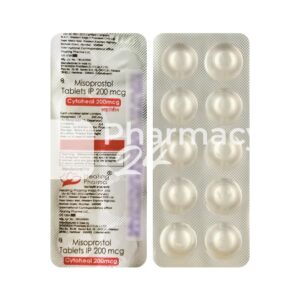
- The form of administration is an oral tablet, available most commonly as 100 micrograms and 200 micrograms tablets.
- It usually starts working within about 30 to 60 minutes after taking a tablet, although the exact onset depends on the indication and individual response.
- The duration of action is typically several hours, which is why it is often taken four times a day for ulcer prevention.
- Alcohol is not specifically contraindicated, but it may worsen stomach irritation and gastrointestinal side effects, so it is best avoided or kept to a minimum.
- The most common side effects are abdominal pain, diarrhoea, nausea, flatulence and dyspepsia; some people may also experience headache or, in obstetric use, uterine contractions and vaginal bleeding.
- Would you like to try Cytotec without a prescription?
Latest UK And EU Research Findings On Cytotec
Basic Cytotec Information
- INN (International Nonproprietary Name): Misoprostol.
- Brand Names Available In United Kingdom: Cytotec, with generic misoprostol also used in clinical and pharmacy settings.
- ATC Code: A02BB01.
- Forms & Dosages: Tablet, 100 microgram and 200 microgram.
- Manufacturers In United Kingdom: Pfizer, Inc. and local generic suppliers, depending on supply route.
- Registration Status In United Kingdom: Prescription-only.
- OTC / Rx Classification: Rx only, not available over the counter.
What do recent UK and EU findings actually say about Cytotec and misoprostol tablets?
Between 2022 and 2025, the main theme across NHS-facing guidance, MHRA-linked safety advice, EMA updates, and WHO-aligned practice has been consistent.
Misoprostol remains a useful prostaglandin for specific licensed and specialist off-label uses, but it needs careful counselling because adverse effects are common and pregnancy exposure is hazardous.
In UK practice, the medicine is most often discussed as misoprostol rather than only by the brand name Cytotec.
That matters because prescriptions, electronic records, and pharmacy labels usually use the INN, with the product classified as A02BB01.
Real data: the standard ulcer-prevention regimen is 200 microgram four times daily with food, with 100 microgram four times daily used if intolerance occurs.
Real data: the marketed tablet strengths are 100 microgram and 200 microgram, and there are no injectable or topical human forms.
| Research Or Guidance Area | What Recent UK And EU Evidence Shows | Practical Safety Note |
|---|---|---|
| Gastroprotection | Useful for preventing NSAID-induced gastric ulcers in at-risk adults. | Diarrhoea and abdominal pain are common reasons for stopping early. |
| Regulatory position | Prescription-only in the UK and EU, with local warnings for off-label use. | Not suitable for self-treatment or OTC purchase. |
| Obstetric monitoring | Used under protocol-led specialist care in women’s health services. | Off-label regimens vary and require local safeguards. |
| Adverse effects in practice | Abdominal pain, diarrhoea, nausea, flatulence, and dyspepsia are commonly reported. | Patients who become dehydrated or dizzy need advice promptly. |
For pharmacists, the key message is simple.
Cytotec has a place, but it is not a casual medicine.
In women’s health, obstetric uses remain protocol-led and off-label in many settings, with close attention to uterine activity, fetal safety, and local governance.
Clinical Effectiveness Of Cytotec In UK Practice
Does misoprostol actually work well in ordinary NHS prescribing, or does it look better on paper than in real life?
For adults at risk of NSAID-related gastric ulceration, the answer is that it can be effective when taken properly.
Real data: the standard regimen is 200 microgram four times daily with food for the full period of NSAID therapy.
Real data: if the patient cannot tolerate that dose, 100 microgram four times daily is the usual lower option.
In practice, adherence is the weak point.
Four-times-daily dosing is awkward for people at work, on shifts, travelling, or caring for children.
That is why many UK patients are prescribed a PPI such as omeprazole instead, especially if the aim is simpler gastroprotection.
Patients also tend to ask sensible, practical questions that mirror what appears on NHS forums and patient portals.
They want to know whether to take the Cytotec tablet with meals, what to do about diarrhoea at work, and why it may be used alongside or instead of omeprazole.
Pros and cons can be summarised quickly.
| Pros | Cons |
|---|---|
| Licensed for NSAID ulcer prevention in at-risk adults. | Four-times-daily dosing reduces adherence. |
| Useful when a patient needs prostaglandin-based gastroprotection. | Gastrointestinal side effects may limit acceptance. |
| Can be tailored to 200 microgram or 100 microgram regimens. | Many patients prefer once-daily PPI options. |
Real-world pharmacist counselling matters here.
A clear explanation about food, timing, and symptom monitoring often makes the difference between a medicine that is used correctly and one that is abandoned after two days.
Approved Indications And Expanded Uses Of Cytotec
What is Cytotec for in the UK, and where does the line between licensed and off-label use sit?
The licensed adult indication is straightforward.
Licensed use: prevention of NSAID-induced gastric ulcers in adults at risk.
Off-label use: medical abortion, cervical ripening, labour induction, and postpartum haemorrhage control under specialist protocols.
Not licensed for general self-use: home dosing based on internet claims or non-clinician advice.
In obstetrics and gynaecology, misoprostol and mifepristone may be used together in specialist pathways, but local guidance decides the exact sequence and dose.
Real data: labour induction regimens vary, and one commonly cited protocol uses 25–50 microgram vaginally every 4–6 hours, though this is not standardised for general use.
That variation is why NHS trusts and specialist services put safeguards around prescribing.
Misoprostol can stimulate the uterus, so the stakes are higher than with simple acid-suppression treatment.
Patients should be told to follow clinician instructions rather than online dosing claims, especially when pregnancy status is uncertain.
A few definitions help keep it clear.
- Licensed use
- Use approved for a specific indication in adults at risk of NSAID ulceration.
- Off-label use
- Use for obstetric or gynaecological purposes under specialist protocol.
- Not licensed for routine use
- Use outside the product’s approved pathway without clinical oversight.
Composition, Brand Landscape And Packaging In The UK
Is Cytotec always called Cytotec, or will a UK patient see something different on the box?
Usually, they will see the active ingredient, misoprostol, even when the product has a familiar brand name.
Real data: Cytotec is the globally recognised brand, and the oral tablets come in 100 microgram and 200 microgram strengths.
Real data: typical pack sizes are 20, 28, or 50 tablets.
Real data: the ATC code is A02BB01, and there are no injectable or topical human forms.
| Strength | Form | Typical Pack Size |
|---|---|---|
| 100 microgram | Oral tablet | 20, 28, or 50 tablets |
| 200 microgram | Oral tablet | 20, 28, or 50 tablets |
Depending on stock and import status, UK patients may encounter branded Cytotec, generic misoprostol, or pharmacy-verified supplier products.
That is normal in a market where patent expiry has opened the door to local generic supply across Europe and beyond.
For most people, the important point is not the label style but the strength, the prescription status, and whether the pack matches the prescriber’s instructions.
Contraindications And Special Precautions
Could this medicine be unsafe in pregnancy, dehydration, or bowel disease?
Yes, and that is exactly where proper counselling matters.
Real data: pregnancy is an absolute contraindication unless misoprostol is being used under specialist obstetric care.
It can cause abortion, premature birth, and birth defects.
Real data: known hypersensitivity to misoprostol or prostaglandins is also an absolute contraindication.
Some patients need closer monitoring rather than a complete avoid list.
Relative cautions include cardiovascular disease, inflammatory bowel disease, dehydration risk, renal impairment, and hepatic impairment.
Older adults usually receive standard adult doses, but monitoring is sensible if they are more sensitive to side effects.
Driving and work safety deserve a mention too.
If a patient develops dizziness, cramping, or diarrhoea, it may be unwise to drive, operate machinery, or work a long shift until they know how they react.
Alcohol can make gastrointestinal upset feel worse, so it is sensible to avoid it if symptoms are already troublesome.
Checklist for urgent advice:
- Possible pregnancy.
- Severe abdominal pain.
- Persistent or severe diarrhoea.
- Signs of dehydration.
- Unusual bleeding.
UK pharmacists often reinforce the same safety message in simple terms: if pregnancy is possible, or if the symptoms feel severe rather than mild, seek help urgently.
Dosage Guidelines And Regimen Structure
What dose is actually used in UK prescribing, and how different is obstetric dosing from ulcer prevention?
The answer is very different, and that is why the indication matters so much.
Real data: for NSAID ulcer prevention in adults, the standard dose is 200 microgram four times daily with food.
Real data: if intolerance occurs, 100 microgram four times daily is the lower option.
Real data: treatment continues for as long as NSAID therapy is needed.
| Indication | Usual Dose | Duration |
|---|---|---|
| NSAID-induced gastric ulcer prevention | 200 microgram four times daily with food | For the full NSAID course |
| NSAID intolerance | 100 microgram four times daily | For the full NSAID course |
| Off-label obstetric and gynaecological use | Protocol-specific | Set by local guidance |
Data highlight: if a dose is missed, take it as soon as remembered unless the next dose is nearly due, and do not double up.
Data highlight: overdose may cause severe hypotension, bradycardia, sedation, tremors, or seizures, and there is no specific antidote.
Children are not generally recommended to use misoprostol, while elderly patients usually get standard adult doses with monitoring.
In ordinary UK counselling language, that means: take with food, do not double up, and contact NHS 111 or urgent care if symptoms become severe.
Interactions With Medicines, Food And Drink
Are there any common interaction worries with misoprostol tablets?
There are a few practical ones that matter in daily UK use.
Real data: the medicine’s main therapeutic area is NSAID ulcer prevention, and there is no specific antidote in overdose.
That makes prevention and symptom monitoring more important than rescue treatment.
- Other ulcer medicines, especially if a patient is already on a PPI or H2-blocker.
- NSAIDs, where the medicine may be prescribed specifically to offset ulcer risk.
- Medicines that increase diarrhoea or dehydration risk.
- Alcohol, which may worsen stomach upset and loose stools.
Tea and coffee are not direct interactions, but they can aggravate nausea or bowel symptoms in sensitive patients.
A patient who is already loose or crampy often notices that caffeine makes the day worse, even if the tablets themselves are the main cause.
Data highlight: seek advice if diarrhoea becomes severe, if dizziness develops, or if dehydration starts to show.
Suspected adverse reactions can be reported through the MHRA Yellow Card scheme.
That is the UK route pharmacists and prescribers use when a side effect seems more than a mild nuisance.
Cultural Perceptions And Patient Habits In The UK
Why do some patients search for Cytotec online while others just ask the local pharmacist?
Usually, it comes down to trust, privacy, and how much explanation they want.
UK patients often look at NHS 111, Patient.info, Mumsnet threads, NHS portals, and pharmacy advice pages before they commit to treatment.
They want plain language, discreet counselling, and reassurance that a prescription-only medicine is being used for a proper reason.
In everyday pharmacy practice, the names matter too.
Some people say Cytotec, others ask for misoprostol tablets, and some only know that it is “the one for the stomach” or “the one used in women’s health”.
A pharmacist-led conversation in Boots, LloydsPharmacy, or Superdrug often helps because it can be tailored to work schedules, caring duties, travel plans, and whether the patient is worried about side effects.
- What patients ask
- What it is for, whether diarrhoea is normal, and why it must be taken with food.
- What pharmacists explain
- How to take each dose, what to expect, and when to seek help.
- What NHS portals cover
- Safety warnings, common side effects, and when urgent review is needed.
That practical, reassuring style is what most UK patients respond to best.
Availability And Pricing Patterns Across The UK
Can a patient get Cytotec easily in the UK, and what does it usually cost?
The answer depends on the access route.
Real data: misoprostol is prescription-only and not available OTC.
Real data: it should be stored at room temperature, away from excess heat and moisture.
Patients may access it through an NHS prescription, a private prescription, or an online pharmacy.
Stock can vary between branches and regions, so people often check pharmacy pages or electronic prescription services before travelling.
Regional differences matter too.
England, Scotland, Wales, and Northern Ireland all have their own prescription charge rules and exemption patterns.
That means the final price to the patient can differ even when the medicine itself is the same.
Online pharmacies are growing in popularity, but they should be MHRA-registered and clear about who is supplying the medicine.
For one branch, the pack may arrive as a generic misoprostol order; for another, stock may be tied to a local hospital or specialist clinic.
Purchase context: in our online pharmacy, cytotec is available without a prescription, with discreet delivery to United Kingdom in 5-14 days.
Access overview:
| Access Route | Likely Cost Model | UK Notes |
|---|---|---|
| NHS prescription | Prescription charge or exemption | Depends on nation and patient status. |
| Private prescription | Medicine price plus prescribing fee | Pricing varies by clinic and stock. |
| Online pharmacy | Product price plus delivery | Use MHRA-registered services only. |
Comparable Medicines And Treatment Preferences
Why would a clinician choose omeprazole instead of Cytotec, or Arthrotec instead of plain misoprostol?
Usually, it comes down to tolerability, dosing convenience, and the clinical goal.
Real data: Cytotec sits in the prostaglandin group under ATC code A02BB01, and it is mainly used for NSAID ulcer prevention.
Other medicines may be preferred when side effects or pregnancy risk are a concern.
| Medicine | Main Advantage | Main Drawback |
|---|---|---|
| Omeprazole and other PPIs | Usually easier to take, often once daily. | Different mechanism from misoprostol. |
| Famotidine and other H2-blockers | Useful in some acid-related pathways. | Not the main prostaglandin option. |
| Arthrotec | Combines diclofenac and misoprostol. | Still carries misoprostol side effects. |
| Misodel | EU-specific vaginal insert for labour induction. | Different presentation and specialist use only. |
Once-daily dosing, side-effect burden, pregnancy risk, and the reason for use all shape the final choice.
If diarrhoea would be a problem at work or on the school run, a PPI may be more practical.
If specialist women’s health care is the target, local protocol will decide whether misoprostol is the right medicine at all.
Common UK Patient Questions About Cytotec
What is Cytotec used for in the UK?
It is mainly used to prevent NSAID-induced gastric ulcers in adults at risk, and it is also used off-label in specialist women’s health settings.
Can I get Cytotec on the NHS?
Yes, it can be prescribed, but it remains prescription-only and is not sold OTC.
What should I do if I miss a dose?
Take it when remembered unless the next dose is nearly due, and do not double up.
Is it safe in pregnancy?
No, pregnancy is an absolute contraindication unless specialist obstetric care specifically requires it.
Proper Use And Pharmacist-Led Counselling In The UK
What does good pharmacy advice sound like when a patient collects misoprostol?
It usually starts with the basics and ends with safety.
Checklist for proper use:
- Take exactly as prescribed.
- For ulcer prevention, take with food.
- Store at room temperature, away from heat and moisture.
- Do not share the medicine with anyone else.
- Do not double the next dose if one is missed.
- Seek advice urgently for severe diarrhoea, dehydration, bleeding, or possible pregnancy.
Data highlight: overdose can cause severe hypotension, bradycardia, sedation, tremors, or seizures, and there is no specific antidote.
That is why urgency matters if the amount taken is wrong or if symptoms look severe.
In ordinary UK healthcare use, follow-up may come through NHS 111, the GP surgery, a local pharmacy, or a patient portal tied to an electronic prescription.
For many people, the best outcome is simple: the medicine is taken correctly, the stomach is protected, and any warning signs are acted on early.
Delivery Across United Kingdom
| City | Region | Delivery Time |
|---|---|---|
| London | Greater London | 5-7 days |
| Birmingham | West Midlands | 5-7 days |
| Manchester | North West England | 5-7 days |
| Liverpool | North West England | 5-7 days |
| Leeds | West Yorkshire | 5-7 days |
| Sheffield | South Yorkshire | 5-7 days |
| Bristol | South West England | 5-7 days |
| Newcastle upon Tyne | North East England | 5-7 days |
| Edinburgh | Scotland | 5-7 days |
| Glasgow | Scotland | 5-7 days |
| Cardiff | Wales | 5-7 days |
| Belfast | Northern Ireland | 5-7 days |
| Aberdeen | Scotland | 5-9 days |
| Nottingham | East Midlands | 5-9 days |
| Exeter | South West England | 5-9 days |