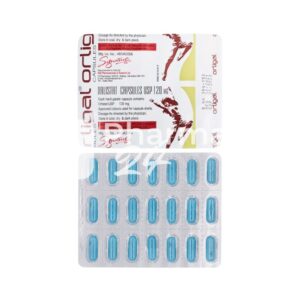
Xenical
In brief
- You can buy Xenical in some markets with and without a prescription depending on the country: 120 mg Xenical is usually prescription-only, while 60 mg alli may be available over the counter or pharmacist-only in select regions such as the UK, the US and Australia. Availability also varies by local regulations and pharmacy policy.
- Xenical (orlistat) is used for weight loss and weight maintenance in adults with obesity or overweight. It works by inhibiting gastrointestinal lipases, which reduces the absorption of dietary fat from the intestine.
- The usual dose of Xenical is 120 mg three times a day, taken with each main meal that contains fat, during the meal or within 1 hour after it. Higher doses do not improve efficacy.
- The form of administration is an oral capsule.
- Xenical starts working with the first dose by blocking fat absorption during the meal it is taken with, but noticeable weight-loss results usually take several weeks and depend on adherence to a reduced-calorie, lower-fat diet.
- The duration of action lasts for the meal it is taken with, and it is used as a long-term treatment when needed, with response typically reviewed after 12 weeks.
- Alcohol is not known to have a direct interaction with Xenical, but drinking alcohol may make it harder to follow a healthy weight-loss plan. It is best to limit alcohol if you are using this medicine.
- The most common side effects are oily or fatty stools, oily spotting, increased bowel motions, urgency, flatulence with discharge, abdominal cramps and rectal discomfort.
- Would you like to try Xenical without a prescription?
Latest Research Findings On Xenical In The UK And EU
- INN (International Nonproprietary Name): Orlistat
- Brand names available in United Kingdom: Xenical, alli
- ATC Code: A08AB01
- Forms & dosages: 120 mg capsules, 60 mg capsules
- Manufacturers in United Kingdom: F. Hoffmann-La Roche AG for Xenical; generics supplied by multiple manufacturers
- Registration status in United Kingdom: Prescription and regulated supply pathways vary by product and strength
- OTC / Rx classification: Xenical 120 mg is prescription strength; alli 60 mg is the lower-dose OTC version in selected markets
What has the recent evidence actually said about Xenical in real-world weight management?
Across UK and EU practice, orlistat remains an established lipase inhibitor with modest but clinically useful weight-loss support when it is paired with a reduced-calorie diet.
That point has not changed, even as newer medicines have attracted more headlines.
Systematic reviews and regulatory updates from 2022 to 2025 continue to position Xenical 120 mg as a long-standing option where lifestyle measures need extra support.
In primary care, the practical message is simple: the medicine works best when meal fat is kept down, and the gastrointestinal effects are often easier to manage when patients follow that advice closely.
| Study type | Population | Weight-loss outcome | Adverse effects | Follow-up length |
|---|---|---|---|---|
| Systematic review | Adults using orlistat alongside diet | Modest weight loss with support from calorie reduction | Gastrointestinal effects were the main limitation | Varied across included studies |
| Real-world adherence data | UK and EU adults in routine care | Better results when dosing was matched to meals and diet advice was followed | Less troublesome stools when dietary fat was lower | Short to medium term |
| Regulatory review | Licensed adult use | Confirmed continued role as a weight loss medication | Known GI profile remained the key safety issue | Ongoing |
Data highlight: the standard adult regimen is 120 mg three times daily with meals containing fat, and taking more than that does not improve efficacy.
Data highlight: MHRA-aligned prescribing in the UK is generally Rx-only for 120 mg, with use usually considered after lifestyle measures have been tried.
Data highlight: GI side effects tend to ease as adherence to a lower-fat diet improves, which is why pharmacy counselling matters so much in UK primary care.
Basic Xenical Information
- INN (International Nonproprietary Name): Orlistat
- Brand names available in United Kingdom: alli, Xenical
- ATC Code: A08AB01
- Forms & dosages: Capsule, 120 mg; Capsule (OTC), 60 mg
- Manufacturers in United Kingdom: F. Hoffmann-La Roche AG; generics from multiple suppliers
- Registration status in United Kingdom: Prescription and regulated pharmacy supply pathways
- OTC / Rx classification: Prescription (Rx) for most 120 mg products; OTC for 60 mg alli in selected markets
Clinical Effectiveness In NHS And Private UK Use
How do patients usually know whether Xenical is doing enough?
In NHS pathways and private prescribing, the answer is usually based on early response rather than waiting for months without review.
That is why treatment review around 12 weeks is such a common checkpoint.
If weight loss is not reaching the expected threshold, the medicine is usually stopped rather than continued indefinitely.
Data highlight: less than 5% body weight loss by 12 weeks may indicate stopping treatment.
- Some patients notice better portion control because every high-fat meal becomes very obvious.
- Some feel more confident after seeing the scales move, even if the total loss is modest.
- Diet awareness often improves because Xenical quickly shows the effect of fatty takeaways or large portions.
- Common problems include messy stools, social inconvenience, and people stopping too early when they are not prepared for the bowel effects.
In practice, Xenical is usually a support tool rather than a standalone solution.
That is especially true when a dietitian, GP, or pharmacist helps the person keep meals lower in fat and more predictable.
NHS access can depend on local commissioning, eligibility, and whether the person is being seen through a GP, a weight-management service, or a private online clinic.
Indications, Mhra Status, And When Xenical Is Considered
What is Xenical actually for, and who is it meant for?
The approved indication is simple: it is an adjunct to a reduced-calorie, low-fat diet for weight management in adults.
The active substance is orlistat, and the medicine is used under medical supervision rather than as a quick fix.
Definition: Orlistat is the International Nonproprietary Name, and A08AB01 is its ATC code in the obesity medicines group.
Definition: Xenical 120 mg is the prescription strength most commonly associated with regulated adult use in the UK and EU.
- It may be considered when lifestyle change alone has not delivered enough progress.
- It is used in obesity management where BMI criteria and weight-related comorbidities support treatment.
- It can be supplied through GP prescribing, NHS weight services, or regulated private pharmacies, including electronic prescriptions.
- alli 60 mg is the lower-dose OTC version in selected markets, but Xenical 120 mg remains the main Rx product.
For UK patients, the main point is that MHRA-approved medicines are part of a structured pathway, not a shortcut around diet and activity.
Composition, Brand Landscape, And How Xenical Compares With Generics
Is Xenical just a brand name, or is there something different about it?
The active ingredient is orlistat, and the main branded product is Xenical 120 mg capsules produced by F. Hoffmann-La Roche AG.
In online pharmacy listings, people often see both the branded and generic naming styles.
That is why Xenical 120 mg capsules often match branded searches, while orlistat capsules is the wording more often used for generics.
| Brand | Strength | Route | Usual Packaging |
|---|---|---|---|
| Xenical | 120 mg | Oral | Blister packs or bottles |
| alli | 60 mg | Oral | Blister packs |
| Orlistat generic | 120 mg or 60 mg | Oral | Blister packs, bottles, or strips depending on supplier |
Patients sometimes think a generic must behave differently, but the practical difference is mostly in branding, packaging, and supply chain rather than the active ingredient.
That matters when comparing Xenical capsules against orlistat capsules on a UK pharmacy site.
Contraindications And Who Should Avoid Xenical
Who should not take Xenical, even if they are keen to lose weight?
The main absolute contraindications are chronic malabsorption syndromes, hypersensitivity to orlistat or excipients, pregnancy, and breastfeeding.
Data highlight: children under 12 are not recommended because safety and efficacy are not established.
- People with chronic malabsorption do not absorb fat normally already, so blocking fat absorption is not suitable.
- Pregnancy is a clear no, because weight loss is contraindicated during pregnancy.
- Breastfeeding is also not recommended.
- A history of kidney stones, chronic kidney disease, gallbladder problems, or pancreatic disorders needs extra caution.
- Cyclosporine and warfarin need monitoring because interactions can matter clinically.
Anyone with multiple medicines, significant comorbidity, or older age should have a pharmacist or clinician review before starting.
That keeps the advice practical and avoids preventable problems later.
Dosage Guidelines, Timing, And Missed-Dose Advice
What is the right way to take Xenical so it actually works?
The standard adult regimen is 120 mg orally three times daily with each main meal containing fat, during or up to 1 hour after the meal.
Taking more than 120 mg three times daily does not improve efficacy.
The medicine is meant to be used with a nutritionally balanced reduced-calorie diet containing about 30% of calories from fat.
Data highlight: if a dose is missed and the meal was within the last hour, take it; if more than an hour has passed, skip it; do not double up.
- Take one capsule with each main meal that contains fat.
- If a meal is skipped, the capsule is skipped too.
- If a dose is forgotten and the meal was within the last hour, take the missed dose.
- If more than 1 hour has passed after the meal, leave it and carry on with the next dose.
Pharmacists often remind patients to match dosing to meals and to expect more GI effects if the meal is high in fat.
Elderly patients, and those with renal or hepatic impairment, usually need caution rather than routine dose changes.
Interactions With Food, Drink, And Medicines
Why does a greasy takeaway seem to cause such trouble with Xenical?
Because the key interaction is really with fat in the meal.
High-fat meals increase the chance of oily stools, urgency, and leakage, and that is exactly why diet advice is so important.
| Interaction | What To Watch For | Practical Advice |
|---|---|---|
| High-fat meals | Oily stools, urgency, leakage | Keep meals lower in fat and more balanced |
| Warfarin | Monitoring may be needed | Speak to a pharmacist or GP if treatment changes |
| Cyclosporine | Levels may need monitoring | Do not start or stop without clinical advice |
There is no major tea or coffee interaction, although caffeine-heavy habits can complicate appetite and bowel comfort for some people.
Unexpected reactions can be reported through the MHRA Yellow Card scheme, which is useful when something does not feel typical.
Side Effects, Safety Patterns, And What Patients Actually Notice
What do people usually notice first after starting Xenical?
For many, it is the bowel effects rather than the weight loss itself.
The most common adverse effects are oily or fatty stools, oily spotting, increased defecation, urgency, flatulence with discharge, abdominal cramping, rectal pain, and nausea.
| Mild Effects | Moderate Effects |
|---|---|
| Oily or fatty stools | Fecal urgency and increased defecation |
| Oily spotting | Flatulence with discharge and abdominal cramping |
| Fatty or oily evacuation | Rectal pain and nausea |
| Increased defecation | Rare headache and upper respiratory infections |
Data highlight: GI side effects are usually worst early on and often lessen when the patient keeps dietary fat low.
Data highlight: serious overdose reactions are uncommon in available data, but severe GI symptoms should still be monitored symptomatically.
- Hydration helps if stools are loose or urgent.
- Planning toilet access matters on workdays and journeys.
- Very fatty takeaway meals are the quickest way to make the side effects worse.
- Balanced meals make Xenical much easier to live with.
Many people first hear about Xenical side effects from pharmacists or online forums, so balanced counselling is important.
Cultural Perceptions, Pharmacist Counselling, And UK Patient Habits
Why do some people like Xenical, while others abandon it after a week?
Usually, it comes down to expectations.
People who understand that Xenical needs behaviour change tend to cope better than people who expected a simple prescription to do all the work.
- Embarrassment about bowel side effects is common.
- Planning around meals can feel awkward at work or while travelling.
- Clear pharmacist counselling often makes the medicine feel much more manageable.
- Patients appreciate discreet advice from Boots, LloydsPharmacy, Superdrug, and online pharmacies.
Many UK patients want reassurance about privacy, practicality, diet adaptation, and what happens if the diet is not low-fat enough.
That is why the best advice is usually straightforward: keep meals sensible, follow the dosing schedule, and ask early if the side effects are getting in the way.
Availability, Ordering, And Pricing Patterns Across The United Kingdom
Can Xenical be bought easily in the UK, and how does access usually work?
In practice, access depends on whether the route is NHS prescription, private pharmacy, or regulated online pharmacy supply.
Prescription charge policies vary across England, Scotland, Wales, and Northern Ireland, so the final cost and access route can look different from one part of the UK to another.
In our online pharmacy, Xenical is available without a prescription, with discreet delivery to the United Kingdom in 5-14 days.
| Access Route | Typical Features | Common Packaging | Usual Consideration |
|---|---|---|---|
| NHS prescription | Eligibility checks and local commissioning may apply | Varies by supply | Often the most structured option |
| Private pharmacy | Faster access, clinical screening still required | Blister packs or bottles | Often more expensive |
| Major chains | Common touchpoints for advice and fulfilment | Blister packs | Convenient for local collection |
| Online services | Electronic prescriptions and home delivery | 21, 42, 84, or 90 capsules depending on supplier | Useful for discreet ordering |
Data highlight: Xenical 120 mg is Rx-only, while alli 60 mg is the OTC lower-dose brand in some settings.
Prices are not fixed here because they vary by supply route and market conditions, but private purchase is usually quicker and more expensive than NHS routes.
Comparable Medicines And Why Patients May Choose Alternatives
What if Xenical is not the right fit, or the side effects are too much?
Then a comparison with other obesity medicines helps.
Xenical is a lipase inhibitor, while GLP-1 medicines act centrally and are injectable.
| Medicine | Mechanism | Route | Common Reason People Choose It |
|---|---|---|---|
| alli | Lipase inhibitor | Oral | Lower-dose OTC option |
| Saxenda | GLP-1 analogue | Injectable | People willing to inject |
| Wegovy / Ozempic | GLP-1 analogue | Injectable | Appetite-focused treatment |
| Contrave / Mysimba | CNS appetite suppressant | Tablet | Oral non-injectable alternative |
Some patients prefer Xenical because it is oral and non-systemic.
Others move away from it because bowel side effects are inconvenient or the results feel too slow.
For many UK patients, the best choice comes down to tolerance, willingness to inject, and what is available through the relevant pathway.
Practical Use Guidance For United Kingdom Patients And Frequently Asked Questions
What should people remember on day one?
Three things usually matter most: take it with meals, keep fat intake moderate, and review whether it is working rather than continuing forever without benefit.
- How quickly does Xenical work?
- It starts acting with meals, but the weight-loss review is usually around 12 weeks.
- What if I eat a fatty meal?
- GI side effects are more likely, including oily stools and urgency, so lower-fat meals are easier to manage.
- Can I buy Xenical online in the UK?
- Yes, through regulated online pharmacy routes, subject to screening and supply rules.
- Do I need to stop if there is no weight loss after 12 weeks?
- Yes, if the response is below the expected threshold, treatment is generally reviewed and stopped.
Pharmacist advice, GP review, NHS patient portals, and repeat prescriptions all help patients stay on track.
How to use properly: take with each main meal that contains fat, keep the diet balanced, do not double doses, and report worrying symptoms promptly.
Delivery Across United Kingdom
| City | Region | Delivery time |
|---|---|---|
| London | England | 5-7 days |
| Birmingham | England | 5-7 days |
| Manchester | England | 5-7 days |
| Leeds | England | 5-7 days |
| Liverpool | England | 5-7 days |
| Edinburgh | Scotland | 5-7 days |
| Glasgow | Scotland | 5-7 days |
| Cardiff | Wales | 5-7 days |
| Belfast | Northern Ireland | 5-7 days |
| Sheffield | England | 5-9 days |
| Bristol | England | 5-9 days |
| Newcastle upon Tyne | England | 5-9 days |
| Nottingham | England | 5-9 days |
| Leicester | England | 5-9 days |