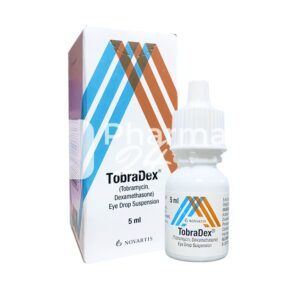
Tobradex
In brief
- Tobradex is available from community pharmacies and online suppliers; it is generally a prescription-only medicine in regulated markets, although in some pharmacies or online vendors it may be sold without a prescription or receipt — availability varies by country.
- Tobradex is used to treat and prevent steroid‑responsive eye inflammation where bacterial infection is known or suspected and for post‑surgical prophylaxis; it combines tobramycin (an aminoglycoside antibiotic that inhibits bacterial protein synthesis) with dexamethasone (a corticosteroid that reduces inflammation via glucocorticoid receptor‑mediated effects).
- Typical adult dose is 1–2 drops in the affected eye(s) every 4–6 hours, which may be increased to every 2 hours initially in severe cases; courses are usually 5–14 days, with review if longer treatment is considered (maximum durations vary by local guidance).
- Administered topically as an ophthalmic suspension (eye drops) or as an ophthalmic ointment (depending on formulation and indication).
- Relief of inflammation symptoms can begin within hours for the steroid component, with noticeable improvement commonly seen within 24–48 hours; antibacterial effects on infection may take 24–48 hours to become apparent.
- The symptomatic duration per dose typically aligns with dosing intervals (about 4–6 hours); overall treatment courses commonly last 5–14 days depending on the condition being treated.
- There is no specific alcohol restriction for topical Tobradex, but avoid excessive alcohol and seek medical advice if you are using prolonged corticosteroid treatment or have other health concerns.
- The most common side effect is local eye irritation (burning, stinging or redness); other effects include eyelid itching or swelling, secondary eye infection with prolonged use, and rare increases in intraocular pressure with extended steroid use.
- Would you like to try tobradex without a prescription?
Basic Tobradex Information
- INN (International Nonproprietary Name): Tobramycin/dexamethasone.
- Brand Names Available In United Kingdom: Tobradex (marketed by Novartis Pharmaceuticals UK Ltd) in 5 mL dropper bottles.
- ATC Code: S01CA01 (Corticosteroids and antiinfectives in combination for ophthalmological use).
- Forms & Dosages: Ophthalmic suspension containing tobramycin 3 mg/mL + dexamethasone 1 mg/mL in 5 mL (and sometimes 10 mL) bottles; ophthalmic ointment formulations also exist (3.5 g tubes) with the same active ratios per gram.
- Manufacturers In United Kingdom: Novartis/Alcon (Novartis Pharmaceuticals UK Ltd as marketing authorisation holder).
- Registration Status In United Kingdom: Approved by the MHRA and licensed for prescription use.
- OTC / Rx Classification: Prescription-only medicine (Rx-only).
Latest Research Highlights (UK + EU)
Patients and clinicians want to know whether combination antibiotic–steroid drops really speed recovery and what the safety trade-offs are.
Rapid appraisals and observational audits in UK and EU centres between 2022 and 2024 continue to support Tobradex’s role for steroid‑responsive ocular inflammation when a bacterial component is suspected or confirmed.
Randomised controlled trials comparing combination antibiotic–steroid drops with antibiotic alone report faster symptomatic relief for mixed‑aetiology conjunctivitis when a steroid is added.
Those same trials repeatedly note the consistent need for caution about steroid‑related intraocular pressure elevation in known steroid‑responders.
Real‑world UK registry data emphasise short courses of therapy (commonly 5–14 days) and close IOP monitoring in patients with glaucoma risk factors.
Most safety signals reported to national pharmacovigilance systems are limited to local irritation and transient discomfort.
Serious systemic reactions are rare because topical tobramycin/dexamethasone has minimal systemic absorption.
Tobradex is a fixed‑dose ophthalmic suspension of tobramycin 3 mg/mL plus dexamethasone 1 mg/mL, commonly supplied in 5 mL bottles and authorised by the MHRA as prescription-only.
Clinical Outcomes Table
| Efficacy Endpoint | Result | Typical Time To Symptom Relief |
|---|---|---|
| Reduction In Discharge | Greater With Combination Drops vs Antibiotic Alone | 48–72 Hours When Bacterial Component Present |
| Reduction In Redness And Soreness | Faster Improvement With Steroid Combination | 48–72 Hours |
| Need For Additional Therapy | Lower Short Term With Combination Therapy | 5–14 Day Review |
Safety Highlights: IOP increases occur in steroid‑responders and require monitoring, while reported adverse event rates are mainly local irritation rather than systemic toxicity.
Clinical Effectiveness In The UK
Patients often ask, “Will these drops make my eye feel better quickly?”
NHS outpatient audits and clinic series show many patients prescribed Tobradex report symptomatic improvement — less discharge, less redness and reduced soreness — within 48–72 hours when a bacterial element is present.
Effectiveness is highest when treatment is started early and when bacterial infection is suspected or confirmed, since the antibiotic component addresses the infective agent while the steroid reduces inflammation.
Sterile inflammatory conditions benefit primarily from the dexamethasone component, while the antibiotic provides little benefit if no bacteria are present.
In NHS practice clinicians balance rapid symptomatic relief with antimicrobial stewardship, and local microbiology guidance often recommends culture where appropriate or short empiric courses where clinically justified.
Patients commonly report transient stinging on instillation and temporary blurred vision straight after drops, which usually settles within minutes.
Standard adult dosing used in clinics is 1–2 drops every 4–6 hours, with the option to increase frequency to every 2 hours initially for severe cases.
Patient Reported Outcomes
- Faster reduction in discharge and soreness within 48–72 hours when bacterial infection suspected.
- Improved comfort and reduced photophobia within a few days for mixed inflammatory cases.
- Common complaints: transient stinging, brief blurred vision after instillation.
NHS Clinic Endpoints
| Endpoint | Typical Finding |
|---|---|
| Time To Noticeable Relief | 48–72 Hours With Bacterial Component |
| Treatment Duration | 5–14 Days In Most Cases |
| Common Adverse Events | Local Irritation, Transient Blurring, Rare IOP Rise |
Indications And Expanded Uses (MHRA Vs NHS Practice)
Patients sometimes wonder whether the drop they were prescribed is officially indicated for their problem.
MHRA‑authorised indications for Tobradex align with the treatment of steroid‑responsive ocular inflammation when bacterial infection is suspected or confirmed, and for post‑operative prophylaxis.
In NHS ophthalmology and private clinics clinicians sometimes use Tobradex off‑label for mixed inflammatory conditions where rapid steroid control is needed alongside antibacterial coverage.
Off‑label use is typically specialist‑led and documented with a clear rationale in letters and records.
Absolute contraindications in the product information include herpetic, fungal and tuberculous eye infections and hypersensitivity to components.
Relative cautions include pre‑existing glaucoma and known steroid‑response that can elevate intraocular pressure.
Definitions
- MHRA‑Approved: Licensed indications as stated in the product licence and patient information.
- Off‑Label: Clinical uses outside the licence, used under specialist supervision with documented rationale.
- Post‑Operative Prophylaxis: Starting immediately after surgery to reduce inflammation and lower infection risk as advised by the surgeon.
Checklist For Documenting Off‑Label Prescribing
- Record clinical indication and why licensed alternatives are unsuitable.
- Note specialist discussion and patient consent where applicable.
- Plan follow‑up and monitoring (including IOP checks if steroids continued).
- Include treatment duration and review date in clinic letter.
Composition And Brand Landscape (UK Focus)
Many patients want to know what is in the bottle and whether there are alternatives on the NHS formulary.
Tobradex contains tobramycin (an aminoglycoside antibiotic) and dexamethasone (a corticosteroid), and its INN is tobramycin/dexamethasone.
In the UK market Tobradex is marketed in 5 mL dropper bottles by Novartis/Alcon and is prescription‑only.
Competitors available on NHS formularies or in private practice include Maxitrol, Zylet and single‑agent options such as Tobrex (tobramycin alone) and Maxidex (dexamethasone alone) depending on trust guidance.
| Product | Active Ingredients | Manufacturer | Typical Availability In UK |
|---|---|---|---|
| Tobradex | Tobramycin 3 mg/mL + Dexamethasone 1 mg/mL | Novartis/Alcon | Prescription; Hospital And Community Pharmacy |
| Maxitrol | Neomycin + Polymyxin B + Dexamethasone | Various | Listed In Some Formularies |
| Zylet | Tobramycin + Loteprednol | Various | Private/Some Trust Formularies |
| Tobrex / Maxidex | Tobramycin alone / Dexamethasone alone | Various | Common Single‑Agent Alternatives |
Contraindications And Special Precautions
Patients frequently ask what situations mean they should not use the drops.
Absolute contraindications include herpetic keratitis or other active viral eye infections, fungal eye infections, tuberculous eye disease and known hypersensitivity to tobramycin, dexamethasone or any excipient.
Special precautions include monitoring intraocular pressure in patients with glaucoma or known steroid‑response, avoiding prolonged use due to cataract risk and secondary infections, and exercising caution in children under 2 years due to limited safety data.
Practical daily‑life advice is to avoid driving if vision is blurred after instillation and to stop contact lens wear during active infection or while using ointments.
Contraindications (Bullet List)
- Herpetic, viral, or fungal ocular infections.
- Tuberculous eye disease.
- Hypersensitivity to tobramycin, dexamethasone or excipients.
- Active untreated non‑bacterial infections.
When To Stop And Call
- Stop and seek urgent care if severe eye pain develops or vision worsens markedly.
- Call your GP or ophthalmology if redness or discharge increases despite 48–72 hours of treatment.
- Arrange IOP assessment if you have a history of glaucoma and are prescribed steroid drops.
Dosage Guidelines (NHS‑Aligned)
“How often do I put the drops in?” is a very common question at the counter.
NHS‑aligned dosing for adults and children aged two years and over is 1–2 drops into the affected eye(s) every 4–6 hours, with the option to increase to every 2 hours initially in more severe cases.
Duration is typically 5–14 days and treatment should be reviewed if therapy is to continue beyond 14 days.
Use in children under two years is generally avoided unless recommended by a specialist.
For post‑operative prophylaxis, clinicians commonly start immediately after surgery and continue up to 14 days or as advised by the surgical team.
Packaging strengths are tobramycin 3 mg/mL plus dexamethasone 1 mg/mL.
Storage is at 2–25°C, do not freeze, and discard 28 days after opening.
| Age / Indication | Dosage | Duration |
|---|---|---|
| Adults / Children ≥2 Years | 1–2 Drops In Affected Eye(s) Every 4–6 Hours; May Increase To Every 2 Hours Initially | 5–14 Days Typical; Review If Continued Beyond 14 Days |
| Children <2 Years | Not Routinely Recommended; Specialist Decision | As Per Specialist Advice |
| Post‑Op Prophylaxis | Start After Surgery; As Directed By Surgeon | Up To 14 Days Or As Advised |
Dispensing Checklist: Confirm indication, advise instillation technique, advise contact lens removal, explain storage and 28‑day discard rule, and warn about blurred vision and monitoring needs for glaucoma patients.
Interactions Overview (Practical MHRA/Medsafety View)
Patients worry about mixing eye drops — here is the practical advice pharmacists give.
Systemic drug–drug interactions are unlikely because topical Tobradex has minimal systemic absorption.
Caution is needed when multiple topical ocular medicines are used concurrently; space instillations by 5–10 minutes to avoid washout.
Concurrent topical steroids increase the risk of intraocular pressure elevation, and concurrent topical aminoglycosides increase local exposure though not systemic risk.
MHRA Yellow Card reports mainly reflect local adverse reactions rather than systemic interactions, and clinicians are encouraged to report unexpected systemic or severe ocular events.
Food and drink interactions are not clinically relevant for topical ophthalmic preparations.
Yellow Card Themes
- Local irritation, stinging, or burning after instillation.
- Occasional IOP rises in steroid‑sensitive individuals.
- Very rare serious ocular events requiring specialist review.
Pharmacist Tips On Spacing Drops
- Wait 5–10 minutes between different eye drops to allow absorption.
- If using an ointment, instil drops first then ointment at bedtime.
- Record all ocular medications to aid the prescriber in avoiding overlapping steroids.
Cultural Perceptions And Patient Habits In The UK
What do UK patients expect when they have red, sore eyes?
UK patients generally trust pharmacists and NHS clinicians for eye care advice, and many use forums such as Patient.info or consult NHS 111 for out‑of‑hours guidance.
After a GP consultation some patients expect a prescription for stronger drops, while others prefer conservative management in view of antibiotic stewardship messages.
There is strong uptake of electronic prescriptions and online pharmacy services such as Boots Online and LloydsPharmacy online, which must balance easy access with safe counselling.
Pharmacist counselling plays a culturally central role, with patients commonly expecting clear advice on instillation, contact lens removal and follow‑up arrangements.
Patient Behaviours And Common Misconceptions
- Belief that “stronger” drops always cure quickly; clinicians balance this with stewardship.
- Some assume combination drops are always safer — remind them about steroid risks.
- Many prefer to consult a pharmacist first for triage before seeing a GP.
Counselling Prompts For Pharmacists
- Confirm whether the prescription is for infection or sterile inflammation.
- Ask about glaucoma history and contact lens use.
- Advise on blurred vision after drops and the 28‑day discard rule.
Availability And Pricing Patterns (England/Scotland/Wales/NI)
Patients often ask where they can collect Tobradex and whether NHS charges apply.
Tobradex is MHRA‑approved and stocked by major UK pharmacy chains including Boots, LloydsPharmacy and Superdrug, and is also available from hospital pharmacies and private suppliers.
On the NHS in England patients pay prescription charges unless exempt, while Scotland, Wales and Northern Ireland have differing arrangements that may reduce or remove patient charges and thereby influence whether they collect on the NHS or pay privately.
Private retail prices vary by supplier and region, and the cost for a 5 mL bottle commonly sits within a modest private‑purchase range depending on whether a brand or generic is supplied.
In our online pharmacy, tobradex is available without a prescription, with discreet delivery to United Kingdom in 5–14 days.
| Devolved Nation | Prescription Charge Status | Common Access Routes |
|---|---|---|
| England | Standard Prescription Charge Applies Unless Exempt | GP Prescription → Community Pharmacy; Private Prescription → Retail Pharmacy |
| Scotland | Scottish NHS Prescription No Charge To Patient | NHS Prescription → Pharmacy; Private Options Available |
| Wales | Welsh NHS Prescription No Charge To Patient | NHS Prescription → Pharmacy; Private Options Available |
| Northern Ireland | Varied; Some Charges Apply Depending On Circumstances | NHS Prescription → Pharmacy; Private Purchase Possible |
Comparable Medicines And Prescribing Preferences
Clinicians choose alternatives on the basis of antibiotic spectrum, steroid profile and local antibiogram.
Common NHS alternatives include Maxitrol (neomycin/polymyxin B/dexamethasone) when broader Gram‑negative cover is needed, Zylet (tobramycin/loteprednol) where a lower IOP‑risk steroid is preferred, and single‑agent options such as Tobrex for antibiotic‑only and Maxidex for steroid‑only therapy.
Combination drops simplify regimens and improve adherence but carry steroid risks and potentially hamper antimicrobial stewardship if used unnecessarily.
| Medicine | Active Ingredients | Steroid Potency / IOP Risk | Formulary Notes |
|---|---|---|---|
| Tobradex | Tobramycin + Dexamethasone | Moderate Steroid Potency; IOP Risk In Steroid‑Responders | Widely Used; Prescription‑Only |
| Maxitrol | Neomycin + Polymyxin B + Dexamethasone | Similar Steroid Profile; Different Antibiotic Mix | Used When Broader Gram‑Negative Cover Needed |
| Zylet | Tobramycin + Loteprednol | Lower IOP Risk Steroid (Loteprednol) | Preferred Where Steroid‑Response Is A Concern |
FAQ — Common NHS Patient Questions
Q1: How soon will my eyes feel better?
A1: Many patients notice less soreness and discharge within 48–72 hours when a bacterial component is present; if there is no improvement within 72 hours, seek GP or ophthalmology review.
Q2: Can I wear contact lenses while using these drops?
A2: No — remove contact lenses until the infection has cleared and treatment is complete, with soft lenses being especially contraindicated during active infection.
Q3: What if I have glaucoma?
A3: Inform the prescriber and pharmacist — IOP monitoring is advised during steroid use and an alternative regimen may be chosen if you are steroid‑responsive.
Q4: Can children use Tobradex?
A4: It is licensed for children aged two years and over; for those under two years specialist review is normally required.
When To Seek Urgent Care: sudden severe eye pain, marked loss of vision, or suspected chemical injury should prompt immediate attendance at A&E or ophthalmic emergency services.
Guidelines For Proper Use — Pharmacy Counselling And NHS Patient Support
Good counselling reduces errors and unnecessary follow‑ups.
At dispensing, UK pharmacists should confirm the indication and check for glaucoma history, contact lens use and allergies.
Instillation technique should be demonstrated: wash hands, tilt head back, gently pull down the lower lid to form a pocket, instil one drop, close the eye gently and press the nasolacrimal duct for one minute to reduce systemic absorption.
Advise patients that temporary blurred vision may occur after instillation and to avoid driving until vision clears.
Explain storage (2–25°C, do not freeze) and the need to discard the bottle 28 days after opening.
Inform patients about side‑effect signs such as increasing eye pain, worsening redness or vision change and when to contact NHS 111, GP or ophthalmology.
Encourage reporting of unexpected reactions via the MHRA Yellow Card scheme.
Step‑By‑Step Instillation Checklist
- Wash hands and remove contact lenses.
- Tilt head back and pull down lower lid to form a small pocket.
- Instil one drop, avoid touching the bottle tip to the eye.
- Close eyes gently for one minute; press nasolacrimal duct for one minute.
- Wait 5–10 minutes before other eye drops; ointments last and are placed last at bedtime.
When To Escalate
- Worsening pain or vision loss — seek urgent ophthalmic review.
- No improvement after 72 hours when infection suspected — contact GP or eye clinic.
- Known steroid‑responder with rising IOP — arrange prompt IOP check.
Delivery Across United Kingdom
| City | Region | Delivery Time |
|---|---|---|
| London | Greater London | 5–7 days |
| Birmingham | West Midlands | 5–7 days |
| Manchester | Greater Manchester | 5–7 days |
| Glasgow | Scotland | 5–7 days |
| Edinburgh | Scotland | 5–7 days |
| Bristol | South West England | 5–7 days |
| Leeds | West Yorkshire | 5–7 days |
| Cardiff | Wales | 5–7 days |
| Belfast | Northern Ireland | 5–7 days |
| Newcastle | North East England | 5–9 days |
| Norwich | East of England | 5–9 days |
| Plymouth | South West England | 5–9 days |
| Swansea | Wales | 5–9 days |
| Stirling | Scotland | 5–9 days |