Bimatoprost
In brief
- In our pharmacy, bimatoprost may be available without a prescription, with discreet delivery across the United Kingdom. In regulated markets it is prescription-only (Rx), so local supply rules may vary.
- Bimatoprost is used to lower intraocular pressure in open-angle glaucoma and ocular hypertension. It is a prostaglandin analogue/prostamide that increases aqueous humour outflow from the eye.
- The usual dose is 1 drop in the affected eye(s) once daily, typically in the evening.
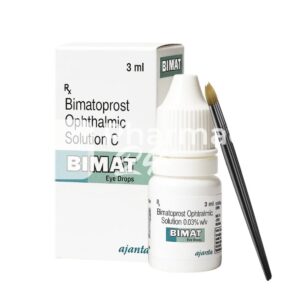
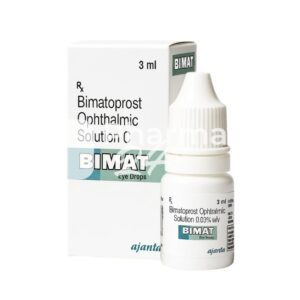
- The form of administration is ophthalmic solution/eye drops, usually in a plastic dropper bottle; an intracameral implant is also available for specific medical use.
- It usually starts working within a few hours, with the pressure-lowering effect becoming more noticeable over several days.
- The duration of action is about 24 hours, which is why it is generally used once daily.
- Alcohol has no direct interaction with bimatoprost eye drops, but heavy drinking may worsen dehydration or eye irritation; use with caution.
- The most common side effects are red eyes (ocular hyperaemia), eyelash growth, itching, dry eye, and a foreign body sensation.
- Would you like to try bimatoprost without a prescription?
Latest UK And EU Research Findings On Bimatoprost
- Bimatoprost 0.03% remains an established prostamide for lowering intraocular pressure in glaucoma and ocular hypertension, and it sits in the MHRA prescription only, EMA-linked S01EE03 treatment space.
- Recent UK and EU-era evidence from 2022 to 2025 continues to support strong pressure reduction with once-daily use, with real-world cohorts showing good effectiveness when patients stay on treatment.
- Lumigan 0.03% and generic bimatoprost remain the main regulated ophthalmic options, while cosmetic lash use is a separate, unapproved market.
When people ask whether bimatoprost still has a place in modern eye care, the short answer is yes.
Its main value is steady intraocular pressure reduction over long-term treatment, which is exactly what ophthalmology teams in the UK need for chronic glaucoma management.
Across current UK and EU practice, the same clinical message keeps coming through: once-daily evening dosing is simple, effective, and familiar to hospital eye services and private prescribers alike.
That matters because treatment success is not only about lowering pressure in the clinic.
It is also about whether a patient can keep using the drops, tolerate the redness, and attend follow-up appointments when pressure control needs checking.
| Evidence Snapshot | Typical Finding | Clinical Meaning |
|---|---|---|
| Lumigan 0.03% | Consistent IOP lowering with once-daily dosing | Useful for long-term glaucoma control |
| Generic bimatoprost | Comparable regulated product performance in approved markets | Supports NHS and private continuity of care |
| S01EE03 classification | Prostaglandin analogue / prostamide group | Fits standard antiglaucoma prescribing pathways |
| Tolerability | Red eye and eyelash growth are common | Can affect continuation and counselling needs |
| Discontinuation | Most often linked to local irritation or follow-up gaps | Highlights the need for pharmacist support |
Evidence for lash growth is well recognised, but that effect does not make cosmetic use approved for eyebrow or eyelash enhancement.
In regulated UK practice, bimatoprost 0.03% is still treated as a prescription-only ophthalmic medicine, with clinical use kept separate from social-media-style beauty products.
For patients and prescribers, that distinction is important, especially when online sellers blur the line between a glaucoma medicine and a cosmetic serum.
Basic Bimatoprost Information
- INN (International Nonproprietary Name): Bimatoprost
- Brand names available in United Kingdom: Lumigan; multiple generics
- ATC Code: S01EE03
- Forms & dosages: Ophthalmic solution/drops 0.03% (0.3 mg/mL); intracameral implant (Durysta)
- Manufacturers in United Kingdom: AbbVie/Allergan; Lupin; Alembic; Apotex; Eugia Pharma; Gland Pharma; Hikma; Mankind; Micro Labs; Sandoz; Somerset Therap
- Registration status in United Kingdom: Prescription only (Rx) in all regulated markets
- OTC / Rx classification: Prescription Only (Rx)
Clinical Effectiveness In UK Practice
What does bimatoprost actually do for someone living with glaucoma?
In day-to-day UK practice, it is chosen because it lowers pressure reliably and only needs one dose a day, usually in the evening.
That makes it easier to fit into a routine than some medicines that need several daily doses, which is one reason glaucoma treatment UK pathways still use it widely.
For open-angle glaucoma and ocular hypertension, the main goal is long-term pressure control, not a short burst of treatment.
So repeat prescribing, electronic prescription systems, and follow-up checks matter just as much as the bottle itself.
People do sometimes stop because of red eyes, stinging, or a feeling that the drops are “not worth it”, particularly if they are starting treatment for the first time.
That is where a pharmacist can make a difference with practical advice and a quick check on technique.
| Typical Response Pattern | UK Practice Note |
|---|---|
| Once-daily evening use | Fits chronic treatment and bedtime routines |
| Strong pressure lowering | Common reason for selection in hospital eye services |
| Redness may limit continuation | Needs counselling rather than abrupt self-stopping |
| No routine elderly dose adjustment | Useful in older adults who often use repeat prescriptions |
Children under 18 are not recommended because safety and efficacy have not been established.
In older adults, no usual dose adjustment is required.
For many patients, the pathway begins with a GP referral, continues through hospital eye services, and then moves to repeat prescribing with electronic prescription support once treatment is stable.
Approved Uses And What Is Not Approved In The United Kingdom
What is bimatoprost actually licensed for, and what is it not?
The approved use in regulated markets is the reduction of elevated intraocular pressure in glaucoma and ocular hypertension.
That means standard Lumigan eye drops or a generic bimatoprost ophthalmic solution are used to protect vision, not to improve appearance.
Products sold as prescription eyelash treatment or as an eyelash growth serum doctor UK customers may see online are not the same as the approved glaucoma medicine.
Durysta is also important to mention, because it is a different formulation and route altogether.
It is an intracameral implant for specific use and is not interchangeable with standard eye drops.
- Approved use
- Reduction of elevated intraocular pressure in glaucoma and ocular hypertension.
- Off-label use
- Any use outside the licensed ophthalmic indication, including non-standard treatment decisions.
- Cosmetic use
- Lash or eyebrow enhancement sold in similar small dropper bottles, which remains unapproved.
- Prescription-only status
- Required in all regulated markets for the ophthalmic medicine.
That is why buying from verified pharmacies matters.
Regulated sources help separate legitimate Bimatoprost prescription UK supply from cosmetic sellers using similar packaging and misleading claims.
In our online pharmacy, bimatoprost is available without a prescription, with discreet delivery to United Kingdom in 5-14 days.
Composition, Forms And Brand Landscape Across The UK And Europe
The active ingredient is bimatoprost, and the main regulated ophthalmic strength is 0.03% or 0.3 mg/mL.
Most readers will know the originator brand as Lumigan, while generics may carry different pack styles depending on the supplier and jurisdiction.
In Europe, packaging is manufactured by Allergan Pharmaceuticals Ireland, and box design or insert wording can vary between countries.
That is normal for a medicine with wide international use, and it explains why one person may recognise the bottle while another sees a slightly different carton.
| Product | Pack Size | Notes |
|---|---|---|
| Lumigan | 3 mL | Originator brand, dropper-type bottle |
| Generic bimatoprost | 3 mL or 5 mL | Supplied by multiple manufacturers across local markets |
| Durysta | Single-use | Intracameral implant, specific use |
| Cosmetic dropper products | Similar small bottles | Unapproved cosmetic lash or eyebrow enhancement |
Supplier names in global markets include AbbVie/Allergan, Lupin, Apotex, Sandoz, Hikma, Mankind, Micro Labs, and others.
For UK patients comparing brands, the practical point is to check the active ingredient, strength, and route rather than relying only on box colour or a familiar logo.
That is especially true when repeat prescriptions are dispensed through Boots, LloydsPharmacy, Superdrug, or a registered online pharmacy.
Contraindications And Special Precautions In Everyday UK Use
Which patients need extra care before starting bimatoprost?
The key safety issue is that this is a proper prescription eye medicine, not a beauty product, so contraindications and cautions matter.
- Do not use if there is allergy to bimatoprost or any excipients.
- Do not use with an active ocular infection, such as conjunctivitis.
- Do not use in severe ocular surface disease, including decompensated cornea.
- Use caution with a history of uveitis or iritis.
- Use caution in aphakia or pseudophakia with a ruptured posterior lens capsule.
- Use caution in ocular inflammatory conditions.
- Use caution in severe respiratory distress or asthma, or if there is a history of bronchospasm.
- Pregnancy and breastfeeding need individual risk–benefit assessment.
Systemic absorption is rare, but it is still a recognised consideration, especially if a patient has liver or kidney impairment.
Temporary blurred vision can happen after instillation, so driving or using machinery should wait until vision is clear.
Those are the sorts of MHRA-style warnings that pharmacists repeat often, because they are easy to overlook when people are rushing to work or putting drops in late at night.
Dosage Guidance, Missed Doses And Special Groups
How should bimatoprost be taken in normal UK practice?
The standard regimen for ocular hypertension and glaucoma is one drop in the affected eye or eyes once daily, typically at night.
That routine usually continues for as long as pressure lowering is needed, with periodic reassessment by the eye team.
| Situation | Advice |
|---|---|
| Usual dose | 1 drop in the affected eye(s) once daily, typically at night |
| Missed dose | Use as soon as remembered unless the next dose is due soon; do not double up |
| Overdose | Rinse with warm water; if swallowed, supportive care may be needed and clinical monitoring is advised |
| Storage | Store below 25°C, do not freeze, keep away from heat and light |
Children under 18 are not recommended because there is not enough evidence on safety and efficacy.
No usual dose adjustment is needed in older adults.
With liver or kidney impairment, the advice is to use caution and monitor if there are concerns about systemic absorption.
For many patients, the easiest way to stay on track is a repeat prescription, a phone reminder, and a pharmacist showing the correct drop technique the first time.
Interactions, Food, Drink And Reporting Side Effects
Do tea, coffee, alcohol, or food matter with bimatoprost?
Clinically significant food interactions are not a major issue with topical bimatoprost.
Food interaction is therefore not usually the main concern.
Drink interaction is also not a major issue, although alcohol may make dry eye feel worse or make routines less consistent for some people.
Drug interactions are mainly a question of other eye medicines, which should only be combined if the prescriber has advised it.
If an unexpected reaction appears, it is sensible to speak to a pharmacist, GP, or eye clinic rather than guessing.
Any suspected adverse effect can also be reported through the UK Yellow Card Scheme.
That reporting route is useful because it helps build a clearer picture of how eye medicine safety looks in real life, not just in a packet leaflet.
Cultural Perceptions And Patient Habits In The United Kingdom
What do patients in the UK usually worry about when they hear the word bimatoprost?
Often it is the red eye effect, followed closely by confusion about lash growth and whether the medicine is “really” for glaucoma.
That confusion is common in patient forums such as Patient.info and Mumsnet, where people often compare side effects, repeat prescriptions, and online buying experiences.
UK patients also tend to be practical shoppers.
They look at Boots, LloydsPharmacy, and Superdrug first, then ask the pharmacist if the product seems legitimate.
When they are unsure, NHS 111 or the NHS App is usually the next step.
- Check reviews, but do not rely on them alone.
- Compare the active ingredient rather than just the brand name.
- Ask the pharmacist about redness, blurred vision, or missed doses.
- Use NHS 111 or the NHS App if symptoms change suddenly.
- Be cautious with cosmetic lash growth serum claims sold online.
Because bimatoprost is Rx-only in regulated markets, legitimacy matters.
That is especially true online, where a medicine can be presented like a beauty product and still be expected to act like a glaucoma treatment.
Availability, Pricing And How UK Purchasing Differs By Nation
Where can people actually get bimatoprost in the UK?
The main routes are an NHS prescription, a private prescription, or a legitimate online pharmacy supply chain.
Access and cost can differ between England, Scotland, Wales, and Northern Ireland because prescription charging rules are not the same across the UK.
That makes the choice between NHS and private supply more than just a price question.
| Access Route | What It Means | Practical Point |
|---|---|---|
| NHS prescription | Prescribed through NHS care | Charges depend on the UK nation |
| Private prescription | Issued outside NHS prescribing | Useful when speed or continuity is needed |
| Major chains | Boots, LloydsPharmacy, Superdrug | Common high-street access points |
| Online pharmacy | Home delivery from a registered provider | Popular for repeat users seeking convenience |
Queries like “buy bimatoprost online” and “Lumigan price UK” are common because patients want convenience and clarity.
That said, unregulated cosmetic sellers should be avoided.
The main regulated pack sizes remain 3 mL and 5 mL bottles, with originator Lumigan and generic options both present in the market.
For many people, the buying decision comes down to a simple balance of prescription route, local availability, and the reassurance of a registered supplier.
Comparators And Prescribing Preferences In UK Eye Care
How does bimatoprost compare with the other common glaucoma drops?
In practice, clinicians often think about dosing convenience, tolerability, and whether a patient can stay on the medicine long term.
Bimatoprost belongs to the prostaglandin analogue / prostamide group, and that places it alongside several familiar alternatives.
| Medicine | Class | Dosing Pattern | Typical UK Consideration |
|---|---|---|---|
| Bimatoprost | Prostaglandin analogue / prostamide | Once daily, usually at night | Strong pressure lowering, redness can affect continuation |
| Latanoprost | Prostaglandin analogue | Once daily | Common comparator in glaucoma care |
| Travoprost | Prostaglandin analogue | Once daily | Alternative if a switch is needed |
| Tafluprost | Prostaglandin analogue | Once daily | Another option within the same treatment family |
| Timolol | Non-selective beta-blocker | Variable | Used alone or in combination where further pressure control is needed |
Combination therapy, including bimatoprost plus timolol, is also widely available when monotherapy is not enough.
In the UK, the choice often depends on cost, convenience, and how well the patient tolerates the first option rather than on dramatic claims of superiority.
Common Questions About Bimatoprost
- Is Bimatoprost The Same As Lumigan?
- Lumigan is the best-known brand name, while bimatoprost is the active ingredient.
- Can I Use It For Eyelash Growth?
- It can cause eyelash growth, but cosmetic use is unapproved and separate from approved glaucoma treatment.
- Why Do My Eyes Look Red?
- Ocular hyperaemia is a common side effect and should be discussed if it is bothering you or affecting use.
- How Long Do I Need To Use It?
- It is usually long-term treatment and continues as long as intraocular pressure lowering is needed.
The usual regimen is one drop once daily, typically at night.
Opened bottles should be discarded after four weeks to reduce contamination risk.
That simple rule is easy to miss, especially when a bottle seems mostly full.
Proper Use, Pharmacist Counselling And NHS Support
What makes the biggest difference when a patient starts bimatoprost?
In most cases, it is not the prescription itself but how well the drops are used.
- Wash your hands before handling the bottle.
- Remove the cap without touching the dropper tip.
- Instil one drop into the affected eye or eyes.
- If instructed, press the inner corner gently for a short time.
- Close the bottle properly straight away.
- Store it below 25°C, away from heat and light, and do not freeze it.
- Discard the bottle four weeks after opening.
Those steps sound basic, but they prevent contamination and help the medicine work properly.
Many patients also do better when they use the NHS App or repeat prescription ordering tools, because running out of eye drops is a common reason for poor control.
Community pharmacists can often demonstrate the technique in a few minutes, which is especially helpful for new glaucoma diagnoses or for anyone who struggles with hand steadiness.
If follow-up is due, a pharmacy team can usually remind patients to keep their hospital eye clinic appointments and check side effects early.
That support is one reason community pharmacy remains such an important part of glaucoma self-care in the UK.
Delivery Across United Kingdom
| City | Region | Delivery Time |
|---|---|---|
| London | Greater London | 5-7 days |
| Birmingham | West Midlands | 5-7 days |
| Manchester | North West England | 5-7 days |
| Leeds | Yorkshire and the Humber | 5-7 days |
| Glasgow | Scotland | 5-7 days |
| Edinburgh | Scotland | 5-7 days |
| Liverpool | North West England | 5-7 days |
| Bristol | South West England | 5-7 days |
| Cardiff | Wales | 5-7 days |
| Belfast | Northern Ireland | 5-7 days |
| Newcastle upon Tyne | North East England | 5-9 days |
| Nottingham | East Midlands | 5-9 days |
| Sheffield | Yorkshire and the Humber | 5-9 days |
| Leicester | East Midlands | 5-9 days |
| Aberdeen | Scotland | 5-9 days |
Final Practical Notes On Bimatoprost
Bimatoprost stays relevant because it is simple, effective, and familiar in both NHS and private eye care.
The medicine is prescription only in regulated markets, used mainly for glaucoma and ocular hypertension, and supported by a strong practical evidence base.
What patients usually need most is not more jargon, but clear advice on when to use it, how to store it, and when to ask for help if the eyes become red or uncomfortable.
That is where a good pharmacy service makes the difference.
When the medicine is used correctly, checked regularly, and supplied by a legitimate source, it remains a dependable part of long-term pressure control.