Tegretol
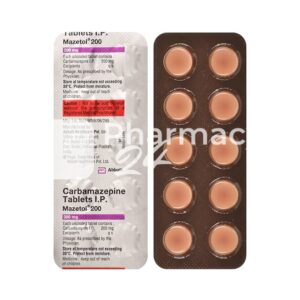
In brief
- Tegretol (carbamazepine) is normally supplied only on prescription in the UK and most other countries and is available from community pharmacies and via doctors’ prescriptions; some online sellers may claim to supply without a prescription, but this is against regulation and not recommended for safety reasons.
- Tegretol is used to treat epilepsy (partial and generalised tonic‑clonic seizures), trigeminal neuralgia and, in some settings, bipolar disorder; it works mainly by blocking voltage‑gated sodium channels to reduce excessive neuronal firing.
- Typical adult doses vary by indication: epilepsy commonly starts at 200 mg once or twice daily with maintenance often 800–1,200 mg/day; trigeminal neuralgia often starts 100 mg once or twice daily with maintenance 400–800 mg/day; bipolar dosing is typically 400–600 mg/day initially with 400–1,200 mg/day maintenance; paediatric dosing is weight‑based (≈10–20 mg/kg/day) and should be titrated.
- Administered orally as immediate‑release or controlled/extended‑release tablets (100 mg, 200 mg, 400 mg), chewable tablets and oral suspension (e.g. 100 mg/5 mL); no routine injectable formulations for standard clinical use.
- Immediate‑release carbamazepine is absorbed and begins to act within hours (plasma levels typically rise within 1–4 hours and peak within several hours); clinical antiseizure effect usually requires careful titration over days to weeks depending on the indication and dose.
- Duration of action depends on formulation: immediate‑release effects typically last about 8–12 hours, while controlled‑release/retard preparations provide a prolonged effect (often 12–24 hours); carbamazepine also shows auto‑induction of metabolism affecting plasma levels over the first weeks.
- Do not drink alcohol while taking tegretol; alcohol increases drowsiness and ataxia, can worsen seizure control and may interact with carbamazepine metabolism.
- The most common side effects are dizziness and drowsiness (also nausea, blurred vision, unsteadiness and mild blood or liver test abnormalities are frequent).
- Would you like to try tegretol without a prescription?
Basic Tegretol Information
- INN (International Nonproprietary Name): Carbamazepine
- Brand Names Available In United Kingdom: Tegretol; Tegretol Retard (tablets 100mg, 200mg, Retard 400mg; Rx; “retard” = sustained release)
- ATC Code: N03AF01
- Forms & Dosages: Tablets 100mg, 200mg, 400mg (immediate and controlled‑release); Extended/sustained‑release (Retard/CR/LP) 200mg and 400mg; chewable 100mg (not common in UK); oral suspension 100mg/5mL in some markets
- Manufacturers In United Kingdom: Novartis (originator), Teva, Sandoz, Mylan, Zentiva (generics commonly supplied in UK pharmacies)
- Registration Status In United Kingdom: Approved by MHRA (prescription‑only)
- OTC / Rx Classification: Prescription only
Latest Research Highlights (UK And EU) — Key Studies 2022–2025
Are there new safety or effectiveness findings I should know about?
Recent UK and EU literature from 2022–2025 has reinforced carbamazepine’s established role in focal epilepsy and trigeminal neuralgia while highlighting important safety signals.
NHS‑linked cohort studies reproduced responder rates similar to older trials, with roughly half to two‑thirds of people achieving significant seizure reduction when carbamazepine is used as monotherapy for partial epilepsy.
European pharmacovigilance updates emphasise a sustained risk of serious cutaneous reactions such as Stevens‑Johnson syndrome and toxic epidermal necrolysis, plus hyponatraemia especially in older adults, and occasional haematological events.
MHRA and EMA advisories during this period strengthened monitoring and risk‑minimisation measures, particularly around early rash and blood count checks.
Comparative observational work shows oxcarbazepine offers similar analgesic efficacy in trigeminal neuralgia with fewer CYP interactions, while valproate remains more effective for many generalised epilepsies but is restricted in women of childbearing potential due to teratogenicity.
Recent NHS pharmacoepidemiology using NHS Digital linkages also flagged frequent drug–drug interactions via CYP3A4 induction and noted that therapeutic ranges vary with adherence and formulation type (immediate vs Retard/CR).
The studies below give a snapshot for clinicians and patients considering Tegretol for seizures or neuralgia.
| Study/Source | Population / Sample Size | Key Outcome | Noted Safety Signals |
|---|---|---|---|
| NHS Cohort Analysis 2023 (UK) | ~8,000 adults with focal epilepsy | Responder rate ~50–65% on monotherapy | Hyponatraemia in older adults; cognitive side effects reported |
| EU Pharmacovigilance Report 2024 | Yellow Card / EudraVigilance aggregated | Confirmed ongoing risk of SJS/TEN and haematological events | Monitoring recommendations reinforced |
| Observational Analgesia Comparison 2022–24 | Multi‑centre, n≈1,200 trigeminal neuralgia patients | Carbamazepine and oxcarbazepine similar pain control | Oxcarbazepine fewer CYP interactions |
Clinical Effectiveness In The UK — NHS Treatment Outcomes
Will Tegretol work for people treated on the NHS in routine practice?
Audit and clinic data across NHS neurology services support carbamazepine as an effective first‑line option for focal epilepsy and a gold standard for trigeminal neuralgia.
Patients with therapeutic serum levels and steady dosing commonly report fewer seizures and measurable improvements in quality of life questionnaires used in NHS clinics.
NHS patient‑reported outcome measures also indicate frequent cognitive side effects such as drowsiness and concentration difficulties that can interfere with work and schooling.
Because of those effects, UK clinicians may opt for slower titration or switch to alternatives for people in safety‑sensitive roles.
Standard NHS safety monitoring — baseline full blood count, liver function tests and sodium — underpins routine practice, and Yellow Card submissions inform local prescribing audits and safety reviews.
Adherence tends to improve with pharmacy counselling at high‑street chains and use of NHS e‑prescription services and the NHS App for reminders.
| NHS Outcome | Typical Frequency / Note |
|---|---|
| Seizure Control (partial epilepsy) | Responder rates ~50–70% when serum levels therapeutic |
| Cognitive Side Effects | Common—drowsiness, slowed concentration; affects up to one in four in routine data |
| Serious Cutaneous Reactions | Rare but critical; immediate review and stop drug if widespread rash or mucosal involvement |
Indications And Expanded Uses — MHRA‑Approved And Off‑Label Practice
Is Tegretol only for seizures, or are there other reasons clinicians prescribe it?
MHRA and BNF‑aligned indications in the UK include partial (focal) seizures, selected generalised tonic‑clonic seizures and trigeminal neuralgia where analgesic benefit is well documented.
Off‑label use occurs in some NHS and private psychiatric services for bipolar disorder, particularly when lithium, valproate or lamotrigine are unsuitable.
Neuropathic pain outside trigeminal neuralgia may be considered by clinicians when other options have failed, though documentation and consent are required for off‑label prescribing.
- MHRA‑Labelled Uses: Partial seizures, selected generalised tonic‑clonic seizures, trigeminal neuralgia.
- Common NHS Off‑Label Uses: Bipolar disorder (mania/maintenance) in select cases; some neuropathic pain syndromes.
- Formulary Notes: Document rationale in records, secure specialist input where appropriate.
INN: Carbamazepine.
ATC: N03AF01.
Rx‑only status applies in the UK.
Composition And Brand Landscape — Active Ingredient, UK Brands And Generics
Which Tegretol products will I find in a UK pharmacy and can tablets be split?
The active ingredient is carbamazepine (INN) and the originator brand is Tegretol, produced by Novartis, with multiple generics supplied by companies such as Teva, Sandoz, Mylan and Zentiva available across the UK.
Available tablet strengths include 100mg and 200mg immediate‑release and 400mg Retard (sustained‑release) tablets commonly branded as Tegretol Retard.
Sustained‑release tablets must not be split, while some 200mg immediate tablets are scored and may be split according to the product labelling.
Pharmacy chains routinely stock both branded Tegretol products and cost‑saving generics with NHS prescribing usually written generically to manage expenditure.
| Brand / Supplier | Common Dosages | Formulation Notes |
|---|---|---|
| Tegretol (Novartis) | 100mg, 200mg, Retard 400mg | Originator; Retard = sustained release; do not split Retard |
| Teva / Sandoz / Mylan / Zentiva (Generics) | 100mg, 200mg, 400mg (where licensed) | Generic options frequently prescribed on NHS; check score line before splitting |
Contraindications And Special Precautions — High‑Risk Groups
Who should avoid carbamazepine or be treated with extra caution?
Absolute contraindications include known hypersensitivity to carbamazepine or tricyclic compounds, history of bone marrow depression, prior SJS/TEN to carbamazepine and concurrent MAOI therapy.
Special precautions apply during pregnancy due to teratogenic risk, in the elderly because of hyponatraemia and falls risk, and in people with hepatic or renal impairment where dose reduction and closer monitoring are advised.
Cardiac conduction defects warrant pre‑treatment ECG review and caution.
For patients of Asian descent clinicians must consider HLA‑B*1502 risk as part of MHRA/EMA risk‑minimisation advice where ethnicity suggests elevated SJS/TEN risk.
Driving guidance in the UK advises not to drive until seizure control is stable and side‑effects such as dizziness or drowsiness have resolved, with DVLA reporting obligations if seizures persist.
- Pre‑treatment Checklist: Baseline FBC, LFTs, sodium; ECG if cardiac history; document ethnicity and pregnancy plans.
- Ongoing Monitoring: Periodic blood tests, vigilance for rash, and review of sodium in older adults.
Dosage Guidelines — Standard NHS Regimens And Special Populations
What starting doses and target ranges does the NHS typically use for Tegretol?
Adults commonly start at 200mg once or twice daily and titrate to maintenance doses of 800–1,200mg per day for epilepsy depending on response and tolerability.
For trigeminal neuralgia initial doses are often lower (100–200mg) with maintenance typically 400–800mg daily tailored to pain control and side effects.
Children start at 10–20mg/kg in two to three divided doses and are carefully titrated to the lowest effective dose.
The elderly are advised to “start low, go slow” because of increased susceptibility to neurocognitive effects and hyponatraemia.
Sustained‑release Retard or CR formulations reduce peak‑to‑trough variability and should not be split.
| Indication | Typical Starting Dose | Typical Maintenance Range |
|---|---|---|
| Epilepsy (Adult) | 200mg once or twice daily | 800–1,200mg/day |
| Trigeminal Neuralgia (Adult) | 100–200mg daily in divided doses | 400–800mg/day |
| Children | 10–20mg/kg/day in 2–3 divided doses | Titrate to clinical response |
Missed‑dose advice: take as soon as remembered unless it is near the next dose and never double up.
Interactions Overview — Drugs, Food And MHRA Yellow Card Signals
Which medicines will interact with Tegretol and how will pharmacists advise me?
Carbamazepine is a strong CYP3A4 inducer and also auto‑induces its own metabolism, so expect clinically important interactions with hormonal contraceptives (reduced efficacy), warfarin, some direct oral anticoagulants, antiretrovirals and many psychotropic medicines.
Co‑prescription with MAOIs is contraindicated and alcohol, sedatives or antihistamines can increase CNS depression.
MHRA Yellow Card reports in the UK have repeatedly flagged interactions that cause breakthrough seizures or increased toxicity when combined with CYP inhibitors or other inducers.
Grapefruit juice can affect CYP activity and is best avoided while taking carbamazepine.
- High‑Risk Pairs To Avoid Or Monitor: Combined use with hormonal contraception (advise additional contraception), warfarin (monitor INR), certain antiretrovirals and interacting psychotropics (specialist advice).
- Monitoring Actions: Check serum levels where available, INR for warfarin, and review contraception options with GP or pharmacist.
Cultural Perceptions And Patient Habits In The UK
What do UK patients say about Tegretol and how do they manage treatment day‑to‑day?
UK patients often rely on pharmacists and NHS clinicians for medication advice, with forums such as Patient.info reflecting mixed experiences: many report good seizure control or pain relief, while others describe cognitive fog or impacts on employment and daily functioning.
Pharmacist counselling at Boots and LloydsPharmacy and the growing use of the NHS App and e‑prescriptions have improved adherence through reminders and easy repeat ordering.
Stigma around epilepsy persists in some communities and clinicians routinely offer driving and employment counselling as part of holistic care.
Cultural nuance matters: families with South Asian heritage may be particularly alert to SJS/TEN warnings and HLA screening discussions, while women planning pregnancy often request pre‑conception neurology and obstetric review.
- Common Patient Concerns: Memory and concentration problems, contraception interactions, pregnancy safety, and practical advice about driving.
- Pharmacist Counselling Script (Short): Explain dosing schedule, warn against splitting Retard tablets, advise on rash and when to seek urgent review, and discuss contraception options and Yellow Card reporting.
Availability And Pricing Patterns
Where can I get Tegretol in the UK and what will it cost me?
Tegretol and generic carbamazepine are widely stocked in UK high‑street chains such as Boots, LloydsPharmacy and Superdrug and are available via online pharmacies with NHS e‑prescriptions.
NHS prescriptions in England incur a per‑item charge unless the patient is exempt, while prescriptions are free in Scotland, Wales and Northern Ireland — creating regional cost differences for patients.
Private prescriptions and online retailers may list branded Tegretol at variable prices, and electronic prescribing has increased convenience for repeat prescriptions.
Supply interruptions have been reported from time to time, and clinicians may switch brands if necessary, taking care to confirm formulation (immediate vs Retard) to avoid inadvertent dosing changes.
| Outlet | Availability | Typical Cost Note |
|---|---|---|
| NHS Prescription (GP) | Wide (generic usually supplied) | Prescription charge applies in England; free in devolved nations |
| High‑Street Pharmacy (Boots/LloydsPharmacy) | Common stock | Dispensed on prescription; private price varies |
| Online Pharmacies | Available with e‑prescription | Repeat delivery convenience; check formulation and brand |
In the online pharmacy service offered here, Tegretol is supplied with discreet delivery across the United Kingdom and prescriptions are managed in line with MHRA requirements and standard NHS practice.
Comparable Medicines And NHS Preferences
What are the common alternatives to carbamazepine used on the NHS?
NHS clinicians commonly consider oxcarbazepine for similar indications when interaction burden is a worry, lamotrigine where mood stabilisation or better cognitive tolerability is needed, levetiracetam for a favourable side‑effect profile, and valproate for some seizure types despite teratogenic risks.
Choice depends on seizure type, childbearing potential, co‑morbidities and the full interaction profile.
- Oxcarbazepine: Similar analgesic effect for trigeminal neuralgia but fewer CYP interactions.
- Lamotrigine: Useful for bipolar depression prevention and some epilepsies; slower titration required.
- Valproate: Broad efficacy for generalised epilepsies but contraindicated in women of childbearing potential unless no alternative.
- Levetiracetam: Often chosen for lower cognitive impact and easier monitoring.
| Comparator | Key Pros | Key Cons / NHS Note |
|---|---|---|
| Oxcarbazepine | Fewer CYP interactions | Similar efficacy for trigeminal neuralgia; still requires monitoring |
| Lamotrigine | Good mood stabiliser; better cognitive profile | Slow titration; rash risk exists |
| Valproate | High efficacy in generalised epilepsy | Teratogenic; restricted in women of childbearing potential |
FAQ — Common NHS Patient Questions
- Can I Drive On Tegretol? Not until seizures are controlled and side‑effects such as dizziness or drowsiness have resolved; discuss DVLA obligations with your clinician.
- Will Tegretol Affect My Contraception? Yes — enzyme induction can reduce hormonal contraceptive efficacy, so use additional barrier methods and speak with your GP or pharmacist about alternatives.
- Is Tegretol Safe In Pregnancy? Tegretol carries teratogenic risk; specialist pre‑conception counselling and multidisciplinary review are essential for women planning pregnancy.
- What Monitoring Is Needed? Baseline and periodic full blood count, liver function tests and sodium checks; report suspected adverse effects to MHRA Yellow Card via your pharmacist or online.
For further patient guidance see NHS patient portals or contact your epilepsy specialist nurse for personalised advice.
Guidelines For Proper Use — UK Pharmacist Counselling And NHS Support
What should a pharmacist tell me when dispensing Tegretol?
Pharmacist counselling typically covers the importance of steady dosing to maintain therapeutic levels, not splitting Retard tablets, recognition of serious side‑effects such as rash or sore throat, and missed‑dose rules.
Patients are advised to stop the medicine and seek urgent medical review if they develop a widespread rash, fever or mucosal lesions.
Pharmacists also check for interactions with contraceptives, anticoagulants and other medicines, and encourage reporting of adverse events via the MHRA Yellow Card scheme.
NHS support routes include the GP, neurology team, specialist epilepsy nurse, NHS 111 and the NHS App for records and e‑prescriptions.
- If Rash Or Fever Develops: Stop taking carbamazepine and seek urgent GP or A&E review.
- If A Seizure Occurs: Follow seizure safety advice, contact your GP or epilepsy nurse and consider urgent review if seizures are prolonged or repetitive.
- If Excessive Drowsiness: Do not drive; contact your clinician for dose review.
- Reporting: Report side effects via Yellow Card and carry a seizure/medication card.
Documentation of ethnicity and pregnancy plans should be part of counselling so HLA risks and teratogenic considerations are addressed proactively.
Delivery Across United Kingdom
| City | Region | Delivery Time |
|---|---|---|
| London | Greater London | 5–7 days |
| Birmingham | West Midlands | 5–7 days |
| Manchester | Greater Manchester | 5–7 days |
| Leeds | West Yorkshire | 5–7 days |
| Glasgow | Scotland | 5–7 days |
| Sheffield | South Yorkshire | 5–9 days |
| Leicester | Leicestershire | 5–9 days |
| Edinburgh | Scotland | 5–7 days |
| Liverpool | Merseyside | 5–9 days |
| Newcastle Upon Tyne | Tyne and Wear | 5–9 days |
| Bristol | South West | 5–9 days |
| Cardiff | Wales | 5–9 days |
| Belfast | Northern Ireland | 5–9 days |
| Nottingham | Nottinghamshire | 5–9 days |