Rifampin
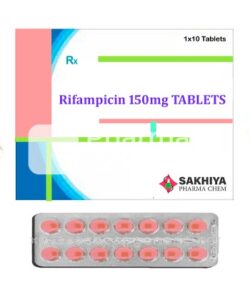
In brief
- Rifampin (rifampicin) is generally a prescription-only medicine (Rx) and is registered with agencies such as the EMA, FDA, Health Canada and TGA; however, in practice some pharmacies or suppliers may dispense it without a prescription — this is not recommended and regulated prescribing is advised.
- Rifampin is an antibiotic used primarily as a first-line treatment for tuberculosis, also used in leprosy and for prophylaxis against meningococcal and Hib infections; it is a rifamycin that works by inhibiting bacterial DNA-dependent RNA polymerase, blocking RNA synthesis and producing a bactericidal effect.
- The usual adult dose for TB is 10 mg/kg (up to 600 mg) once daily (many regimens use 600 mg OD); other regimens include 600 mg OD for short-course therapy, 600 mg once monthly for leprosy (in combinations), and children typically 10–20 mg/kg (max 600 mg).
- Administration is oral (capsules/tablets 150 mg, 300 mg; oral suspension 100 mg/5 ml) or by injectable vial (600 mg powder for solution); oral doses are best taken on an empty stomach (1 hour before or 2 hours after food) for optimal absorption.
- The bactericidal activity begins relatively quickly — rifampin starts acting within hours, with patients often noticing clinical improvement within days when used as part of combination therapy.
- Duration of action for a single dose is approximately 24 hours (hence once-daily dosing), though its enzyme-inducing effects on hepatic CYP450 can persist for days to weeks after stopping the drug.
- Alcohol should be avoided or kept to a minimum because rifampin can cause liver injury and concurrent alcohol increases hepatotoxicity risk; liver function should be monitored during treatment.
- The most common side effects include gastrointestinal upset (nausea, abdominal pain), asymptomatic increases in liver enzymes and the characteristic harmless red–orange discoloration of urine, sweat and tears; serious but less common effects include hepatitis and hypersensitivity.
- Would you like to try rifampin without a prescription?
Basic Rifampin Information
- INN (International Nonproprietary Name): Rifampicin (also known as rifampin in US/Canada) is the official INN.
- Brand Names Available In United Kingdom: Rifadin; Rimactane — available as capsules 150 mg and 300 mg, vials 600 mg and syrup.
- ATC Code: J04AB02.
- Forms & Dosages: Tablets/capsules 150 mg and 300 mg; oral suspension 100 mg/5 ml (paediatric in select markets); injectable/vial 600 mg (powder for solution or lyophilised form).
- Manufacturers In United Kingdom: Sanofi (listed with UK among markets); Sandoz and other generics suppliers are active internationally.
- Registration Status In United Kingdom: not specified.
- OTC / Rx Classification: Prescription only (Rx) in the countries listed; rifampicin is an Rx medicine.
Latest Research Highlights
Worried about resistance and safety trends with rifampicin in recent years?
Recent UK and EU surveillance and clinical reviews from 2022–2024 emphasise that rifampicin remains central to standard TB regimens.
Reports highlight rising challenges such as increasing pyrazinamide and isoniazid resistance patterns in some EU clusters and variable treatment completion rates.
Studies across Europe during 2022–24 examined intermittent versus daily dosing, pharmacokinetics in older adults, and rifampicin therapeutic drug monitoring in HIV/TB co‑infection.
Most evidence supports daily dosing of about 10 mg/kg once daily (maximum 600 mg) for adults to maximise cure and limit resistance.
Pharmacovigilance sources including MHRA Yellow Card and Eudravigilance show predictable adverse‑event patterns with hepatitic signals, hepatic enzyme elevations and hypersensitivity reports.
Severe events are rare, and orange‑red bodily fluid discolouration remains a consistently reported harmless effect.
| Outcome Area | UK/EU 2022–24 Findings |
|---|---|
| Efficacy | Rifampicin remains effective as part of combination therapy; daily dosing favoured (10 mg/kg, max 600 mg). |
| Hepatotoxicity | Consistent reports of transaminase elevations; hepatitis signals flagged but severe events uncommon. |
| Adherence | Daily dosing and fixed‑dose combinations linked with improved completion vs intermittent schedules. |
Clinical Effectiveness In The UK
Are NHS outcomes for TB improved when rifampicin is used as recommended?
NHS treatment outcome audits show high cure rates when rifampicin is given within guidelineised combination therapy and with directly observed therapy (DOT).
Practical UK data indicate simpler daily dosing and fixed‑dose combinations improve adherence and reduce pill burden for many patients.
Patients frequently report side‑effects such as nausea and fatigue, and describe disruption from red‑orange secretions on NHS patient fora and in clinic feedback.
UK clinical services place strong emphasis on baseline and on‑treatment liver function tests, with defined escalation pathways for significant transaminase rises or new jaundice.
Where malabsorption or significant drug interactions are expected, clinicians may request therapeutic drug monitoring or substitute rifabutin under specialist advice.
| NHS Metric | Typical Finding |
|---|---|
| Treatment Completion | High when rifampicin used in fixed‑dose combos and DOT. |
| Relapse | Low with guidelineised regimens including rifampicin. |
| Hepatotoxicity Rates | Asymptomatic enzyme rises common; clinical hepatitis less frequent but monitored. |
Indications And Expanded Uses
What is rifampicin licensed for and where is it used beyond the label?
MHRA‑labelled indications for rifampicin focus on treatment of tuberculosis, leprosy and specific prophylactic uses for meningococcal and Haemophilus influenzae type b (Hib) exposure.
In NHS practice rifampicin is used in fixed‑dose combinations for first‑line TB therapy and, under specialist guidance, in complex mycobacterial infections off‑label.
Public‑health prophylaxis for household or neonatal exposure follows local algorithms and rapid short‑course regimens for contacts.
Off‑label use is uncommon but can include adjunctive therapy for certain staphylococcal or device‑related infections because of rifampicin’s activity against biofilm when used in combination.
- MHRA‑Approved Uses: Tuberculosis; leprosy; meningococcal/Hib chemoprophylaxis.
- Common NHS Off‑Label Uses: Complex nontuberculous mycobacterial cases and adjunctive biofilm therapy under specialist oversight.
Composition And Brand Landscape
Which brands and formulations of rifampicin are encountered on UK formularies?
The active moiety is rifampicin (INN), marketed under brand names such as Rifadin and Rimactane in the United Kingdom.
Available strengths include 150 mg and 300 mg capsules or tablets, oral suspension for children (100 mg/5 ml in some markets) and 600 mg vials for injection or IV reconstitution.
Fixed‑dose combinations like Rifater and Rifinah are commonly used in TB programmes to simplify regimens and aid adherence.
| Brand Or Combination | Common Formulations |
|---|---|
| Rifadin | Capsules 150 mg, 300 mg; vials 600 mg; syrup (where marketed) |
| Rimactane | Capsules 150 mg, 300 mg; vials 600 mg |
| Rifater / Rifinah | Fixed‑dose tablets combining rifampicin with isoniazid ± pyrazinamide |
For formulary commissioners, multi‑source generic availability typically reduces shortages, although local procurement cycles can cause brand or pack changes across England, Scotland, Wales and Northern Ireland.
Contraindications And Special Precautions
Who should not take rifampicin, and what precautions are essential?
Absolute contraindications include known hypersensitivity to rifamycins and severe hepatic impairment.
Relative cautions cover active liver disease, alcohol misuse, porphyria, pregnancy and breastfeeding where risk–benefit should be discussed, and elderly frail patients on multiple hepatotoxic drugs.
UK clinicians routinely obtain baseline liver function tests and repeat during therapy; severe transaminase elevations require treatment cessation and specialist review.
Practical daily‑life advice for patients includes warning about orange‑red discolouration of urine, sweat and tears which can stain fabrics and contact lenses, and to take care with driving if drowsy or dizzy.
- Absolute Contraindications: Hypersensitivity to rifamycins; severe hepatic impairment.
- Relative Cautions: Hepatic disease, alcoholism, pregnancy/lactation (use only after discussion), porphyria, concomitant hepatotoxic medicines.
Store below 25°C and advise patients to keep medication in original packaging until use.
Dosage Guidelines
How is rifampicin dosed in NHS practice for adults and children?
The standard adult dose is 10 mg/kg once daily up to a maximum of 600 mg, commonly administered as 600 mg once daily within fixed‑dose regimens for pulmonary and extrapulmonary TB.
Typical treatment duration is six months in first‑line combination regimens and longer for certain forms of TB.
Children receive 10–20 mg/kg (maximum 600 mg) with oral suspension used where appropriate for accurate paediatric dosing.
Renal impairment usually does not require adjustment for mild to moderate dysfunction; dose modification or avoidance is advised in severe hepatic impairment with close LFT monitoring.
| Population | Typical Dose |
|---|---|
| Adults | 10 mg/kg once daily (max 600 mg) |
| Children | 10–20 mg/kg once daily (max 600 mg); oral suspension where available |
| Prophylaxis (contacts) | Short courses per public‑health protocol, e.g. meningococcal prophylaxis dosing |
Advise administration on an empty stomach — one hour before or two hours after food — to optimise absorption.
Interactions Overview
Which common medicines are affected by rifampicin’s enzyme induction?
Rifampicin is a potent inducer of CYP450 enzymes, particularly CYP3A4, and P‑glycoprotein, causing clinically important reductions in plasma levels of many drugs.
Key affected classes include hormonal contraceptives where efficacy is reduced, warfarin which requires INR monitoring and dose adjustment, and many antiretrovirals such as protease inhibitors where rifabutin is often the preferred alternative.
Other affected medicines include certain anticoagulants, many antiepileptics and some antibiotics where interaction‑related therapeutic failures have been reported to the MHRA Yellow Card scheme.
| High‑Risk Co‑Medicine | Practical Action |
|---|---|
| Oral Contraceptives | Use additional barrier methods or alternative contraception |
| Warfarin | Increase monitoring frequency (INR) and adjust dose |
| Protease Inhibitors / Some ARVs | Consider rifabutin or specialist infectious diseases advice |
Pharmacists should flag interactions on e‑prescriptions via NHS EPS and counsel patients about alcohol minimisation due to additive hepatic risk.
Cultural Perceptions And Patient Habits
What do patients in the UK commonly ask about when starting rifampicin?
Common themes on Patient.info, NHS forums and parenting sites include concerns about long therapy duration, stigma linked to TB and worry about bodily fluid discolouration.
Community pharmacies and TB nurses are trusted sources for counselling, and patients expect clear warnings about side‑effects, interactions and contact‑lens advice.
Digital services such as NHS 111, the NHS App and e‑prescriptions support remote counselling, but face‑to‑face pharmacist advice remains important for language‑diverse and marginalised groups.
- Use non‑stigmatising language when discussing TB and involve family or support workers for adherence where appropriate.
- Offer translated leaflets and signpost to local TB nurse specialists for people with social or language needs.
Availability And Pricing Patterns
How easy is it for UK patients to get rifampicin from community or online pharmacies?
Rifampicin is prescription‑only in the UK and is routinely dispensed by major chains when supplied, with brands such as Rifadin and Rimactane commonly listed on hospital formularies.
Generic availability reduces unit cost but occasional supply switches and short local shortages can affect dispensing across the four nations.
In our online pharmacy, rifampin is available without a prescription, with discreet delivery to United Kingdom in 5-14 days.
Hospital trusts often have preferred suppliers to manage procurement, and patients ordering privately may see modest price differences versus NHS supply depending on prescription status and dispensing fees.
| Dispensation Route | Notes |
|---|---|
| NHS Prescription (England) | Subject to standard NHS item charge where applicable; supplied via community pharmacy or hospital clinic. |
| NHS Prescription (Scotland/Wales/NI) | Often free to patient; dispensed via community pharmacy or hospital. |
| Private Prescription / Online | Possible supply via online pharmacies; price varies by supplier and brand. |
Comparable Medicines And Prescribing Preferences
When might a prescriber choose something other than rifampicin?
Rifampicin is paired in first‑line TB regimens with isoniazid, ethambutol and pyrazinamide to provide the standard bactericidal and sterilising activity needed for cure.
Rifabutin is the main alternative used when drug interactions, particularly with protease inhibitors, make rifampicin unsuitable.
Pros of rifampicin include potent bactericidal activity and availability in fixed‑dose combinations which support adherence.
Cons include broad CYP induction, hepatotoxicity risk and orange‑red bodily fluid discolouration that some patients find distressing.
| Decision Factor | Guidance |
|---|---|
| Drug Interactions | Consider rifabutin or specialist advice when major interactions expected. |
| Resistance Found | Adjust regimen according to susceptibility results; rifampicin resistance requires specialist review. |
Frequently Asked Questions
Q: Will rifampicin make my urine orange?
A: Yes — harmless red‑orange discolouration of urine, sweat and tears is common and may stain fabrics and contact lenses.
Q: Can I take my contraceptive pill while on rifampicin?
A: Rifampicin reduces contraceptive efficacy; use additional barrier methods or consider alternative contraception and discuss with your clinician.
Q: Do I need liver tests during treatment?
A: Baseline liver function tests are standard and repeat monitoring is performed during therapy; report jaundice or abdominal pain immediately.
Q: Can I drink alcohol while taking rifampicin?
A: Avoid or minimise alcohol because of increased hepatic risk and discuss levels with your prescriber.
Guidelines For Proper Use
What should a UK pharmacist check and tell every patient starting rifampicin?
Confirm the indication and dose — typically 10 mg/kg up to 600 mg for adults — and advise taking on an empty stomach for best absorption.
Review all concurrent medicines for CYP interactions, flag e‑prescriptions when necessary, and counsel on contraception, warfarin monitoring and antiretroviral considerations.
Warn patients about orange‑red secretions and staining, advise alcohol moderation, and explain the need for baseline and on‑treatment liver tests.
- Actions: Check indication and dose; confirm administration timing; review medications for interactions.
- Checks: Baseline LFTs; pregnancy status and contraception; contact lens use.
- Referrals: TB nurse, infectious diseases or hospital clinic for complex cases or suspected toxicity.
Provide printed NHS leaflets, translated materials where needed, and signpost to NHS 111 and local TB specialist services for follow‑up.
Delivery Across United Kingdom
| City | Region | Delivery Time |
|---|---|---|
| London | Greater London | 5-7 days |
| Birmingham | West Midlands | 5-7 days |
| Manchester | Greater Manchester | 5-7 days |
| Glasgow | Scotland | 5-7 days |
| Leeds | West Yorkshire | 5-7 days |
| Sheffield | South Yorkshire | 5-7 days |
| Liverpool | Merseyside | 5-7 days |
| Bristol | South West England | 5-7 days |
| Edinburgh | Scotland | 5-7 days |
| Cardiff | Wales | 5-9 days |
| Belfast | Northern Ireland | 5-9 days |
| Newcastle upon Tyne | North East England | 5-9 days |
| Southampton | South East England | 5-9 days |
| Nottingham | Nottinghamshire | 5-9 days |
| Leicester | Leicestershire | 5-9 days |