Celebrex
In brief
- In our pharmacy, you can buy celebrex without a prescription, with delivery in 5–14 days throughout United Kingdom. Discreet and anonymous packaging; note that celecoxib is prescription-only in many countries and local regulations vary, so a prescriber’s advice is recommended.
- Celebrex (celecoxib) is used to treat osteoarthritis, rheumatoid arthritis, ankylosing spondylitis, juvenile idiopathic arthritis, acute pain (including menstrual pain) and to reduce polyps in familial adenomatous polyposis. It is a selective COX‑2 inhibitor that reduces prostaglandin production to relieve pain and inflammation.
- Usual doses vary by indication: osteoarthritis 200 mg once daily or 100 mg twice daily; rheumatoid arthritis 100–200 mg twice daily; ankylosing spondylitis 200 mg once daily or 100 mg twice daily; acute pain initial 400 mg then 200 mg if needed on day 1, then 200 mg twice daily; FAP 400 mg twice daily; paediatric dosing for JIA is weight-based.
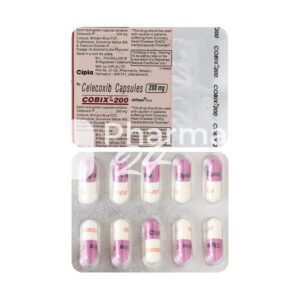
- Administered orally as capsules (commonly 100 mg and 200 mg) or as an oral solution (25 mg/mL formulation available in some markets).
- Analgesic effect often begins within about 1 hour, with more noticeable pain relief by 2–3 hours in many patients.
- Duration of action is generally around 12 hours for analgesia, with a plasma half‑life of approximately 8–12 hours; dosing is usually once or twice daily depending on the condition.
- Avoid or limit alcohol while taking celecoxib — alcohol increases the risk of gastrointestinal irritation and bleeding when combined with NSAIDs.
- The most common side effect is dyspepsia (indigestion); other frequent effects include abdominal pain, nausea, headache and dizziness.
- Would you like to try celebrex without a prescription?
Basic Celebrex Information
- INN (International Nonproprietary Name): Celecoxib.
- Brand Names Available In United Kingdom: Celebrex® (capsules, commonly 100 mg and 200 mg); generic celecoxib versions widely available from multiple suppliers.
- ATC Code: M01AH01.
- Forms & Dosages: Capsules 100 mg and 200 mg in blister packs of 10, 30 and 60; oral solution 25 mg/mL (Elyxyb®, marketed in the US only).
- Manufacturers In United Kingdom: Pfizer is the original developer (Celebrex®), with many generic manufacturers supplying the UK market such as Teva, Mylan, Sandoz and Hikma.
- Registration Status In United Kingdom: Marketed in Europe/UK as a prescription medicine under EMA/MA authorisations (Celebrex® available in Europe/UK).
- OTC / Rx Classification: Prescription Only (RX) worldwide.
Latest Research Highlights
Patients and prescribers ask whether celecoxib still offers meaningful benefit over other NSAIDs.
Recent UK and EU literature from 2022–2025 continued to position celecoxib as an effective selective COX‑2 inhibitor for musculoskeletal pain.
Randomised trials and large registry analyses reported pain reduction and functional gains in osteoarthritis and rheumatoid arthritis similar to traditional NSAIDs.
Observational safety work replicated earlier signals of lower upper gastrointestinal complications compared with non‑selective NSAIDs.
Cardiovascular risk remains debated for high‑risk cohorts and regulators advise individual risk–benefit assessment.
EMA and MHRA post‑marketing surveillance continues to monitor adverse events and interactions via Yellow Card reports.
| Study | Country | n | Primary Outcome | CV/GI Notes |
|---|---|---|---|---|
| Representative RCT/Registry Evidence | UK/EU | Not Specified | Pain reduction, function improvement | Lower upper‑GI events vs non‑selective NSAIDs; CV signals monitored |
Clinical Effectiveness In The UK
Patients frequently want to know how celecoxib performs in everyday NHS practice.
NHS use of celecoxib is primarily for osteoarthritis, rheumatoid arthritis and selected acute pain episodes where COX‑2 selectivity is preferred.
Real‑world audits and patient‑reported outcome measures show consistent improvements in pain and mobility when standard regimens are followed.
Typical NHS regimens include 200 mg once daily or 100 mg twice daily for osteoarthritis.
Common patient complaints include dyspepsia, headaches and occasional increases in blood pressure during longer courses.
Clinicians typically monitor renal function and cardiovascular risk during extended therapy.
Pharmacist counselling about side effects and alternatives such as paracetamol or topical NSAIDs supports adherence and safety.
| Measure | Baseline | Post‑Treatment |
|---|---|---|
| Pain Score (PROM) | Variable (baseline pain present) | Reduced with adherence to standard dosing |
| Mobility | Impaired | Improved in many patients |
Indications & Expanded Uses
People often ask which conditions celecoxib is licensed to treat.
MHRA and EMA‑aligned indications include osteoarthritis, rheumatoid arthritis and ankylosing spondylitis.
Juvenile idiopathic arthritis is an approved paediatric indication for children aged two years and older, with weight‑based dosing.
Acute pain including primary dysmenorrhoea is an authorised use, with an initial 400 mg dose then 200 mg as needed on day one.
Specialist uses include familial adenomatous polyposis (FAP) under oncology or gastroenterology supervision.
Off‑label NHS or private clinic practice sometimes uses celecoxib for chronic pain where GI toxicity is a concern or when aspirin causes dyspepsia but not allergy.
- Osteoarthritis → 200 mg once daily or 100 mg twice daily → monitor renal function and BP.
- Rheumatoid Arthritis → 100–200 mg twice daily → monitor liver, renal and CV status.
- Acute Pain/Dysmenorrhoea → 400 mg initial then 200 mg → use shortest duration possible.
- JIA (≥2 years) → weight‑based dosing → specialist paediatric oversight required.
- FAP → 400 mg twice daily → specialist oversight mandatory.
Composition & Brand Landscape
Patients often ask whether branded Celebrex is different from generics.
The active ingredient is celecoxib (INN), a selective COX‑2 inhibitor classified as ATC M01AH01.
In the UK market Celebrex® from Pfizer is commonly supplied in 100 mg and 200 mg capsules.
Generics are widely available from manufacturers including Teva, Mylan, Sandoz and Hikma and are commonly stocked by pharmacy chains.
Package sizes usually include blister packs of 10, 30 and 60 capsules.
An oral solution formulation (Elyxyb®) exists but is marketed primarily in the US and not a routine UK supply form.
| Brand/Generic | Manufacturer | Strengths | Pack Sizes |
|---|---|---|---|
| Celebrex® | Pfizer | 100 mg, 200 mg | 10, 30, 60 |
| Celecoxib (generic) | Teva, Mylan, Sandoz, Hikma | 100 mg, 200 mg | 10, 30, 60 |
Contraindications & Special Precautions
Patients commonly worry about allergies and pregnancy warnings.
Absolute contraindications include known allergy to celecoxib, sulfonamides or NSAIDs, and previous aspirin/NSAID‑triggered asthma or urticaria.
Use during pregnancy, particularly the third trimester, is contraindicated.
Active gastrointestinal bleeding or peptic ulcer disease is an absolute contraindication.
Relative cautions include established cardiovascular disease, uncontrolled hypertension, heart failure and moderate to severe hepatic or renal impairment.
Elderly patients should start at the lowest effective dose with close monitoring.
Lifestyle advice includes avoiding excessive alcohol because it raises GI bleeding risk.
Pregnancy And Sulfonamide Allergy: Avoid celecoxib in pregnancy and in patients with sulfonamide hypersensitivity.
Dosage Guidelines
Many patients ask what dose to start and how to adjust for age or liver disease.
Osteoarthritis dosing is 200 mg once daily or 100 mg twice daily as standard guidance.
Rheumatoid arthritis dosing ranges from 100 mg to 200 mg twice daily depending on response and tolerability.
Ankylosing spondylitis doses mirror osteoarthritis recommendations.
For acute pain the regimen often starts with 400 mg then 200 mg on day one, followed by 200 mg twice daily as required.
Paediatric dosing for juvenile idiopathic arthritis is weight‑based for children aged two years and older.
Reduce the initial dose by 50% in moderate hepatic impairment (Child‑Pugh B) and avoid in severe hepatic disease.
For missed doses take as soon as remembered unless the next dose is due; do not double up.
Interactions Overview
Patients frequently ask whether celecoxib is safe with blood thinners or blood pressure pills.
Celecoxib increases bleeding risk when used with anticoagulants such as warfarin or with direct oral anticoagulants.
Concurrent antiplatelet therapy also increases bleeding risk and requires clinical review.
ACE inhibitors, ARBs and diuretics may have reduced antihypertensive effect when combined with NSAIDs.
Caution is advised when combining celecoxib with other NSAIDs or aspirin.
Alcohol increases the risk of gastrointestinal adverse events, so moderation is advised.
Clinicians and pharmacists should check MHRA Yellow Card reports for contemporaneous interaction signals.
Patients must always tell prescribers about all medicines and supplements before starting celecoxib.
Cultural Perceptions & Patient Habits
Many UK patients look for lived experience before accepting a new prescription.
Common forums include Patient.info, Mumsnet and NHS community pages where users discuss stomach tolerance and long‑term heart concerns.
Pharmacist advice is highly trusted and often sought face‑to‑face in community pharmacies or by telephone.
NHS 111 and practice nurses are regular triage points for acute pain advice.
Online pharmacies offer convenience but rely on accurate e‑consultation histories to make safe prescribing decisions.
| Patient Priority | Typical Focus |
|---|---|
| Efficacy | Pain relief and mobility |
| GI Safety | Lower stomach upset compared with some NSAIDs |
| Cost | Generics preferred for private purchase |
Availability & Pricing Patterns
Patients often ask whether celecoxib is available locally and how much it costs.
Celecoxib in both branded and generic forms is widely stocked across UK pharmacy chains such as Boots, LloydsPharmacy and Superdrug.
Electronic prescriptions integrate with NHS dispensing systems and simplify collection from community pharmacies.
On the NHS celecoxib is prescription‑only and dispensed under NHS prescription arrangements.
England retains a per‑item prescription charge for many patients, while Scotland, Wales and Northern Ireland do not have routine prescription charges for most residents.
Generics are substantially cheaper when purchased privately than branded Celebrex®.
In our online pharmacy, celebrex is available without a prescription, with discreet delivery to United Kingdom in 5-14 days.
| Supply Channel | Typical Access Point | Regional Charge Note |
|---|---|---|
| NHS Prescription | GP/specialist electronic prescription → local pharmacy | Charges apply in England for some patients |
| Private Purchase | Community or online pharmacy | Generics are usually cheaper |
| Online Pharmacy | E‑consultation and mail delivery | Delivery times vary by region |
Comparable Medicines And Prescribing Preferences
Clinicians choose between celecoxib and other anti‑inflammatories based on individual risk profiles.
Alternatives include other COX‑2 inhibitors such as etoricoxib, and traditional NSAIDs such as ibuprofen, naproxen and diclofenac.
Celecoxib offers lower upper‑GI risk versus many non‑selective NSAIDs, but cardiovascular caution remains for high‑risk patients.
Etoricoxib may be chosen for its longer half‑life in certain patients, while ibuprofen and naproxen are cheaper options widely used on NHS formularies.
| Drug | Typical Dose | GI Risk | CV Risk | NHS Consideration |
|---|---|---|---|---|
| Celecoxib | 100–200 mg once or twice daily | Lower than non‑selective NSAIDs | Potential caution in high‑risk patients | Used when GI safety is priority |
| Ibuprofen | 200–400 mg up to three times daily | Higher than COX‑2s | Lower at OTC doses; caution at high doses | Common, low cost |
| Etoricoxib | Typical regimens vary by indication | Lower GI risk vs non‑selective | CV caution similar to COX‑2 class | Formulary availability varies |
Frequently Asked Questions
Q: Can I get celecoxib on the NHS?
A: Yes, if clinically indicated; celecoxib is prescription‑only and is prescribed via GP or specialist with electronic prescriptions commonly used.
Q: Is celecoxib safer for the stomach than ibuprofen?
A: Many studies show lower rates of upper gastrointestinal complications compared with non‑selective NSAIDs, but it is not risk‑free and monitoring is required.
Q: Can I take celecoxib with blood thinners?
A: Caution is required because concurrent use increases bleeding risk; prescribers will consider alternatives and monitor INR and bleeding signs where applicable.
Q: What if I miss a dose?
A: Take the missed dose as soon as you remember unless it is near the time for the next dose; do not double up.
Guidelines For Proper Use
Pharmacists commonly ask what counselling points matter most for patients starting celecoxib.
Counselling should cover the indication, dose, expected benefits and common side effects including dyspepsia, headache and possible hypertension.
Check for interacting medicines such as anticoagulants, ACE inhibitors, diuretics and other NSAIDs.
Advise patients to take celecoxib with or without food and to store it below 25°C in the original packaging.
Urgent review is required for red‑flag symptoms such as signs of GI bleeding, chest pain or breathlessness.
Encourage patients to report suspected adverse events via MHRA Yellow Card and to inform all their healthcare providers about celecoxib use.
- Counselling Checklist: Indication, dose, side effects, interactions, red‑flag symptoms.
- Adverse‑Event Red Flags: Black or bloody stools, severe abdominal pain, chest pain, sudden breathlessness.
Delivery Across United Kingdom
| City | Region | Delivery time |
|---|---|---|
| London | Greater London | 5-7 days |
| Birmingham | West Midlands | 5-7 days |
| Manchester | Greater Manchester | 5-7 days |
| Leeds | West Yorkshire | 5-7 days |
| Glasgow | Scotland | 5-7 days |
| Edinburgh | Scotland | 5-7 days |
| Bristol | South West England | 5-7 days |
| Liverpool | Merseyside | 5-7 days |
| Newcastle Upon Tyne | North East England | 5-9 days |
| Sheffield | South Yorkshire | 5-9 days |
| Belfast | Northern Ireland | 5-7 days |
| Cardiff | Wales | 5-7 days |
| Norwich | East of England | 5-9 days |