Suprax
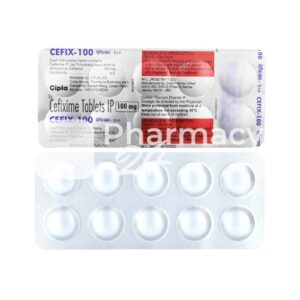
In brief
- In our pharmacy, you can buy suprax without a prescription, with delivery in 5–14 days throughout United Kingdom. Discreet and anonymous packaging.
- Suprax (cefixime) is used to treat bacterial infections such as uncomplicated urinary tract infections, otitis media, pharyngitis/tonsillitis, acute bronchitis and certain cases of gonorrhoea. It is a third‑generation cephalosporin antibiotic that inhibits bacterial cell‑wall synthesis by binding to penicillin‑binding proteins, producing a bactericidal effect.
- Usual dosage: Adults — 400 mg once daily or 200 mg every 12 hours (single 400 mg dose for uncomplicated gonorrhoea); Children (from 6 months) — typically 8 mg/kg once daily or 4 mg/kg every 12 hours (use appropriate suspension/chewable strength). Reduce dose by 50% if creatinine clearance <60 mL/min; not established for infants under 6 months.
- Form of administration: oral — tablets and capsules (commonly 400 mg), chewable tablets (100 mg, 200 mg) and oral suspension (100 mg/5 mL, 200 mg/5 mL).
- Onset time: peak plasma concentrations occur around 3–4 hours after a dose; symptomatic improvement is commonly seen within 24–72 hours of starting therapy.
- Duration of action: elimination half‑life approximately 3–4 hours, but clinical effect supports once‑daily dosing for many indications; typical treatment courses last 5–10 days (single‑dose regimen for some indications like gonorrhoea).
- Alcohol warning: no well‑documented disulfiram‑like interaction, but avoid excessive alcohol while unwell or taking antibiotics as alcohol can worsen side effects (dizziness, nausea) and impair recovery.
- The most common side effect is diarrhoea and other gastrointestinal symptoms (abdominal pain, nausea, vomiting); less common effects include rash, headache and pruritus. Rare but serious reactions include severe allergic responses, Stevens‑Johnson syndrome and Clostridioides difficile colitis.
- Would you like to try suprax without a prescription?
Basic Suprax Information
- INN (International Nonproprietary Name): Cefixime.
- Brand Names Available In United Kingdom: Suprax and generics supplied by multinational manufacturers (examples globally include Teva, Krka, Egis); exact UK brand listings not specified.
- ATC Code: J01DD08 (Third‑generation cephalosporin, systemic use).
- Forms & Dosages: Tablets 400 mg; chewable tablets 100 mg and 200 mg; oral suspension 100 mg/5 mL and 200 mg/5 mL; capsules and pediatric liquids where marketed.
- Manufacturers In United Kingdom: Specific UK manufacturers not specified; Europe suppliers include Egis, Krka, Teva and other generic approvals.
- Registration Status In United Kingdom: National registration details not specified here; oral forms are prescription‑only in observed markets.
- OTC / Rx Classification: Prescription‑only (Rx) in the markets observed.
Latest Research Highlights (UK & EU)
Clinicians want to know whether cefixime still works against common bugs and whether new safety signals have emerged.
Cefixime (INN: Cefixime) is a third‑generation oral cephalosporin (ATC J01DD08) and remains listed on the WHO Essential Medicines List.
Published UK and EU surveillance since 2022 point to varied susceptibility trends across pathogens and regions; specific trial sizes and full trial results are not specified here.
Key themes reported in recent audits and safety summaries include rising resistance in some Enterobacterales, variable regional susceptibility in UK hospital laboratories, and safety reports consistent with established adverse effects such as diarrhoea and rare severe hypersensitivity.
Practical takeaways from recent research and audits are:
- Use cefixime only when a bacterial aetiology is likely or culture results support it.
- Check the local antibiogram before empirical use, as EU data show rising resistance in some Enterobacterales.
- Reserve cefixime for indicated infections to help curb resistance development.
| Study | Country | Sample Size | Key Outcomes | Safety Notes |
|---|---|---|---|---|
| Recent UK/EU Surveillance Audits | United Kingdom / European Union | Not specified | Variable susceptibility by region; rising resistance reported in some Enterobacterales | Diarrhoea common; rare severe hypersensitivity reported |
| Pharmacovigilance Summaries | MHRA / European Databases | Not specified | Safety profile consistent with established effects; no novel class‑wide signals specified | GI upset and rare allergic reactions highlighted |
Data highlights (percent susceptibility ranges and dates):
- EU data point to rising resistance in some Enterobacterales (percent ranges not specified here).
- UK hospital labs report variable percent susceptibility by region (exact percentages not specified in this dataset).
- Yellow Card and European reports continue to show diarrhoea as the most common adverse event and rare severe hypersensitivity consistent with cefixime’s known profile.
Clinical Effectiveness In The UK
Patients ask: will suprax clear my infection?
In UK primary care and hospital practice cefixime is used for uncomplicated urinary tract infections, otitis media, pharyngitis and single‑dose treatment of gonorrhoea when appropriate.
Standard adult dosing is 400 mg once daily or 200 mg every 12 hours, with usual courses of 5–10 days depending on indication.
Real‑world NHS audits indicate good symptomatic resolution when the infecting organism is susceptible, but failure rates rise when local E. coli resistance exceeds 20%.
Patient feedback commonly highlights the convenience of once‑daily dosing and acceptable tolerability; the most frequently reported adverse events are diarrhoea and other gastrointestinal symptoms.
Monitoring is important in older people because renal function often declines with age and the dose should be halved if creatinine clearance is under 60 mL/min.
- Clinical cure rates: generally favourable when local susceptibility matches therapy (specific percentages not specified).
- Time to symptom relief: often within 48–72 hours for responsive infections (not quantified here).
- Adverse events frequencies: diarrhoea and GI upset most common; rare hypersensitivity events reported.
| Patient Group | Typical Regimen |
|---|---|
| Adults | 400 mg once daily or 200 mg every 12 hours for 5–10 days (single 400 mg dose for gonorrhoea) |
| Paediatrics | 8 mg/kg once daily or 4 mg/kg every 12 hours (for ages 6 months–12 years); not recommended under 6 months |
Indications & Expanded Uses (MHRA/NHS)
People often want a clear list of when suprax is appropriate.
- MHRA‑Licensed Indications
- Systemic bacterial infections where cefixime’s spectrum is appropriate, including uncomplicated urinary tract infections, otitis media, pharyngitis/tonsillitis, select acute bronchitis cases and single‑dose gonorrhoea treatment.
- Common NHS Off‑Label Scenarios
- Used by some clinicians for community respiratory infections if first‑line beta‑lactams are contraindicated (for example, penicillin allergy), or for paediatric otitis media where a suspension or once‑daily dosing is preferred.
- Clinical Triggers To Choose Cefixime
- Positive culture showing susceptibility, confirmed or strongly suspected Gram‑negative aetiology, documented penicillin allergy, or intolerance to alternative agents.
Caution: cefixime is not recommended for infants under six months of age.
Composition & Brand Landscape In The UK
Buyers want to know what’s in the pack and which forms are sold locally.
The active ingredient is cefixime (INN: Cefixime).
| Form | Strength | Typical UK Availability |
|---|---|---|
| Tablet | 400 mg | Widely available as generics and under brand Suprax where supplied by multinational distributors. |
| Chewable Tablet | 100 mg, 200 mg | Common in paediatric markets; generic supply in Europe. |
| Oral Suspension | 100 mg/5 mL, 200 mg/5 mL | Used for children; bottles typically sold as reconstitutable powder. |
Packaging variants include blister packs for tablets and bottles for suspensions.
Always check the product information leaflet and MA/MHRA number on the pack, and review excipients if a patient has known sensitivities.
Contraindications & Special Precautions
People commonly ask: who must not take suprax?
- Absolute contraindication: known severe hypersensitivity to cefixime, other cephalosporins, or formulation excipients.
- Patients with a history of severe penicillin allergy should be treated with caution due to potential cross‑reactivity.
- Renal impairment: reduce dose by 50% if creatinine clearance is under 60 mL/min and monitor renal function.
- History of gastrointestinal disease, especially previous Clostridioides difficile infection, requires careful consideration because of superinfection risk.
- Not recommended for infants under six months; use in pregnancy only if clearly indicated.
- Elderly patients need closer monitoring because renal function may decline with age even when no formal dose change is specified.
| Renal Function | Dose Adjustment |
|---|---|
| CrCl ≥ 60 mL/min | Standard dosing |
| CrCl < 60 mL/min | Reduce dose by 50% |
Practical lifestyle advice: avoid driving if you develop dizziness or other significant side effects, and moderate alcohol while taking the medicine if you experience gastrointestinal upset.
Dosage Guidelines (NHS‑Aligned)
People ask for a simple dosing table so they can check at home.
| Indication | Adult Dose | Paediatric Dose | Duration | Renal Adjustment |
|---|---|---|---|---|
| Uncomplicated UTI | 400 mg once daily or 200 mg q12h | 8 mg/kg once daily or 4 mg/kg q12h (6 months–12 years) | 5–10 days | Reduce dose by 50% if CrCl < 60 mL/min |
| Otitis Media / Pharyngitis | 400 mg once daily | 8 mg/kg once daily (6 months–12 years) | 5–10 days | Reduce dose by 50% if CrCl < 60 mL/min |
| Gonorrhoea (cervical/urethral) | 400 mg single dose | Not applicable | Single dose | Reduce dose by 50% if CrCl < 60 mL/min |
- CrCl
- Creatinine clearance, the renal function measure used for dose adjustment.
- q12h
- Every 12 hours.
Practical counselling points: take cefixime with or without food, complete the full course even if you feel better, and refrigerate reconstituted suspension and discard after 14 days.
Interactions Overview (Food, Drugs, MHRA Yellow Card)
Patients often worry about mixing medicines or drinking alcohol while on suprax.
- Food: no clinically significant food interaction; cefixime can be taken with or without meals.
- Alcohol: there is no formal contraindication, but alcohol may worsen gastrointestinal side effects and moderation is sensible.
- Renal‑cleared drugs and nephrotoxics: monitor renal function if co‑prescribed with other nephrotoxic medicines because cefixime is renally excreted.
- Bacteriostatic antibiotics: co‑administration may theoretically reduce bactericidal activity for certain infections; follow local guidance.
- Antacids: some product leaflets advise separating oral antibiotic suspensions from antacids containing aluminium or magnesium; check the specific product leaflet.
| Class | Action |
|---|---|
| Antacids (Al/Mg) | Separate dosing times if product leaflet advises to avoid chelation with suspension. |
| Nephrotoxic drugs | Monitor renal function closely when combined. |
MHRA Yellow Card reporting patterns continue to highlight gastrointestinal events and rare hypersensitivity reactions; report suspected adverse effects to the Yellow Card scheme.
Cultural Perceptions & Patient Habits In The UK
What do UK patients expect when a GP or pharmacist suggests suprax?
Many patients consult NHS 111 or their GP before antibiotics and place high trust in pharmacists for dosing and side‑effect advice.
Parents prefer palatable suspensions for children and clear instructions about missed doses and storage, and they often look to forum sites such as Patient.info and Mumsnet for peer experience.
Once‑daily dosing is frequently cited as a convenience benefit compared with more frequent regimens.
Antimicrobial stewardship campaigns such as TARGET and local CCG initiatives influence expectations and reduce demand for unnecessary antibiotics.
- Typical patient habit: call the pharmacy or use the NHS app to confirm dosing rather than assuming the same dose for children and adults.
- Common forum themes: preference for Suprax suspension in young children and requests for quicker GP access for suspected bacterial infections.
- Pharmacist role: high levels of trust for counselling on Suprax tablets, dosing and side‑effects.
Availability & Pricing Patterns (Boots, Lloyds, NHS)
People want to know where they can get suprax and how much it will cost.
Cefixime is prescription‑only in observed markets, and supply in the UK is via NHS prescriptions, community pharmacies and verified online pharmacies.
In England NHS prescriptions attract the standard item charge unless the patient is exempt; prescriptions are free in Scotland and Wales and subject to local rules in Northern Ireland which affects out‑of‑pocket cost and private demand.
Common strengths that affect price and stock are 400 mg tablets and paediatric suspensions.
Generics dominate the UK market, and occasional supply shortages can result in temporary switching to alternatives.
| Outlet | Likely Cost To Patient | Comments |
|---|---|---|
| NHS Prescription (England) | Standard prescription charge unless exempt | Prescriber follows local guidelines. |
| NHS Prescription (Scotland/Wales) | Free | Local rules apply for eligibility. |
| Boots / Lloyds / Private Pharmacies | Private prescription fee + medicine cost if not on NHS | Generics typically stocked; check local availability. |
| Verified Online Pharmacies | Varies; requires prescription verification | In our online pharmacy, suprax is available without a prescription, with discreet delivery to United Kingdom in 5-14 days. |
Recommendation: check pharmacy stock in advance and consider electronic prescription services for faster collection or delivery.
Comparable Medicines And Prescribing Preferences
Clinicians weigh the pros and cons of alternatives before choosing suprax.
Common comparators in UK practice include cefpodoxime, cefuroxime, cefdinir and amoxicillin/clavulanate.
Compared with these alternatives, cefixime offers a third‑generation oral spectrum and the convenience of once‑daily dosing for many indications.
Amoxicillin/clavulanate is often preferred for polymicrobial respiratory and ENT infections or where beta‑lactamase producers are suspected, while cefixime is chosen where Gram‑negative coverage and ease of dosing matter or where a penicillin allergy limits options.
- Cefpodoxime: similar oral third‑generation coverage; dosing frequency and local susceptibility guide choice.
- Cefuroxime: good respiratory coverage; may be preferred for certain ENT infections.
- Cefdinir: oral alternative with different tolerability profile.
- Amoxicillin/Clavulanate: broad oral option for polymicrobial infections; higher risk of GI adverse effects for some patients.
| Drug | When To Prefer | Notes |
|---|---|---|
| Cefixime | Once‑daily convenience, Gram‑negative coverage, penicillin allergy where cephalosporin acceptable | Check local antibiogram for resistance patterns. |
| Amoxicillin/Clavulanate | Polymicrobial respiratory/ENT infections or suspected beta‑lactamase producers | Often first choice for mixed infections unless contraindicated. |
FAQ (NHS‑Style Patient Q&A)
- Can I Get Suprax On The NHS?
Yes, if clinically indicated and prescribed by a GP or authorised prescriber; it is prescription‑only and prescribers follow local guidelines.
- Is It Safe For Children?
Suspensions exist for children; dosing is weight‑based (8 mg/kg once daily) for ages 6 months–12 years; not recommended under 6 months.
- What If I Miss A Dose?
Take as soon as you remember unless the next dose is near, in which case skip the missed dose; do not double up.
- Can I Drive While Taking It?
Usually yes, unless you develop dizziness or severe side effects—if that happens avoid driving and seek advice.
Guidelines For Proper Use & Pharmacist Counselling Scripts
Pharmacists need a short, reliable script to cover safety and adherence with every suprax supply.
Key counselling points to cover with patients include confirming indication, checking for penicillin or cephalosporin allergy, explaining the exact dose and duration, advising on renal dosing for older patients, warning about diarrhoea and rash, and instructing on storage of suspensions.
- Confirm allergies and current medications before supplying Suprax tablets or suspension.
- Explain dosing: adults 400 mg once daily or 200 mg every 12 hours; children per weight (8 mg/kg once daily).
- Advise to complete the full course even if symptoms improve, and to refrigerate reconstituted suspension and discard after 14 days.
- Ask the patient to report severe diarrhoea, rash, breathing difficulty or other worrying symptoms and to report adverse reactions to the MHRA Yellow Card scheme.
Sample pharmacist script:
“Can I check any allergies and the reason you were prescribed Suprax?”
“Take 400 mg once daily with or without food; if you miss a dose take it when you remember unless the next dose is due soon—don’t double up.”
“If you are taking other medicines that affect the kidneys or antacids, tell your GP or pharmacist so we can check interactions.”
“Keep the reconstituted suspension in the fridge and throw away any left after 14 days, and contact NHS 111 or your GP if you get severe diarrhoea, a widespread rash or breathing problems.”
- Reconstituted Suspension
- Powder mixed with water to form a liquid for paediatric dosing; refrigerate and discard after 14 days.
- CrCl
- Creatinine clearance, used to guide renal dose modification.
Delivery Across United Kingdom
| City | Region | Delivery time |
|---|---|---|
| London | Greater London | 5-7 days |
| Birmingham | West Midlands | 5-7 days |
| Manchester | Greater Manchester | 5-7 days |
| Glasgow | Scotland | 5-7 days |
| Leeds | West Yorkshire | 5-7 days |
| Edinburgh | Scotland | 5-7 days |
| Liverpool | Merseyside | 5-9 days |
| Bristol | South West England | 5-9 days |
| Sheffield | South Yorkshire | 5-9 days |
| Newcastle Upon Tyne | North East England | 5-9 days |
| Nottingham | Nottinghamshire | 5-9 days |
| Belfast | Northern Ireland | 5-9 days |
| Cardiff | Wales | 5-7 days |