
Lamictal
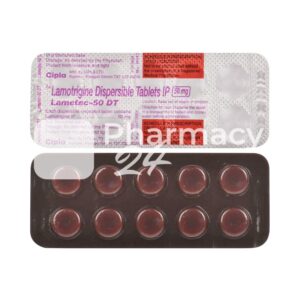
In brief
- In our pharmacy, lamictal (lamotrigine) is available; it is legally prescription-only (Rx) in most countries, although some pharmacies may dispense it without a receipt — we strongly recommend obtaining a prescription and clinical review before use.
- Lamictal is used for epilepsy (adjunctive or monotherapy for partial and generalised seizures) and for prevention of depressive episodes in bipolar disorder. It works mainly by stabilising neuronal membranes through inhibition of voltage-gated sodium channels and by reducing excitatory neurotransmitter (glutamate) release.
- The usual dose starts with low titration (commonly 25 mg once daily for 1–2 weeks) to reduce rash risk, with maintenance doses typically 100–200 mg/day (may be increased to 200–400 mg/day when used with enzyme-inducing drugs); exact dosing varies by age, weight, concomitant medicines and formulation.
- Administration is oral: available as standard tablets, dispersible/chewable tablets and extended‑release (XR) tablets; starter/titration packs are used to guide gradual dose increases.
- Onset: some effects may be noticed within days, but therapeutic benefit usually requires gradual titration over several weeks (often 2–6 weeks) and is not immediate.
- Duration of action: lamotrigine has an effective duration of about 24 hours (elimination half-life ~25–33 hours in adults; altered by drugs like valproate or enzyme inducers); XR formulations support once-daily dosing.
- Alcohol warning: avoid excessive alcohol — alcohol can worsen dizziness, drowsiness and coordination, may impair seizure control and increase side-effect risk when taking lamotrigine.
- The most common side effect is headache; other frequent effects include dizziness, nausea, sleep disturbances and rash — note that serious skin reactions (e.g. Stevens–Johnson syndrome) can occur and require immediate medical attention.
- Would you like to try lamictal without a prescription?
Basic Lamictal Information
- INN (International Nonproprietary Name): Lamotrigine
- Brand Names Available In United Kingdom: Lamictal (global/EU); Lamictal XR™ (global); other branded generics not specified
- ATC Code: N03AX09
- Forms & Dosages: Dispersible/chewable tablets 25 mg, 50 mg, 100 mg; standard oral tablets 25 mg, 50 mg, 100 mg; extended‑release (XR) tablets 25–300 mg; starter/titration packs (5‑week set)
- Manufacturers In United Kingdom: GSK (originator Lamictal); generic suppliers listed in source include Teva, Mylan/Logem and Arrow (market specifics not specified)
- Registration Status In United Kingdom: EMA harmonised EU SmPC for epilepsy and bipolar indications; UK‑specific registration details not specified in source
- OTC / Rx Classification: Prescription only (Rx)
Latest Research Highlights (UK And EU, 2022–2025)
Is lamotrigine still a go‑to for seizures and bipolar depression in recent audits and pharmacovigilance reports? Recent UK and EU literature from 2022–2025 reinforces lamotrigine’s established role for seizure control and prevention of depressive episodes in bipolar disorder. Large observational datasets and NHS trust audit reports describe ongoing reductions in seizure frequency when lamotrigine is used as monotherapy or adjunctive therapy for partial and some generalised epilepsies. Psychiatric audit data from the same period report fewer depressive relapses in maintenance settings for bipolar disorder. Safety monitoring remains central: pharmacovigilance summaries from MHRA and EMA archives show steady Yellow Card and EudraVigilance reports for rash and dizziness. Serious cutaneous reactions such as Stevens–Johnson syndrome and toxic epidermal necrolysis remain rare but clinically important, and risk increases with rapid titration or co‑prescription with valproate. Pregnancy registries in Europe continue to suggest lower teratogenic risk compared with valproate while noting potential need for dose adjustments due to pharmacokinetic changes during pregnancy. Reports also show lower rates of cognitive adverse‑effect reporting with lamotrigine versus older antiepileptic drugs, aligning with clinical preference for cognitive‑sparing maintenance therapy.
| Outcome | Summary |
|---|---|
| Efficacy | Continued seizure‑rate reduction as monotherapy/adjunct for partial and some generalised epilepsies. |
| Bipolar Relapse Prevention | Maintenance use associated with fewer depressive relapses. |
| Rash And Skin Reactions | Serious cutaneous events remain rare but important; risk linked to rapid titration and valproate co‑use. |
| Cognitive Tolerability | Lower cognitive adverse‑effect reporting than many older anticonvulsants. |
Data Highlight: Serious skin reactions are rare but demand immediate action. Yellow Card reporting continues for rash and dizziness, supporting cautious titration and close follow‑up during the first weeks of therapy.
Clinical Effectiveness In The UK
Do patients on the NHS report real benefit from lamotrigine? In NHS practice lamotrigine is widely prescribed for epilepsy and for prevention of depressive episodes in bipolar disorder. Clinical audits and real‑world data show improved seizure frequency for many patients, particularly in focal epilepsy. Patient‑reported outcome measures collected in NHS clinics and public forums commonly describe better day‑to‑day cognitive tolerance with lamotrigine than with older anticonvulsants such as carbamazepine or valproate. Mood stability and fewer cognitive side‑effects are frequent patient comments, though these benefits can take weeks to appear because of cautious titration to reduce rash risk. Adherence challenges centre on the 5‑week starter pack regimen and anxiety about rash. Local clinics often use pharmacist‑led counselling to improve adherence and to explain the titration schedule and rash signs. NHS data confirm lamotrigine’s role as a strong maintenance option, but prescribers must watch for interactions — notably with valproate — and adjust doses in pregnancy or hepatic impairment.
| Measure | Typical NHS Finding |
|---|---|
| Seizure Frequency | Reduction reported when used as monotherapy or adjunct |
| Patient‑Reported Cognition | Improved compared with older antiepileptics in many reports |
- Common Patient Concerns: fear of rash, worries about pregnancy effects, difficulty with the 5‑week starter pack, and interactions with other medicines.
Indications And Expanded Uses
What is lamotrigine licensed for, and when is it used off‑label? MHRA‑aligned prescribing in the UK follows EU indications: lamotrigine is authorised for monotherapy or adjunctive treatment of partial and some generalised seizures and for prevention of depressive episodes in bipolar disorder. Off‑label uses encountered in NHS and private practice include selected neuropathic pain syndromes, mood stabilising roles beyond classic bipolar disorder, and adjunctive use in mixed seizure types when other agents are unsuitable. When prescribing off‑label, clinicians must document the rationale and obtain patient consent, and shared‑care arrangements with GP and pharmacy are commonly used for long‑term management.
- Licensed Indications
- Adjunctive or monotherapy for partial and some generalised seizures; prevention of depressive episodes in bipolar disorder.
- Common Off‑Label Uses
- Selected neuropathic pain, mood stabilisation in non‑classic presentations, adjunctive therapy where standard drugs are unsuitable.
- Documentation Required For Off‑Label Prescribing
- Record clinical rationale, discuss expected benefits and risks, obtain informed consent, and agree shared‑care monitoring where appropriate.
Composition And Brand Landscape
Which brands and formulations will a UK pharmacist recognise? The active ingredient is lamotrigine (INN). The originator brand is Lamictal from GSK and it coexists with multiple generics supplied by manufacturers such as Teva, Mylan and others. Starter and titration packs are common and help standardise the slow dose increase needed to reduce rash risk. Available forms include dispersible/chewable tablets, standard tablets and extended‑release formulations.
| Brand | Manufacturer | Available Strengths | Packaging |
|---|---|---|---|
| Lamictal | GSK | 25 mg, 50 mg, 100 mg; XR strengths available | Blisters; starter/titration packs |
| Lamictal XR™ | GSK / global | 25–300 mg (XR) | Bottles of 30 (XR) |
| Generic Lamotrigine | Teva, Mylan, Arrow, Logem | 25 mg, 50 mg, 100 mg; some XR available | Blisters or bottles; starter packs |
- Interchangeability And Prescription Specification: Pharmacists routinely dispense generics unless brand prescribing is specified by the prescriber.
Contraindications And Special Precautions
Who needs particular caution when starting lamotrigine? Absolute contraindications are known hypersensitivity to lamotrigine or excipients and a history of severe skin reactions such as Stevens–Johnson syndrome to lamotrigine or closely related drugs. High‑risk groups requiring closer monitoring include children (higher incidence of rash), patients co‑prescribed valproate, those with severe hepatic or renal impairment, pregnant people due to changing pharmacokinetics, and the elderly who need low‑and‑slow dosing. Daily life advice should include caution with alcohol, and advice not to drive if new dizziness, visual disturbance or drowsiness develop.
- Absolute Contraindications: Known hypersensitivity to lamotrigine or excipients; previous SJS/TEN with lamotrigine.
- Relative Contraindications / Close Monitoring: Severe hepatic/renal impairment, valproate co‑prescription, pregnancy, elderly patients.
Valproate Interaction Highlight: Valproate inhibits lamotrigine metabolism and raises plasma levels, so a lower lamotrigine maintenance dose is required when both drugs are used. Rash Risk Highlight: Rash is most likely in the early weeks of treatment and with rapid titration; immediate review is required if a rash appears.
Dosage Guidelines
How should the dose be started and adjusted? NHS dosing follows gradual titration to reduce rash risk and commonly uses a 5‑week starter/titration pack to standardise increments. Typical adult monotherapy begins at 25 mg once daily for two weeks and increases gradually towards a maintenance dose of 100–200 mg/day in divided doses. Adjunctive regimens vary and can reach 200–400 mg/day depending on concomitant enzyme‑inducing medicines. When co‑prescribed with valproate, both the initial and maintenance doses are markedly lower due to higher lamotrigine exposure. Children are dosed by weight with slower titration schedules, and hepatic impairment and the elderly require dose reductions and cautious upward titration.
| Regimen | Starting/Titration | Maintenance Range |
|---|---|---|
| Adult Monotherapy | 25 mg once daily for 2 weeks, then gradual increase | 100–200 mg/day (divided) |
| Adjunct With Enzyme Inducers | Start as per starter pack, faster increments may be used | Up to 200–400 mg/day |
| Co‑prescribed With Valproate | Lower starting doses advised | Lower maintenance doses than usual; specialist guidance required |
Missed Dose Advice: Take the missed dose as soon as remembered unless it is near the time for the next dose. Do not double up doses. If several doses are missed, contact the prescriber for safe re‑titration advice.
Interactions Overview
What interactions matter clinically and what should pharmacists check? Valproate is the most important inhibitor interaction; it reduces lamotrigine glucuronidation and raises lamotrigine levels, necessitating lower lamotrigine doses. Enzyme inducers such as carbamazepine, phenytoin, phenobarbital and primidone can lower lamotrigine exposure and often require higher lamotrigine doses. Oral contraceptives may cause small changes in lamotrigine levels during pill cycles, so clinicians should review levels and symptoms. No strong food interactions have been described, but alcohol can worsen central nervous system effects like dizziness and drowsiness. MHRA Yellow Card reports have emphasised interaction‑related adverse events when prescribers or pharmacists fail to adjust doses appropriately.
| Concomitant Drug | Effect On Lamotrigine | Recommended Action |
|---|---|---|
| Valproate | Increases lamotrigine levels | Use lower lamotrigine doses; monitor closely |
| Carbamazepine, Phenytoin, Phenobarbital | Decrease lamotrigine levels | May need higher lamotrigine doses; monitor efficacy |
| Oral Contraceptives | Minor fluctuations in lamotrigine levels | Monitor clinical response and adjust if needed |
| Alcohol | Worsens CNS adverse effects | Advise caution and avoidance when affected |
- Pharmacist Reconciliation Checklist: review valproate and enzyme inducers, ask about oral contraceptive use, recent antibiotics/antifungals, and advise on alcohol cautions.
Cultural Perceptions And Patient Habits
How do UK patients find information and what worries them most? UK patients commonly consult peer networks such as Patient.info and parenting forums and place strong trust in pharmacist counselling for titration support. Common themes are fear of rash, concerns about effects during pregnancy, and a preference for medicines that spare cognition. Many patients use NHS 111 for urgent concerns and rely on NHS patient portals and electronic records for repeat prescription queries. Counselling messages emphasise slow titration and the need to report any rash immediately. Patients frequently seek reassurance about generic substitution and packaging, and most appreciate a brief pharmacist checklist at handover.
- Patient Insights For Leaflets: emphasise slow titration, rash signs to watch for, pregnancy planning advice, and how to report side effects via the Yellow Card scheme.
Sample Pharmacist Counselling Script: “Your starter pack will guide a slow increase in dose over five weeks to reduce the chance of rash. If you notice any new rash, mouth ulcers or fever, stop the tablets and get urgent medical advice. If you are pregnant or planning a pregnancy, speak to your prescriber about monitoring and dose changes.”
Availability And Pricing Patterns
Where do UK patients collect lamotrigine and how do costs vary? Lamotrigine is prescription‑only on the NHS and via private clinics. Major community pharmacy chains such as Boots, LloydsPharmacy and Superdrug dispense lamotrigine, and online pharmacies increasingly supply generics and branded Lamictal. EPS (Electronic Prescription Service) supports repeat dispensing across the NHS. Pricing patterns differ regionally because England retains a per‑item prescription charge for those not exempt, whereas prescriptions are free at point of care in Scotland, Wales and Northern Ireland; this affects whether patients collect from NHS or private suppliers. Stock and pack form (blister vs bottle and starter packs) vary by supplier and can influence pharmacy substitution and supply timing.
| Access Point | Typical Availability |
|---|---|
| Community Pharmacies (Boots, Lloyds, Superdrug) | Commonly stock generics and dispense on prescription |
| Hospital Pharmacy | Supply for inpatient and specialist outpatient prescriptions |
| Online Pharmacies | Offer EPS fulfilment and home delivery; availability varies |
Prescription Exemptions Data Box: England has per‑item charges for patients without exemptions or prepayment certificates. Scotland, Wales and Northern Ireland provide prescriptions free at point of care, which can influence where patients choose to collect or pay for medication.
In our online pharmacy, lamictal is available without a prescription, with discreet delivery to United Kingdom in 5-14 days.
Comparable Medicines And Prescribing Preferences
What choices do clinicians consider instead of lamotrigine? Common NHS alternatives include levetiracetam (Keppra), valproate (Depakote), carbamazepine and oxcarbazepine. Choice depends on seizure classification, sex and pregnancy plans, and side‑effect profiles. Compared with valproate, lamotrigine carries a lower teratogenic risk but may be less effective for some generalised epilepsies. Levetiracetam is valued for rapid titration and low interaction potential but can cause behavioural side‑effects in some patients. A quick checklist for prescribers should include seizure type, childbearing potential, hepatic and renal function, concomitant medications, cognitive profile and monitoring capacity.
| Comparator | Pros | Cons |
|---|---|---|
| Levetiracetam (Keppra) | Rapid titration, few interactions | Behavioural side‑effects can occur |
| Valproate (Depakote) | Broad efficacy for some generalised epilepsies | Higher teratogenic risk; intensive pregnancy counselling required |
| Carbamazepine | Effective for focal seizures | Multiple interactions; cognitive effects in some patients |
Decision Tree For First‑Line Maintenance In Focal Epilepsy (Summary): Assess seizure classification and comorbidities. If childbearing potential is present, avoid valproate and consider lamotrigine or levetiracetam. If drug interactions are a major concern, favour levetiracetam. If cognitive preservation is a priority, lamotrigine is often preferred.
FAQ
Q1: What If I Develop A Rash? A: Stop lamotrigine immediately and seek urgent medical advice. Rashes can be benign but may rarely indicate SJS/TEN and require prompt assessment.
Q2: Can I Take Lamotrigine In Pregnancy? A: Discuss with your prescriber before trying for pregnancy. Lamotrigine is often preferred over valproate for women of childbearing potential, but dose requirements may increase during pregnancy and monitoring is advised.
Q3: What If I Miss A Dose? A: Take the missed dose as soon as you remember unless it is close to the next scheduled dose. Do not double up doses. If multiple doses are missed, contact your prescriber for re‑titration advice.
Q4: How Long Before I See Mood Stabilisation Benefits? A: Mood benefits may take several weeks as dosing is increased slowly. Maintenance therapy is usually continued long‑term under regular psychiatric review.
| Question | Action |
|---|---|
| Rash | Stop medication and get urgent medical assessment (A&E or GP urgent same‑day) |
| Mild Side Effects | Contact GP or pharmacist; NHS 111 if out of hours |
| Missed Doses | Follow missed dose advice; contact GP if many doses missed |
Guidelines For Proper Use
What should pharmacists cover at handover and what resources help patients stay safe? Pharmacist counselling should cover the reason for treatment, the stepwise titration schedule using the starter pack, how to take tablets (with or without food), storage advice, rash warning signs and immediate action, major interactions (especially valproate and enzyme inducers), missed‑dose rules and the need for regular review. Encourage patients to report side effects via the MHRA Yellow Card scheme and to use NHS patient portals for repeat prescriptions and medication records. For paediatrics, explain weight‑based dosing and age‑specific monitoring to carers and check that the starter pack regimen matches the child’s weight band.
- Pharmacist Checklist: confirm indication, check co‑medications (valproate, enzyme inducers), explain starter pack, counsel on rash signs and storage, advise on pregnancy planning, and record advice given.
Sample Counselling Script For Dispensing: “Start with your 5‑week starter pack as shown; increase the tablets exactly as the pack states. If you notice any rash, stop taking the tablets and seek urgent medical review. Store below 25°C and keep the tablets in their original packaging to protect from moisture.”
One‑Page Patient Handout Template (Key Points): Name of medicine, dose and schedule; what to expect in the first five weeks; rash warning signs with immediate contact details; pregnancy advice; missed dose steps; record for MHRA Yellow Card reporting.
Delivery Across United Kingdom
| City | Region | Delivery time |
|---|---|---|
| London | England | 5-7 days |
| Birmingham | England | 5-7 days |
| Manchester | England | 5-7 days |
| Glasgow | Scotland | 5-7 days |
| Edinburgh | Scotland | 5-7 days |
| Leeds | England | 5-7 days |
| Liverpool | England | 5-7 days |
| Bristol | England | 5-7 days |
| Cardiff | Wales | 5-9 days |
| Belfast | Northern Ireland | 5-9 days |
| Newcastle | England | 5-9 days |
| Sheffield | England | 5-7 days |
| Nottingham | England | 5-7 days |
| Southampton | England | 5-9 days |
| Leicester | England | 5-7 days |
Final Notes For Patients
Lamotrigine (Lamictal) is an effective maintenance option for many patients with focal epilepsy and for preventing depressive episodes in bipolar disorder. The priority when starting is slow titration to reduce rash risk and careful review of interactions, especially with valproate and enzyme inducers. Keep medicines in their original packaging, store below 25°C, and report any suspected adverse effects via the MHRA Yellow Card. If in doubt about dosing, titration or interactions, consult your prescriber or pharmacist; urgent rash or signs of systemic illness should prompt immediate medical assessment.